
Kitchen hood cleaning looks straightforward from the outside. In practice, running one of these operations means managing crews with high turnover, navigating grease fire risk classifications, handling variable schedules, and proving coverage before clients will let you through the door. A PEO can take a meaningful chunk of that HR and compliance burden off your plate. But not every PEO is built for this risk profile. Some will quote you a competitive rate, then reprice aggressively at renewal once they actually look at your NAICS code. Others lump you in with general janitorial work and leave gaps in your coverage you won’t discover until something goes wrong.
This guide covers the top PEO comparison resources worth evaluating if you run a kitchen hood cleaning operation. The goal is to help you make a smarter decision before you sign anything.
1. PEO Metrics
Best for: Kitchen hood cleaning operators who want unbiased, side-by-side PEO comparisons before committing to a provider
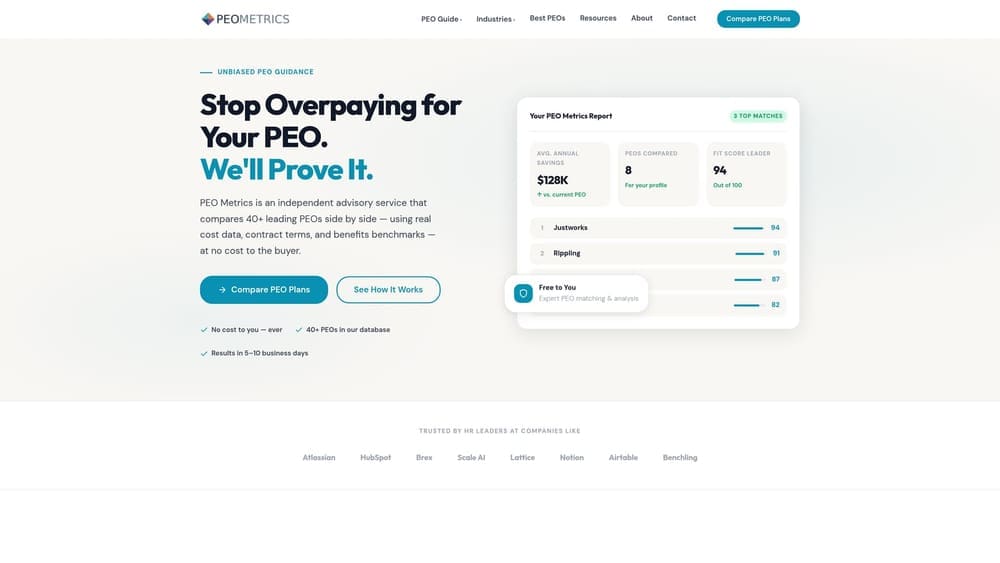
PEO Metrics is an independent PEO comparison service that helps businesses evaluate and select providers using detailed pricing data and side-by-side analysis — without pushing a preferred vendor.
Where This Tool Shines
The core value here is independence. PEO Metrics isn’t affiliated with or paid by any PEO provider, which matters when you’re in a trade where pricing varies significantly depending on how a provider categorizes your work. For kitchen hood cleaning specifically, that categorization question is not trivial — it affects your workers’ comp rates, your coverage structure, and what you’ll actually pay at renewal.
Rather than functioning as a lead-gen marketplace that routes your contact information to whoever pays for placement, PEO Metrics takes a consultative approach. You get a clearer picture of what different providers are actually offering before you’re in a sales conversation. For operators who’ve been burned by PEO repricing or hidden administrative markups, that upfront transparency is genuinely useful.
Key Features
Side-by-Side Provider Comparisons: Detailed pricing and service comparisons across multiple PEO providers so you can evaluate options on equal terms.
Unbiased Guidance: Not affiliated with or compensated by any PEO, which removes the conflict of interest common in marketplace models.
Pricing Analysis: Helps identify where businesses may be overpaying — particularly useful for high-risk trades where fees vary widely by provider.
High-Risk Trade Focus: Useful for industries like kitchen hood cleaning where PEO pricing and coverage decisions are more consequential than in lower-risk service categories.
Consultative Model: Designed to support informed decision-making rather than fast lead routing.
Best For
Hood cleaning operators who are evaluating a PEO for the first time, considering switching providers, or approaching a renewal and want to know whether they’re getting a fair deal. Also useful for businesses that have been declined or heavily repriced by a PEO and want to understand their options before the next conversation.
Pricing
Contact for details. PEO Metrics operates as a comparison and advisory service rather than a transactional marketplace.
2. PEOcompare
Best for: Early-stage research when you want broad market exposure across multiple PEO providers quickly
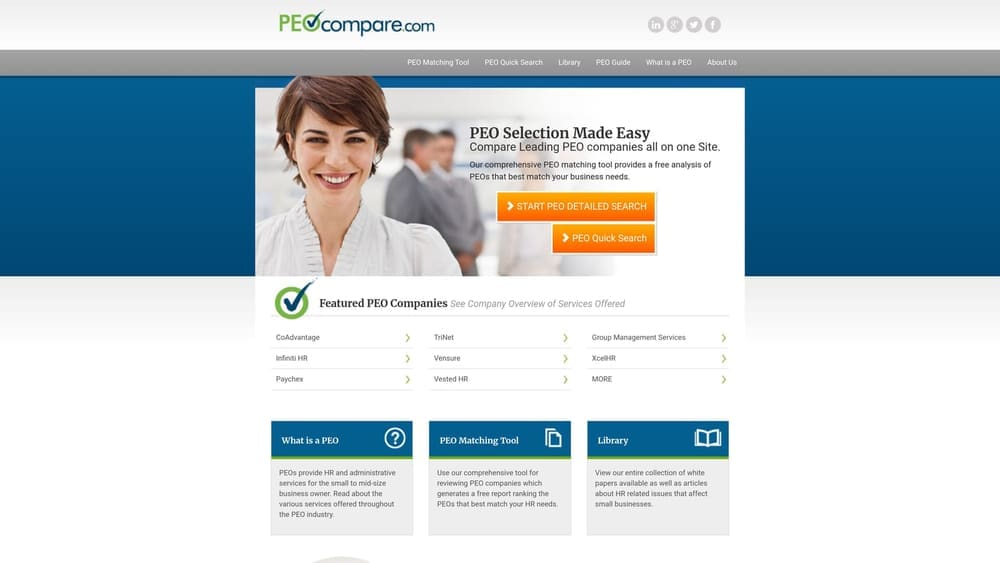
PEOcompare is a marketplace-style platform that aggregates PEO options and allows business owners to compare providers in one place.
Where This Tool Shines
If you’re at the beginning of the evaluation process and want to understand what’s out there before going deep on any single provider, PEOcompare gives you a starting point. You submit your business information and the platform surfaces PEO matches based on your profile. It’s a faster way to get initial market exposure than cold-calling providers one by one.
The tradeoff worth knowing upfront: this is a lead-gen model. Providers on the platform are paying to be there, which can influence which options surface prominently. For a trade like kitchen hood cleaning — where the right PEO depends heavily on how they handle your specific risk classification — broad exposure is useful, but it’s not a substitute for deeper comparison work before you sign.
Key Features
Provider Aggregation: Multiple PEO providers available for comparison in a single platform rather than researching each separately.
Business Matching: Submit your company information and receive PEO matches based on your profile and needs.
Early-Stage Simplification: Reduces the initial research burden by centralizing options in one place.
Broad Market View: Useful for getting a general sense of what’s available before narrowing down to specific providers.
Best For
Business owners who are new to PEO evaluation and want a starting point for understanding what providers exist. Works best as a first step in the research process rather than a final decision tool — particularly for high-risk trades where the details of coverage and pricing structure matter more than initial match speed.
Pricing
Free to use. PEOcompare operates on a lead-generation model, connecting businesses to PEO providers who pay for placement on the platform.
3. HR Guide
Best for: Operators newer to PEO models who want foundational context on co-employment before committing to a provider relationship
HR Guide is an HR information and guidance resource covering co-employment, PEO fundamentals, and HR decision-making for small business owners.

Where This Tool Shines
HR Guide is educational rather than transactional. It’s not going to compare providers or help you negotiate pricing — but if you’re running a hood cleaning operation and you’ve never worked with a PEO before, understanding what co-employment actually means before you sign a contract is genuinely important. The co-employment structure affects everything from how your workers’ comp policy is structured to what happens when you want to exit the relationship.
For operators who jumped into a PEO contract without fully understanding the model and then discovered surprises at renewal or termination, this kind of foundational material is worth the time. It’s also useful for understanding what questions to ask when you’re evaluating providers — which makes the comparison process sharper.
Key Features
PEO and Co-Employment Basics: Clear explanations of how PEO relationships work, including co-employment structure and what it means for your business.
HR Compliance Context: Covers compliance topics relevant to small business owners, including responsibilities that shift when you enter a PEO relationship.
Decision-Making Framing: Helps operators understand what they’re evaluating before they start talking to providers.
Accessible for Non-HR Operators: Written for business owners, not HR professionals — which fits the reality of most small hood cleaning operations.
Best For
Operators who are newer to HR infrastructure and want to understand the PEO model before evaluating specific providers. Also useful as background reading before using a comparison tool, so you know what questions to ask and what contract terms to watch for.
Pricing
Free resource. HR Guide is an information and guidance platform with no transactional component.
Which Option Actually Fits Your Situation
Kitchen hood cleaning companies operate in a risk category that most PEOs aren’t fully prepared for. The workers’ comp exposure alone — grease, heat, rooftop access, confined spaces — puts you in a different bracket than general cleaning or facilities maintenance. That means the PEO you choose carries more weight than it might for a lower-risk trade, and the pricing variance between providers can be significant.
A few things worth keeping in mind before you commit to anything.
If you’re using 1099 subcontractors for cleaning crews, a PEO relationship doesn’t automatically resolve your misclassification exposure. Some PEOs won’t cover 1099 workers at all. That’s a conversation to have explicitly before you sign, not after.
If you’re running a lean operation — say, fewer than 10 employees — it’s worth calculating whether a PEO actually improves your workers’ comp situation or increases it. If you’re already in a favorable assigned risk pool with a low experience mod, a PEO’s master policy might not be the better deal. The “when a PEO is not the right fit” question is a real one in this trade, and an honest comparison process should surface that.
Variable headcount is another wrinkle. If you add crews for large restaurant contracts or seasonal volume, per-employee-per-month pricing can get unpredictable fast. A percentage-of-payroll model may give you more cost stability depending on how your workforce fluctuates.
If you’re starting from scratch on this evaluation, use a comparison resource like PEO Metrics or PEOcompare to get a clearer picture of what’s available before you talk to any provider directly. If you want foundational context on how co-employment actually works before committing, HR Guide covers the basics clearly.
The worst outcome isn’t choosing the wrong PEO. It’s signing a contract without understanding what you’re agreeing to on pricing structure, workers’ comp pooling, and exit terms. Take the time to compare properly.
Don’t auto-renew. Make an informed, confident decision.
Before you sign that PEO renewal, make sure you’re not leaving money on the table.
Many businesses unknowingly overpay because of bundled fees, hidden administrative markups, and contracts designed to limit flexibility. We give you a clear, side-by-side breakdown of pricing, services, and contract terms—so you can see exactly what you’re paying for and choose the option that truly fits your business.
