
Switching ecommerce businesses to a PEO requires careful sequencing to avoid payroll disruptions during peak seasons, multi-state compliance gaps, and workforce transition risks unique to ecommerce operations. This step-by-step guide covers the full migration process, from evaluating PEO providers to managing seasonal workforce complexity and getting your team transitioned without operational disruption.
Most advice on HR outsourcing trends is backward. It tells employers to track buzzwords, ask whether a provider has AI, and compare…
Advertising agencies at 50 employees face unique PEO challenges — from contractor classification risk to multi-state payroll for remote creatives — that generic provider pitches rarely address. This guide covers seven targeted strategies to help advertising firms at this headcount evaluate PEO contracts, avoid costly compliance gaps, and choose a partner built for the realities of project-based creative work.
Finding the best PEO for IT managed service providers requires matching to MSP-specific challenges like multi-state payroll, mixed contractor and W-2 workforces, and competitive tech benefits — not generic HR solutions. This guide evaluates eight providers on pricing transparency, compliance support, and how well they serve the sub-100-employee companies that most MSPs actually are.
IT managed service providers face a deceptively complex workers’ compensation challenge because their workforce spans low-risk desk employees and high-risk field technicians—a gap that generic classifications often miss. This guide examines whether a PEO workers’ compensation program genuinely addresses that complexity for MSPs or simply shifts the risk while adding administrative overhead.
Switching cybersecurity firms to a PEO can consolidate complex HR, compliance, and benefits administration without disrupting your specialized team — but the transition requires careful planning around employment restructuring, sensitive data migration, and government contract requirements unique to the industry.
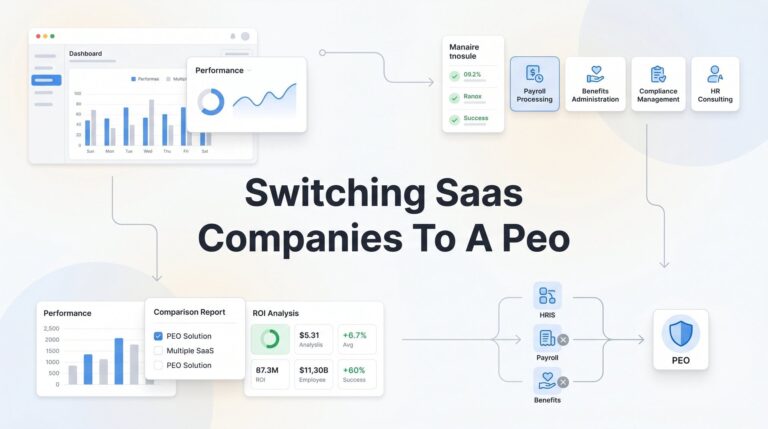
Switching SaaS companies to a PEO requires more than signing a contract — it demands a structured transition process covering HR audits, provider evaluation, and employee communication to avoid compliance gaps and disruption. This guide walks through each practical step, tailored to the specific scaling challenges SaaS companies face as headcount and complexity grow.
A CFO opens the renewal packet expecting the usual movement in payroll taxes, admin fees, and benefits rates. Instead, one line drives…
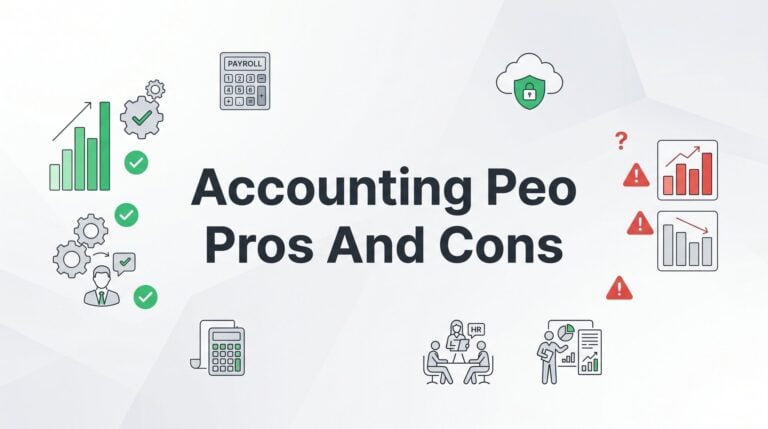
Accounting firms weighing a PEO arrangement face unique considerations around licensed staff, seasonal hiring fluctuations, and client data confidentiality that generic evaluations miss. This guide breaks down the real accounting PEO pros and cons across cost structure, co-employment risks, and operational fit to help firm owners make an informed decision before signing a contract.
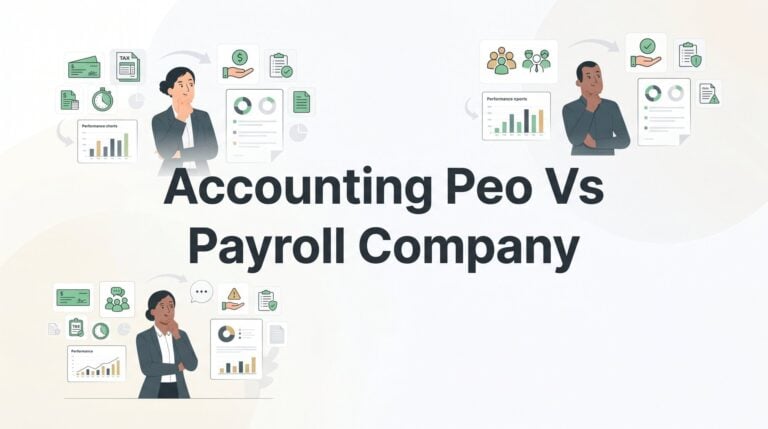
Accounting firms face unique considerations when choosing between a PEO and a payroll company, from partner compensation structures to seasonal staffing spikes around tax season. This comparison breaks down nine tools and services to help accounting professionals evaluate the real tradeoffs before committing to either model.
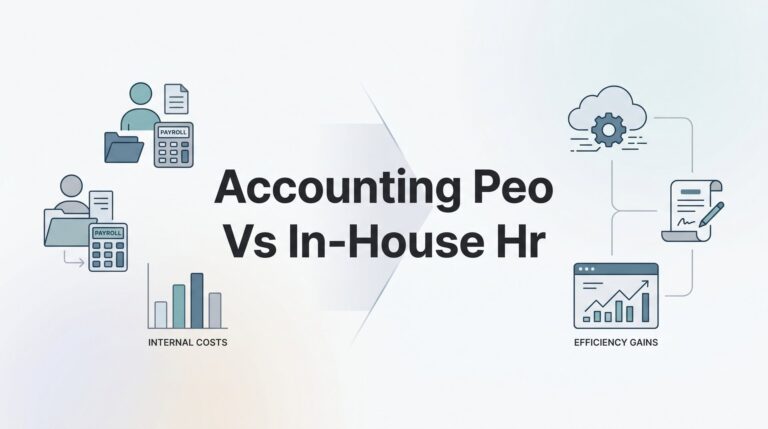
Accounting firms face a uniquely complex version of the PEO vs in-house HR decision, shaped by credentialed workforces, seasonal headcount swings, and layered compliance demands. This guide breaks down the real trade-offs between cost, control, and scalability to help accounting firm leaders choose the model that fits how their practice actually operates.
Switching tech startups to a PEO between 15 and 50 employees can free up significant operational bandwidth and reduce HR costs, but the transition requires careful planning to avoid payroll disruptions, compliance gaps, and employee confusion. This guide walks through the practical steps to make the switch without derailing your startup’s day-to-day operations.