
A PEO workforce legal exposure review helps business owners identify exactly which employment liabilities their PEO covers and which remain their responsibility in the co-employment relationship. These seven essential strategies guide you through mapping liability splits, reviewing contracts, and conducting thorough audits to protect your business from compliance gaps—whether you’re evaluating a new PEO partnership or assessing your current arrangement before legal issues arise.
PEO renewal clause legal implications can lock business owners into unfavorable contracts with automatic renewals, rate increases, and strict cancellation windows they didn’t fully understand when signing. These legally binding provisions determine exit timing, costs, and penalties—making it critical to scrutinize renewal terms before signing, not just initial pricing and services, to avoid being trapped in agreements that no longer serve your business needs.
Using a PEO during acquisition integration provides a fast, unified solution for the operational chaos that follows a deal closing. Instead of juggling mismatched payroll systems, incompatible benefits, and conflicting HR policies across two companies, a PEO offers a single platform to consolidate operations, maintain employee trust, and buy time while you build your long-term infrastructure.
HVAC companies face constant litigation exposure from workplace injuries, wage disputes, and wrongful termination claims that can cost hundreds of thousands per incident. A PEO for HVAC companies litigation risk mitigation framework goes beyond basic payroll processing to create systematic protection against the specific legal vulnerabilities inherent in field service operations—from technician safety protocols to overtime compliance and employment documentation that holds up in court.
Multi-state warehouse operations face unique payroll governance challenges that standard PEO services often overlook—from workers crossing state borders mid-shift to jurisdiction-specific overtime calculations that cascade through multiple tax systems. Understanding how a PEO for warehousing multi-state payroll governance handles these operational realities, including shift differentials, high turnover onboarding, and retroactive corrections across state lines, determines whether you’re buyin…
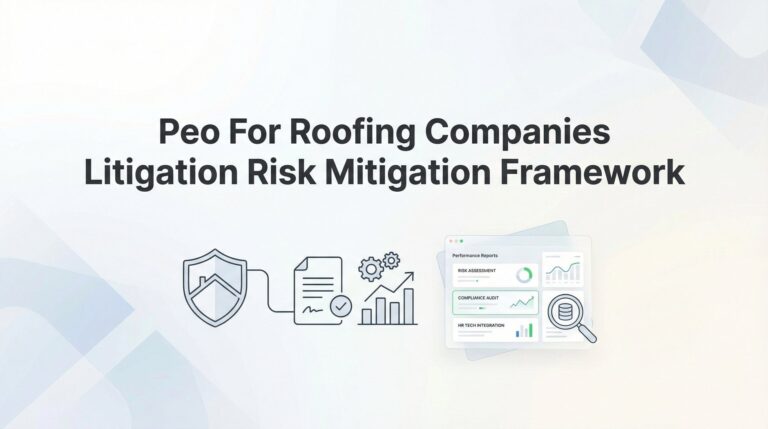
Roofing contractors face unique litigation exposure when workplace incidents trigger cascading legal problems—from OSHA scrutiny and wage violations to subcontractor misclassification issues. A PEO for roofing companies litigation risk mitigation framework addresses these industry-specific pressure points by implementing structured safety documentation, compliance protocols, and HR systems that prevent minor claims from escalating into six-figure settlements.
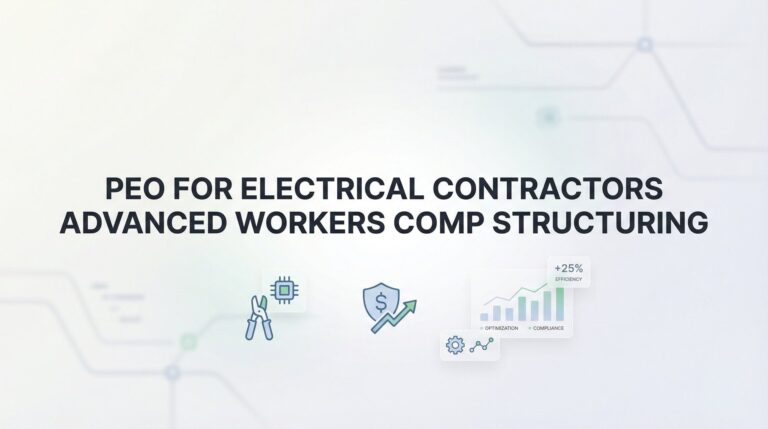
Electrical contractors paying 8-15% of payroll in workers’ comp premiums can leverage PEO master policies for better rates, but standard arrangements aren’t optimized for high-risk trades. This guide reveals how to negotiate class code allocations, structure safety programs for premium credits, and strategically position your company within a PEO’s risk pool to capture real savings on workers’ compensation costs.
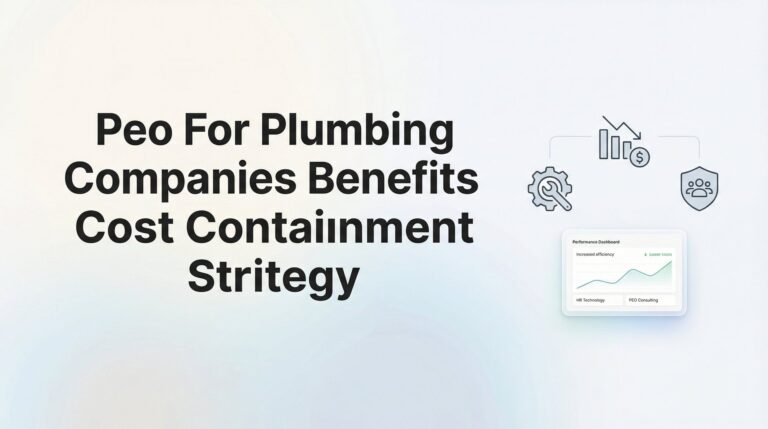
Plumbing contractors face crushing HR costs—$180K+ in workers’ comp, double-digit health insurance hikes, and endless compliance paperwork across multiple jurisdictions. This guide breaks down how a PEO for plumbing companies delivers real cost containment benefits through reduced insurance premiums, streamlined payroll, and consolidated compliance management, plus reveals exactly when the partnership makes financial sense versus when it’s just another expense on your P&L.
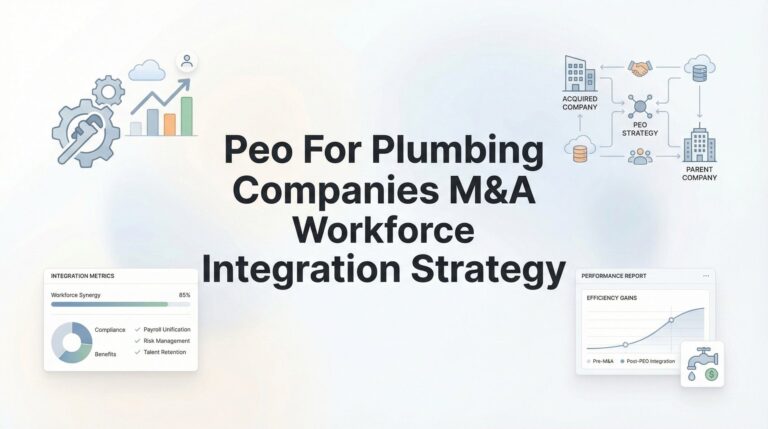
When acquiring a plumbing company, workforce integration failures in the first 60 days can cost you your best technicians—not due to dissatisfaction, but from benefits lapses and administrative chaos. A strategically deployed PEO for plumbing companies M&A workforce integration strategy can prevent skilled plumbers from walking out by ensuring seamless benefits continuity, preserving apprenticeship hours, and maintaining payroll stability during the critical transition period when uncertainty…
HVAC companies face unique HR cost pressures including high workers’ comp premiums from job site injuries, seasonal workforce fluctuations, and competitive benefits demands. A PEO for HVAC companies delivers benefits through cost containment strategies that address industry-specific challenges like high-risk work classifications and seasonal hiring cycles, helping contractors reduce insurance costs and administrative burden while retaining skilled technicians through better benefit offerings.
Enterprise landscaping companies face critical compliance challenges that intensify beyond 50 employees, from multi-jurisdiction pesticide regulations to seasonal hiring surges and OSHA requirements. A PEO for landscaping companies enterprise compliance risk management addresses whether outsourcing actually reduces risk exposure or simply adds costs, particularly when violations like missed license renewals or I-9 audit failures can shut down entire service lines during peak season.
Plumbing companies face significant litigation risks from workers’ compensation claims, wage disputes with mobile crews, and liability issues that can exceed quarterly revenue. A PEO for plumbing companies litigation risk mitigation framework addresses these exposures by managing worker classification, injury documentation, overtime compliance, and vicarious liability—allowing owners to focus on their trade while professionals handle the complex HR and legal vulnerabilities inherent in field …