
Security companies face unique cost pressures including 15-20% workers’ comp premiums, high turnover expenses, and multi-state compliance challenges that strain budgets. A PEO for security companies benefits cost containment strategy when implemented deliberately—targeting your specific financial pain points rather than hoping generic services deliver savings. This guide shows security operators how to identify current cost drains, select PEO capabilities that address industry-specific challe…
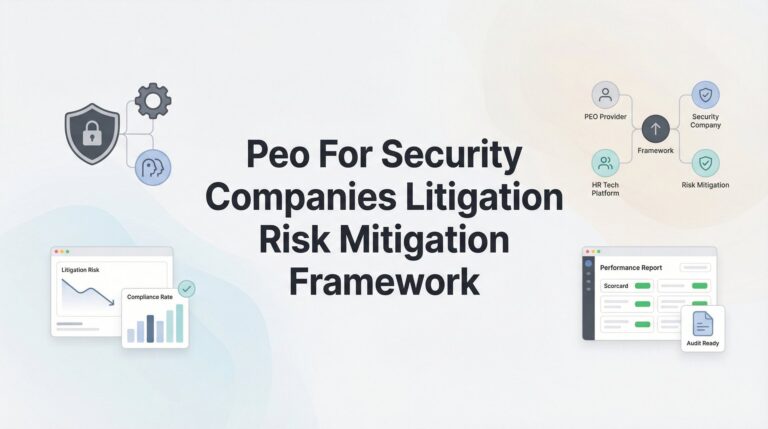
Security companies face unique litigation risks from armed personnel, physical confrontations, and complex labor compliance issues that most lack dedicated teams to manage. A properly structured PEO for security companies litigation risk mitigation framework provides systematic protection through documented training protocols, compliant hiring processes, and defensible HR practices—transforming your company from vulnerable to legally defensible when lawsuits inevitably arise.
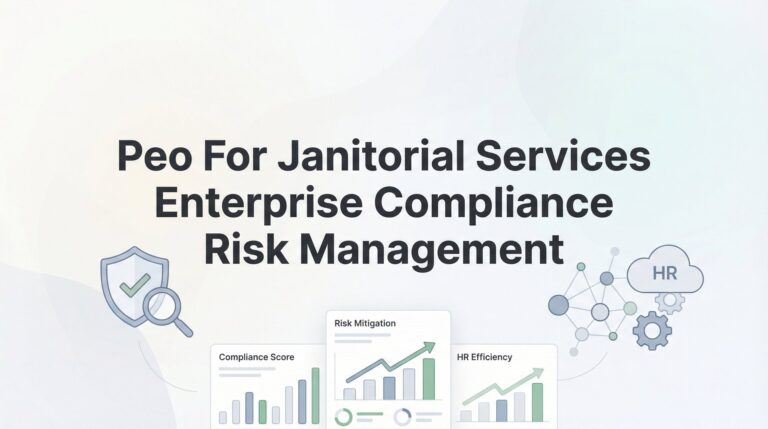
Managing a janitorial enterprise with distributed crews across multiple sites creates unique compliance challenges that standard PEO services may not adequately address. While a PEO for janitorial services enterprise compliance risk management can streamline HR administration and workers’ comp, the real operational risks—misclassification, overnight supervision gaps, safety protocol enforcement, and high turnover—require specialized solutions beyond basic co-employment arrangements that under…
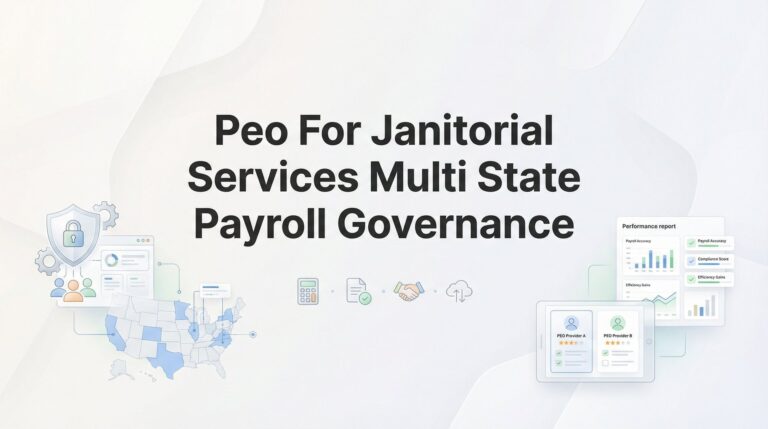
Managing janitorial services across multiple states creates complex payroll compliance challenges, from California’s meal break tracking to New York’s wage theft prevention requirements. This guide shows you how to leverage a PEO for janitorial services multi-state payroll governance, helping you structure the right partnership to handle compliance functions, avoid penalties, and scale your operations without needing a dedicated legal team or getting buried in state-specific regulations.
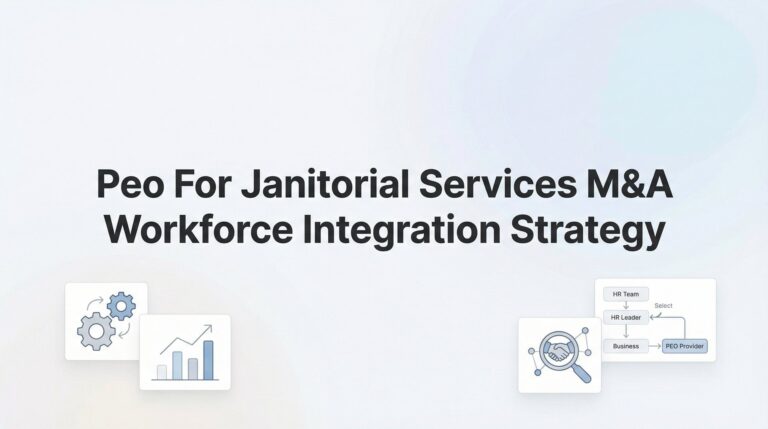
Acquiring a janitorial company brings immediate workforce challenges—scattered employees, language barriers, misclassification risks, and benefits confusion that can destroy deal value. A specialized PEO for janitorial services M&A workforce integration strategy provides the compliance infrastructure, bilingual HR support, and benefits continuity needed to consolidate 47+ employees across multiple sites without derailing operations or losing projected synergies in the critical first 90 days.
Janitorial companies face severe litigation risks from wage misclassification, workplace injuries, harassment claims, and I-9 compliance gaps across dispersed worksites. This guide shows how to strategically structure a PEO for janitorial services litigation risk mitigation framework that addresses your industry’s specific legal exposures—from high turnover and overnight shifts to scattered workforce management—creating a systematic defense against the compliance blind spots that plaintiffs’ …
Managing multi-state warehouse operations creates compounding compliance challenges across OSHA requirements, workers’ comp claims, and state-specific employment laws that standard HR systems can’t handle. A PEO for warehousing enterprise compliance risk management consolidates regulatory obligations, standardizes safety protocols across facilities, and provides specialized expertise to reduce exposure while your internal team focuses on operations.
Acquiring a warehousing operation creates complex HR challenges including multi-state compliance, workers’ comp transfers, and benefits harmonization across different facility locations—all within tight integration timelines. This guide provides a practical PEO for warehousing M&A workforce integration strategy, detailing when to deploy a Professional Employer Organization as an integration bridge, how to manage the critical workers’ comp transition, and the proper sequencing to retain key pe…
Warehousing operations face concentrated litigation risks from wage-and-hour violations, workers’ comp disputes, and OSHA citations that stem from shift complexity and operational inconsistencies. A PEO for warehousing litigation risk mitigation framework helps warehouse operators systematically address these exposures through co-employment structures that strengthen compliance systems, standardize HR processes across shifts, and clarify which risks transfer to the PEO versus those requiring …
Distribution companies juggling warehouse crews, drivers, and office staff often overpay for workers’ comp because traditional insurance treats all employees the same. This step-by-step guide shows how advanced workers’ comp structuring through a PEO for distribution companies lets you segment your workforce by actual risk levels, negotiate proper class code assignments, and build a compensation structure that matches your operation’s true exposure—potentially saving thousands while ensuring …
Distribution companies face complex compliance challenges across OSHA warehouse safety, FMCSA driver regulations, workers’ comp classifications, and multi-state employment laws—where a single violation can exceed annual PEO costs. This guide examines how a PEO for distribution companies enterprise compliance risk management can reduce administrative burden and mitigate certain HR-related risks, while clarifying which operational compliance issues remain your responsibility and how to evaluate…
Distribution companies face exponential payroll complexity when drivers cross state lines and facilities span multiple jurisdictions, juggling withholding rules, reciprocal agreements, and unemployment registrations across dozens of states. A PEO for distribution companies’ multi-state payroll governance handles tax filings, wage law compliance, and regulatory tracking across your entire operational footprint, letting you focus on logistics instead of deciphering which state gets what withhol…