How PEOs work across industries like construction, healthcare, startups, and multi-state employers.
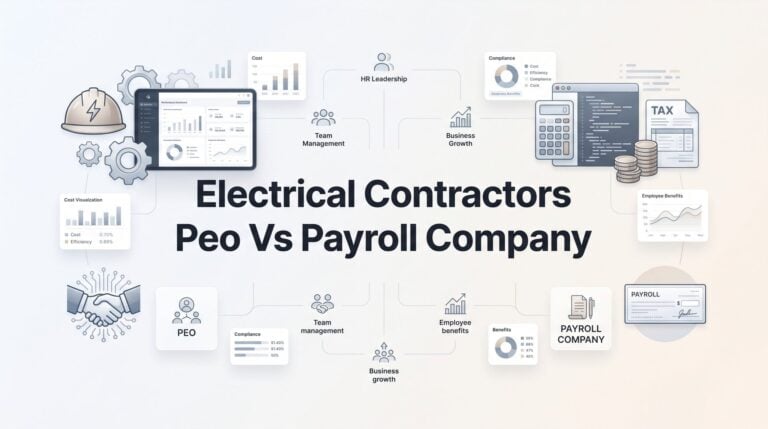
Electrical contractors face unique payroll challenges including multi-state compliance, prevailing wage requirements, and high-risk workers’ comp classifications that standard payroll companies can’t fully address. Understanding the difference between an Electrical Contractors PEO vs Payroll Company is critical—while payroll providers simply process checks, PEOs become co-employers who manage risk exposure, employment liability, and complex compliance issues specific to construction trades wo…
When your plumbing business reaches 50 employees, you face unique HR challenges including complex workers’ comp rates, multi-jurisdiction compliance, and diverse benefits needs across field and office staff. This guide reveals seven strategic approaches to selecting a plumbing PEO for 50 employees that addresses industry-specific factors like claims history management, technician scheduling integration, and the balance between field crew and administrative team requirements—helping you avoid …
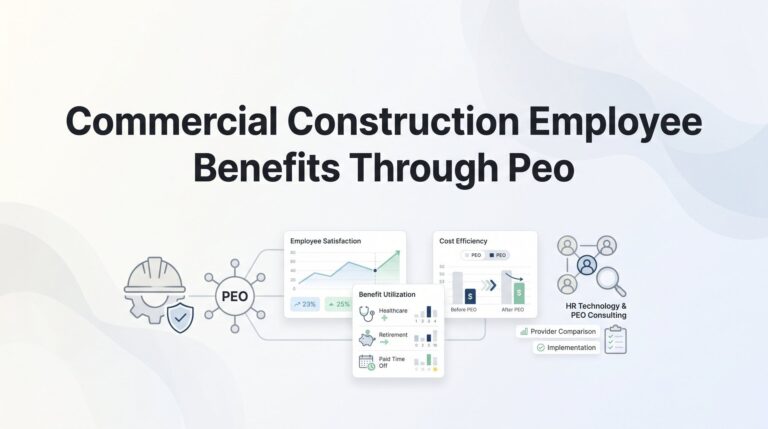
Commercial construction companies lose skilled workers to competitors offering immediate health coverage and struggle with fluctuating workers’ comp costs and multi-state payroll compliance. PEOs (Professional Employer Organizations) address these challenges by providing pooled insurance rates, streamlined benefits administration across state lines, and immediate coverage options that match the industry’s project-based, mobile workforce—helping contractors retain talent while managing the com…
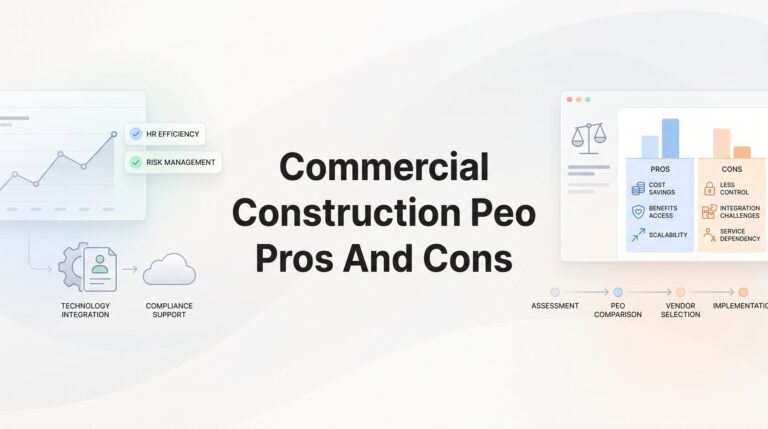
Commercial construction companies face complex HR challenges including fluctuating crews, high workers’ comp costs, multi-state compliance, and strict safety regulations. While PEOs promise to streamline payroll, benefits, and compliance through a single partnership, understanding the commercial construction PEO pros and cons is critical—these services can solve expensive problems for some contractors but may create unnecessary friction for others depending on trade classifications, safety re…
Residential construction payroll requires specialized handling that standard systems can’t provide—tracking labor across multiple job sites, managing fluctuating crew sizes, handling complex worker classification rules, and navigating certified payroll requirements for government projects. Construction-focused PEO payroll services address these unique challenges by combining payroll processing with workers’ comp management, compliance expertise, and job costing tools that residential builders…
Residential builders struggling to compete for skilled tradespeople can leverage PEO (Professional Employer Organization) partnerships to offer competitive employee benefits packages without the prohibitive costs typically faced by small-to-mid-size construction companies. By restructuring how benefits are accessed rather than purchased individually, PEOs enable residential contractors to attract and retain quality finish carpenters, framers, and other skilled workers who increasingly priorit…
Professional Employer Organizations offer residential construction companies relief from HR burdens like payroll, workers’ comp management, and OSHA compliance, which is particularly valuable given the industry’s high-risk classifications and seasonal workforce challenges. Understanding the residential construction PEO pros and cons helps builders determine whether outsourcing these functions will genuinely solve operational problems or simply add another layer of complexity and cost to their…
Roofing PEO payroll services bundle payroll processing, workers’ compensation, and compliance management for roofing contractors dealing with mobile crews, high-risk classifications, and multi-state job sites. While PEOs can streamline administrative chaos and potentially reduce workers’ comp costs, contractors need to understand the true cost structure and contract terms before committing, as not all PEOs are equipped to handle the unique complexities of roofing operations.
Painting contractors with 15 employees face escalating workers’ comp costs (20-30% of labor), complex OSHA compliance, and HR challenges too big for DIY management but too small for dedicated staff. This guide provides seven targeted PEO strategies specifically designed for painting contractors’ unique risk profiles, seasonal staffing patterns, and industry-specific compliance requirements like lead paint regulations and fall protection standards.
Painting contractors with 25 employees face unique challenges including high workers’ comp costs (15-20% of labor), OSHA compliance across multiple job sites, and classification issues—making a specialized PEO essential. This guide reveals seven selection strategies to help painting contractors choose a PEO that understands construction trades and addresses industry-specific needs like lead paint regulations and seasonal workforce fluctuations.
