Coverage of tax responsibility, workers’ comp, liability exposure, and regulatory obligations under co-employment.
Employers with experience modification rates above 1.0 face unique challenges when evaluating PEO partnerships, where workers’ compensation risk management becomes the primary concern rather than a secondary benefit. This guide helps high mod rate employers in construction, manufacturing, and other high-risk industries navigate PEO selection as a strategic enterprise compliance risk management tool, covering carrier acceptance, pricing transparency, and claims infrastructure that can meaningf…
Employers with experience modification rates above 1.2 face more than rising premiums — they face compounding litigation exposure from plaintiff attorneys, OSHA enforcement, and carrier audits that standard cost-reduction strategies don’t address. This PEO for high mod rate employers litigation risk mitigation framework explains how a professional employer organization can interrupt that cycle by targeting the operational and legal vulnerabilities driving claims, not just the premium math.
Multi-state employers using PEOs often face hidden workers’ comp cost overruns caused by class code mismatches, pool-blended experience mods, and payroll attribution errors across different state rating systems. This guide covers seven advanced strategies for peo for multi state employers advanced workers comp structuring, helping business owners identify coverage gaps, optimize experience modifications, and prevent unnecessary premium inflation at renewal.
PEO for multi-state employers offers a structured approach to enterprise compliance risk management by centralizing payroll, tax withholding, leave mandates, and workers’ comp classifications across jurisdictions. This guide examines where real multi-state compliance exposure lives, what a PEO actually handles versus what remains the employer’s responsibility, and what enterprise-scale organizations must evaluate before partnering with a PEO to manage cross-state employment law complexity.
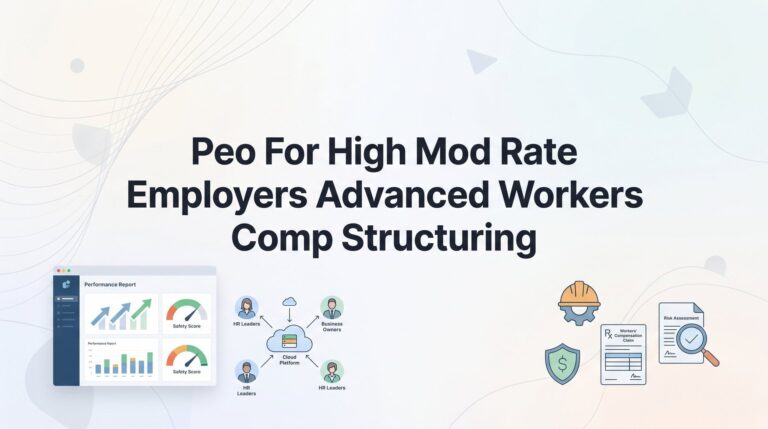
Employers with experience modification rates above 1.0 face limited carrier options and inflated premiums, but strategic PEO arrangements offer access to loss-sensitive programs, advanced claims management, and safety infrastructure that can meaningfully reduce costs. This guide covers seven advanced workers’ comp structuring strategies specifically for high mod rate employers evaluating PEOs, including how different coverage models interact with your mod and where hidden savings and common p…
Remote-first companies managing employees across multiple states face compounding employment law complexity that creates serious litigation exposure. A PEO for remote workforce companies litigation risk mitigation framework provides the operational infrastructure to navigate multi-state compliance requirements—covering overtime rules, termination protocols, workers’ comp, and leave mandates—reducing legal vulnerability without eliminating the need for sound HR practices.
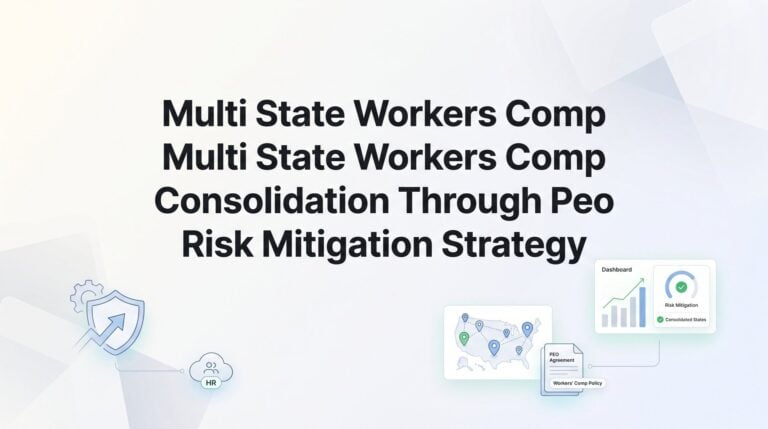
Multi-state workers’ comp consolidation through a PEO risk mitigation strategy can dramatically reduce administrative burden, lower experience modification rates, and unlock better master policy pricing — but only when executed correctly. This playbook walks business owners through the key considerations for evaluating PEO partnerships, avoiding common pitfalls like hidden premium markups and coverage gaps, and building a sustainable compliance framework across multiple state jurisdictions.
Gig economy platforms face escalating worker misclassification risks from state enforcement actions and class action lawsuits, making a structured litigation risk mitigation framework essential. A PEO for gig economy platforms litigation risk mitigation framework offers a strategic approach to managing classification exposure across multi-state operations, even for platforms that rely heavily on 1099 contractors rather than traditional W-2 employees.
Transitioning your workforce to a PEO requires careful workers comp class code restructuring under a PEO compliance framework, as existing codes get re-evaluated against the PEO’s master policy and carrier underwriting rules. This guide covers how to audit, restructure, and validate your classifications before and during the transition to avoid misclassification penalties, inflated premiums, and coverage gaps under co-employment.
Understanding when a PEO makes compliance worse is critical for businesses that assume co-employment automatically reduces regulatory risk. This article examines the specific failure modes—from misaligned accountability to false confidence—that can lead to audit letters, tax liens, and employment lawsuits, helping you identify and protect against the compliance gaps that PEO sales pitches never mention.
