Coverage of tax responsibility, workers’ comp, liability exposure, and regulatory obligations under co-employment.
Logistics companies face uniquely complex employment litigation exposure—from FMCSA violations to multi-state wage disputes and contractor misclassification—that demands a structured approach. This guide explains how to build a PEO for logistics litigation risk mitigation framework that goes beyond passive compliance, detailing what a PEO can realistically cover, where critical gaps remain, and how to use the relationship deliberately to reduce compounding legal exposure across your opera…
Large manufacturing enterprises face an increasingly complex web of OSHA, EPA, DOL, and multi-state compliance obligations that grow more difficult to manage with every new facility or workforce expansion. This article examines how PEO for manufacturing enterprise compliance risk management differs from in-house teams or HR consultants, specifically addressing what changes—and what improves—when compliance infrastructure scales through a co-employment model.
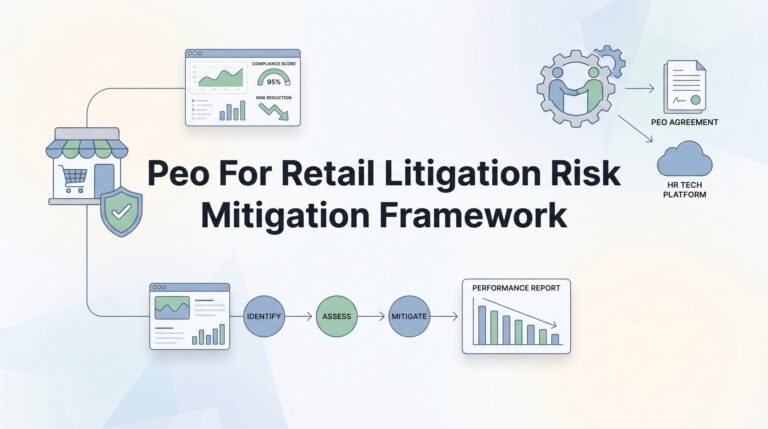
Retail businesses face compounding legal exposure from high turnover, inconsistent documentation, and complex scheduling laws, making a structured peo for retail litigation risk mitigation framework essential. Unlike standard PEO arrangements focused on payroll and benefits, the right co-employment partnership actively reduces lawsuit vulnerability through retail-specific compliance systems, termination protocols, and workforce documentation practices that protect operators before disputes es…
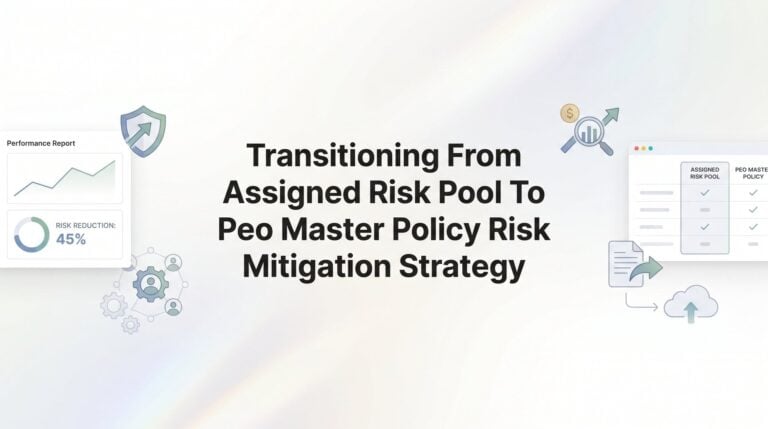
Businesses trapped in an assigned risk pool can escape punitive premiums by transitioning from assigned risk pool to PEO master policy risk mitigation strategy, which involves joining a pooled workers’ comp program that improves rates and restores coverage options. This step-by-step guide covers how to qualify, what PEOs evaluate during underwriting, and how to strategically position your claims history to gain acceptance into a master policy program.
Healthcare businesses face compounding litigation risks—from wage-and-hour claims to HIPAA-adjacent employment conflicts—that most small-to-midsize practices lack the infrastructure to manage. A well-structured PEO for healthcare litigation risk mitigation framework can meaningfully reduce exposure, but only when the PEO brings healthcare-specific compliance depth rather than generic HR templates that may introduce new vulnerabilities.
Professional services firms using PEOs often overpay for workers’ comp due to misclassified job codes, inflated experience modification rates, and poorly structured master policies that don’t reflect their low-risk workforce. A deliberate PEO workers’ comp strategy for professional services firms helps law practices, accounting firms, IT consultancies, and similar businesses audit their current setup, correct classification errors, and negotiate coverage that accurately matches their actual r…
A PEO workforce governance playbook helps business owners clearly define responsibilities, maintain control over employee data, and eliminate compliance blind spots that can create costly legal exposure in co-employment arrangements. This guide covers seven practical strategies to establish transparent oversight, protect your authority within the PEO relationship, and ensure your HR partnership works in your favor rather than against it.
Building a PEO workforce governance documentation framework helps businesses clearly define ownership, responsibilities, and accountability within co-employment relationships, preventing costly ambiguity during audits, employee disputes, and provider transitions. This guide outlines seven practical strategies for creating living documentation—covering policies, process maps, and accountability records—that protects your organization when compliance issues arise and ensures smoother PEO relati…

A PEO payroll tax risk cost model helps businesses move beyond headline pricing to quantify their true tax exposure under a PEO arrangement. This practical framework covers missed deposits, worker misclassification, and multi-state unemployment tax variables—giving employers a risk-adjusted way to evaluate PEO proposals before signing and avoid costly surprises during audits or contract disputes.

Managing benefit fiduciary liability under a PEO model requires a proactive risk mitigation strategy, as partnering with a PEO shifts—but never fully eliminates—your ERISA responsibilities. This guide breaks down exactly which fiduciary duties transfer, which remain yours, and the practical steps business owners should take to protect themselves through proper documentation, contract review, and ongoing oversight.
