Coverage of tax responsibility, workers’ comp, liability exposure, and regulatory obligations under co-employment.
A high experience modification rate above 1.0 doesn’t have to mean permanent premium penalties — the right PEO high mod rate stabilization strategy and risk mitigation strategy can accelerate your path back to competitive workers’ comp pricing. This tactical playbook walks business owners through how to structure a PEO partnership to actively reduce claims exposure, audit current loss drivers, and leverage PEO resources to rebuild a claims history that works in your favor.
A PEO contract risk audit guide helps business owners systematically identify hidden dangers in their PEO agreements — from auto-renewal traps and liability shifts to buried pricing escalations. This step-by-step walkthrough shows HR leaders and business owners how to review every layer of their PEO contract, including master service agreements, benefit schedules, and amendments, before costly problems arise.
A PEO integration governance audit checklist is an essential ongoing operational discipline that helps businesses systematically verify their PEO is delivering on compliance, payroll, and benefits obligations—preventing costly failures like missed tax filings or benefits enrollment errors. This guide outlines seven practical strategies to build structured governance around your PEO relationship and proactively protect your business from silently accumulating risk.
Federal contractors using a PEO for federal contractors advanced workers comp structuring must navigate DCAA audit requirements, SCA/Davis-Bacon wage determinations, and contract-type cost flows that standard PEO pooling arrangements can undermine. This guide provides a detailed framework for structuring workers’ comp through a PEO in ways that withstand indirect cost scrutiny, preserve your experience modification rate integrity, and align with cost-plus versus fixed-price contract accountin…
Effective PEO coordination with outside counsel is critical when employment disputes arise, as misaligned legal teams can create conflicting positions and costly defense gaps. This guide outlines seven practical strategies for business owners to manage the co-employment relationship between their PEO’s internal legal team and outside attorneys, ensuring both parties work together efficiently when wrongful termination claims, wage disputes, or regulatory investigations emerge.
Government contractors managing split workforce risk profiles can leverage PEO for government contractors advanced workers comp structuring to access better rates through master policies while protecting their experience modification rate. This guide covers how to align class codes with contract requirements, navigate co-employment EMR reporting, and avoid compliance pitfalls under the Defense Base Act and Service Contract Act.
A PEO HR risk financial exposure model helps business owners quantify the true dollar cost of HR liabilities—wrongful termination claims, worker misclassification, and benefits errors—before comparing those risks against PEO service fees. By modeling existing HR exposure first, companies can evaluate PEO partnerships as a genuine financial decision rather than an intuitive cost comparison.
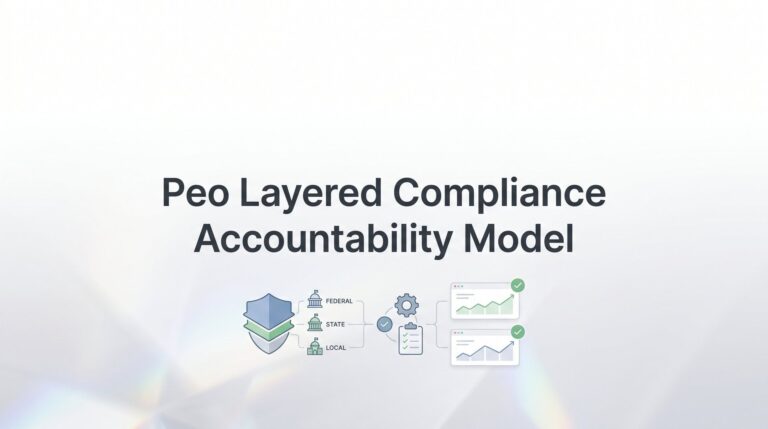
The PEO layered compliance accountability model defines exactly which compliance obligations belong to your PEO, which remain with you as the worksite employer, and how to manage the gray zones where shared responsibility creates dangerous gaps — helping businesses avoid costly surprises when regulators come calling.
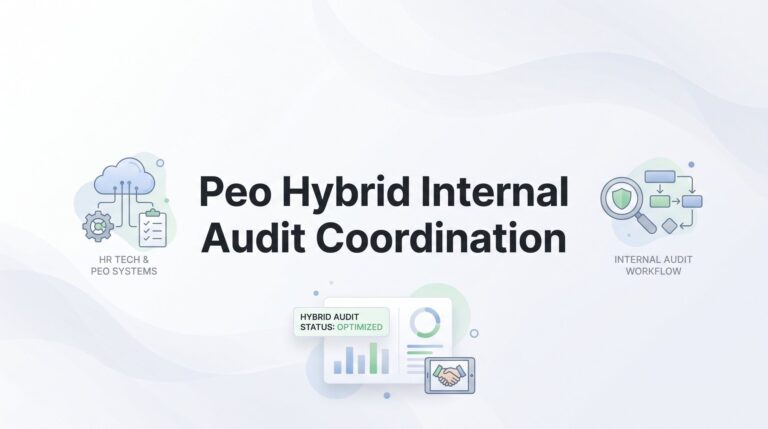
PEO hybrid internal audit coordination becomes complex when two entities share HR and payroll responsibilities without clearly defined ownership boundaries. This guide helps companies map control responsibilities between their internal team and PEO before audit season, preventing reconciliation gaps and compliance blind spots in co-employment arrangements.
PEO hybrid policy enforcement governance defines who owns HR decisions when your business shares employer responsibilities with a co-employment partner — and most companies don’t discover the gaps until a termination, handbook conflict, or state compliance issue forces the question. This guide breaks down how to map policy ownership, prevent enforcement gaps, and establish clear governance structures before ambiguity creates legal or operational risk.
