Coverage of tax responsibility, workers’ comp, liability exposure, and regulatory obligations under co-employment.
Biotech companies with diverse workforces—from lab researchers to computational scientists—often overpay for workers’ comp when PEOs lump all employees into high-risk categories. This guide explains how to structure PEO workers’ comp for biotech teams by properly segmenting your workforce, negotiating experience modification rates, and avoiding classification errors that inflate premiums while ensuring comprehensive coverage for your actual risk profile.
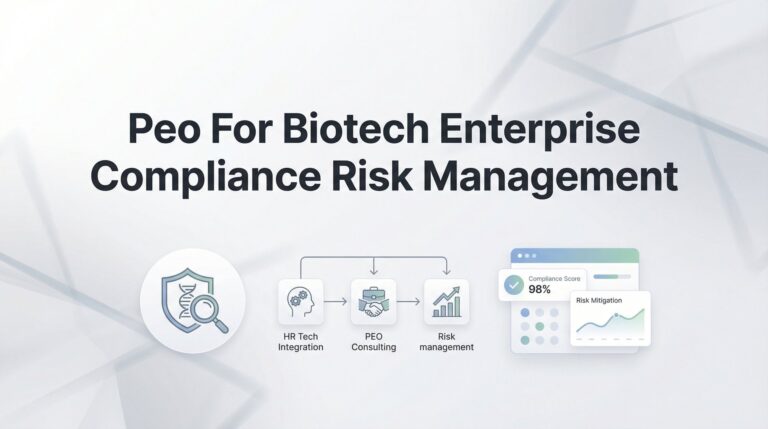
Biotech enterprises face complex compliance challenges across FDA, OSHA, EPA, and multi-state employment regulations. A PEO for biotech enterprise compliance risk management offers shared HR responsibility and professional compliance infrastructure, but the critical question is whether co-employment genuinely reduces regulatory exposure or adds complexity to your existing framework. Understanding what actually works requires looking beyond theory to practical implementation for organizations …
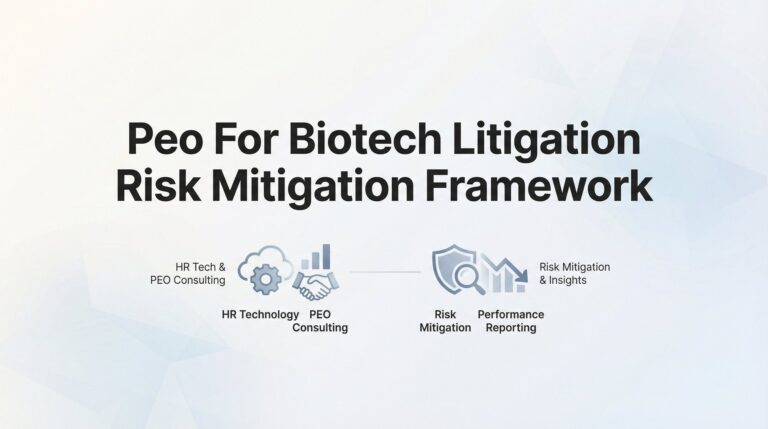
Biotech companies face unique employment litigation risks from IP theft, regulatory whistleblowers, and volatile headcount changes that standard HR can’t address. A properly implemented PEO for biotech litigation risk mitigation framework creates a structured buffer against employment claims by managing contractor relationships, termination protocols, and compliance requirements—but only when tailored to biotech’s specific legal exposures rather than generic payroll processing.
Pharmaceutical enterprises face unique HR compliance challenges spanning FDA validation, DEA protocols, and multi-state employment law that compound with growth. While many executives assume their companies are too specialized for a PEO for pharmaceutical enterprise compliance risk management, the strategic question is whether co-employment can actually reduce regulatory exposure in this heavily regulated industry or create additional liability.
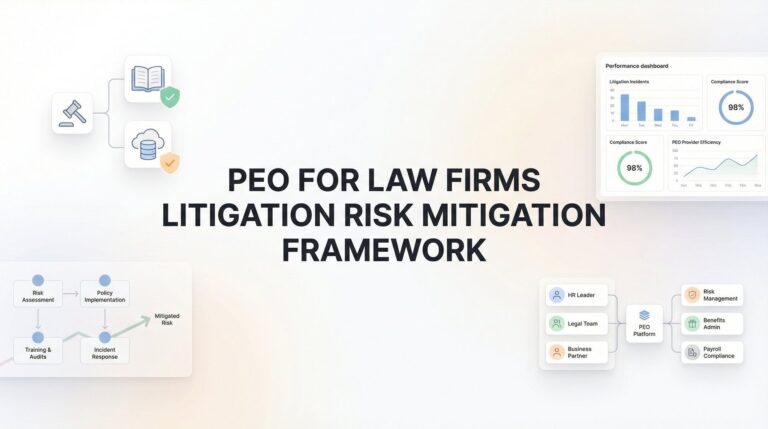
Law firms expertly manage legal risk for clients but often handle their own employment practices informally, leaving them vulnerable to discrimination claims and wage disputes that damage their reputation. A PEO for law firms litigation risk mitigation framework provides the systematic employment compliance infrastructure that protects firms from becoming defendants in the same types of cases they litigate for others, transforming ad-hoc HR practices into defensible, documented processes.
Accounting firms face unique employment litigation risks from handling confidential data, regulatory deadlines, and multi-jurisdictional staff management. This guide demonstrates how to build a PEO for accounting firms litigation risk mitigation framework by identifying specific exposure points, selecting compliance-focused PEO partners, and implementing documentation protocols that create defensible records and reduce legal vulnerability.
Managing multi-location dental practices means juggling OSHA bloodborne pathogen standards, state dental board regulations, HIPAA compliance, and DEA reporting requirements across multiple sites—a complexity that grows exponentially with scale. A PEO for dental practices enterprise compliance risk management centralizes these overlapping regulatory obligations, automating license tracking, standardizing safety protocols, and ensuring consistent compliance across all locations while reducing l…
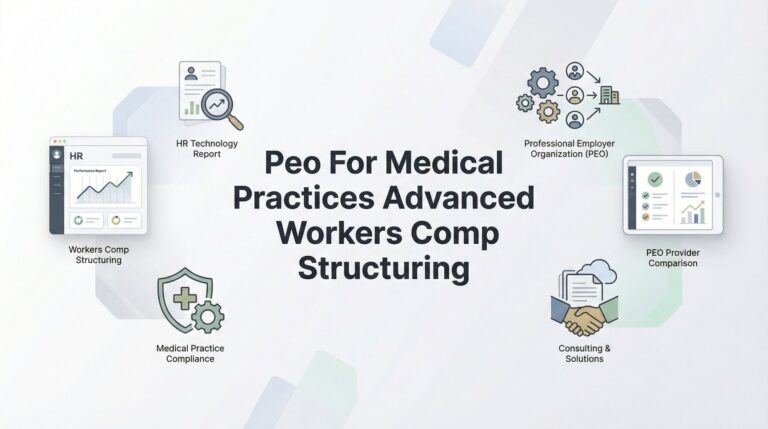
Medical practices using PEOs often overpay for workers’ comp or face coverage gaps because standard arrangements fail to account for the vastly different risk profiles between administrative staff and clinical workers handling needles, patients, and healthcare exposures. This advanced guide demonstrates how to properly structure PEO workers’ comp for medical practices through strategic classification, coverage carve-outs, and experience modification strategies that prevent overpayment while e…
High-risk businesses in construction, roofing, trucking, and manufacturing face workers’ comp rates of $5-$30 per $100 payroll, but most PEOs either reject them or charge premium rates that barely help. A strategic PEO high risk industry workers comp strategy requires understanding how to structure the relationship correctly from day one, ensuring you retain claims experience improvements and avoid being locked into unfavorable terms that prevent you from capitalizing on your safety investments.
PEO compliance representation clauses define who takes legal responsibility when regulators come knocking—not just who handles routine paperwork. Most business owners discover too late that these buried contract provisions often leave them holding liability for audits, wage claims, and agency inquiries, despite paying the PEO to “handle compliance.” Understanding what these clauses actually mean before you sign can prevent costly surprises when the Department of Labor or other agencies send t…
