Coverage of tax responsibility, workers’ comp, liability exposure, and regulatory obligations under co-employment.
Home services businesses face constant litigation exposure from workplace injuries, vehicle accidents, and wage claims that office-based companies never encounter. This practical framework explains how a PEO for home services litigation risk mitigation actually works in real-world scenarios—covering what PEOs genuinely protect against versus what they don’t—so you can build a comprehensive risk management strategy that goes beyond sales promises and protects your business when incidents inevi…
Home services enterprises with 100+ employees across multiple trades face complex compliance challenges including varying workers’ comp classifications, multi-state licensing, OSHA field crew regulations, and wage-and-hour rules. This guide evaluates the best PEOs for home services enterprise compliance risk management in 2026, focusing on providers with proven workers’ comp expertise for high-risk trades, multi-state compliance capabilities, field workforce management tools, and transparent …
PEO master policy liability transfer isn’t the clean risk handoff most business owners expect—it’s a negotiated split where some liabilities genuinely move to the PEO’s ledger while others remain with you, regardless of what the sales pitch suggested. Understanding exactly which risks transfer, under what conditions, and at what embedded cost is critical before signing, or you may pay premiums for protection that won’t materialize when claims actually arise.
When acquiring a company that uses a Professional Employer Organization (PEO), standard M&A due diligence often overlooks critical workforce liabilities hidden within co-employment arrangements. This step-by-step guide helps acquirers conduct a thorough PEO workforce liability review during M&A to identify risks like undisclosed workers’ comp claims, misaligned benefit obligations, and unclear compliance responsibilities before closing the deal.
While PEOs handle administrative HR tasks, understanding PEO client liability limitations is critical before assuming you’re fully protected. Co-employment arrangements don’t transfer most legal responsibilities—you remain liable for employment lawsuits, discrimination claims, workplace safety violations, and hiring decisions even with a PEO partnership. Knowing exactly where PEO protection ends helps business owners implement proper risk management strategies beyond their service agreement.
Understanding the PEO employment practices liability structure is critical because co-employment creates a split in coverage that often leaves business owners exposed. While PEOs typically include EPLI in their service agreements, the coverage rarely works like standalone policies—and many owners only discover gaps when facing discrimination or wrongful termination claims that fall outside the protection they assumed they had.
While most businesses focus solely on initial workers comp premium quotes when selecting a PEO, the real cost determinant is what happens after signing. This guide examines seven specific PEO workers comp loss control programs that actively prevent injuries, manage claims effectively, and improve experience modifiers—distinguishing PEOs that genuinely reduce risk costs from those that merely process paperwork while your claims history and premiums steadily increase.
Most PEO contracts contain limitation of liability clauses that cap the provider’s financial responsibility when errors occur—often at just 12 months of fees paid. A thorough PEO limitation of liability clause review reveals how these provisions shift regulatory and compliance risks back to business owners, potentially leaving them responsible for penalties, interest, and damages that far exceed the contract’s liability cap, even when the PEO is at fault.
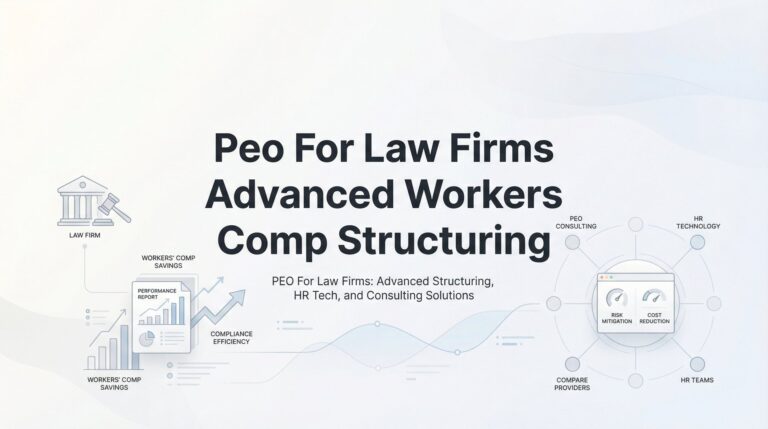
Law firms often overpay for workers’ compensation because standard class codes don’t distinguish between low-risk attorneys and higher-risk roles like process servers or file clerks. This guide reveals advanced strategies for working with a PEO for law firms to restructure workers’ comp coverage based on actual risk profiles, potentially reducing premiums significantly while ensuring appropriate protection for different employee categories within your practice.

Pharmaceutical companies face uniquely complex litigation risks when terminating employees who handle controlled substances, clinical trial data, and FDA-regulated processes. A PEO for pharmaceutical litigation risk mitigation framework addresses the intersection of employment law, regulatory compliance (FDA, DEA), and whistleblower protections, transforming routine separations into strategically managed events that protect against False Claims Act retaliation and proprietary information expo…
