Coverage of tax responsibility, workers’ comp, liability exposure, and regulatory obligations under co-employment.
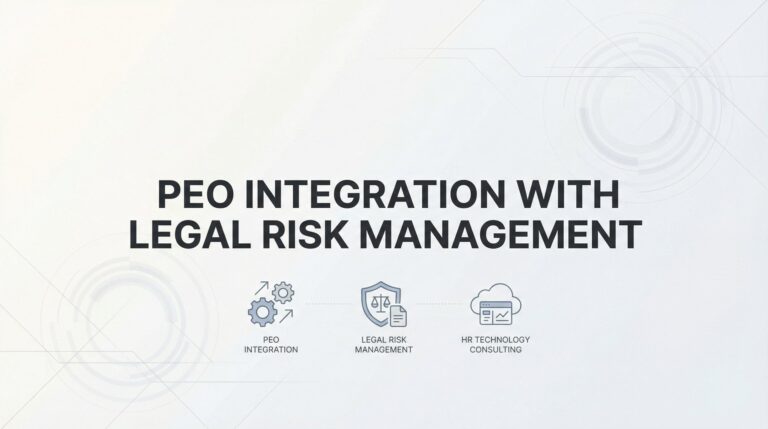
A PEO partnership can reduce employment liability, but only when deliberately aligned with your company’s legal risk landscape. This practical guide provides a step-by-step framework for integrating PEO services with legal risk management—covering exposure audits, accountability boundaries, and monitoring systems to prevent costly gaps in your co-employment arrangement.
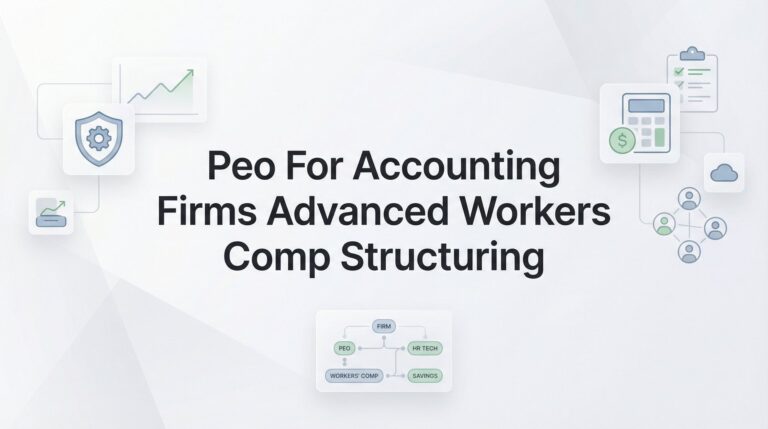
Accounting firms often overpay for workers compensation insurance due to broad industry classifications that don’t reflect their actual low-risk profile. A PEO for accounting firms with advanced workers comp structuring can unlock significant savings, but only if you move beyond default arrangements to actively architect coverage that matches your firm’s specific risk exposure and claims patterns.
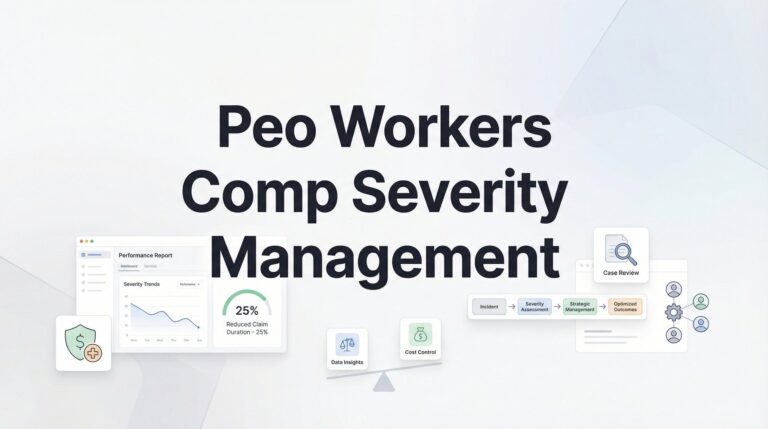
Most businesses focus on workers’ comp claim frequency, but severity—how much each claim costs—is what actually drives premium increases. A single severe injury can impact your experience modification rate more than multiple minor claims combined. This guide reveals seven PEO workers’ comp severity management strategies that leverage pooled resources, return-to-work programs, and dedicated claims teams to actively reduce claim costs and protect your mod, rather than simply processing pape…
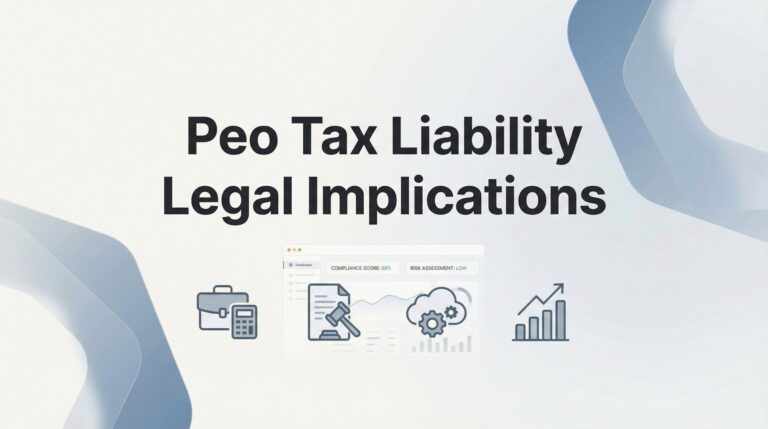
Many business owners assume signing with a PEO eliminates their payroll tax liability, but that’s dangerously incorrect. Understanding PEO tax liability legal implications is critical because even when a PEO handles payroll, business owners can still face IRS collections, penalties, and personal liability if taxes aren’t properly remitted. This guide explains where liability actually sits, what legal protections exist beyond marketing promises, and how to protect yourself from unexpected tax …
A PEO workforce legal exposure review helps business owners identify exactly which employment liabilities their PEO covers and which remain their responsibility in the co-employment relationship. These seven essential strategies guide you through mapping liability splits, reviewing contracts, and conducting thorough audits to protect your business from compliance gaps—whether you’re evaluating a new PEO partnership or assessing your current arrangement before legal issues arise.
PEO renewal clause legal implications can lock business owners into unfavorable contracts with automatic renewals, rate increases, and strict cancellation windows they didn’t fully understand when signing. These legally binding provisions determine exit timing, costs, and penalties—making it critical to scrutinize renewal terms before signing, not just initial pricing and services, to avoid being trapped in agreements that no longer serve your business needs.
HVAC companies face constant litigation exposure from workplace injuries, wage disputes, and wrongful termination claims that can cost hundreds of thousands per incident. A PEO for HVAC companies litigation risk mitigation framework goes beyond basic payroll processing to create systematic protection against the specific legal vulnerabilities inherent in field service operations—from technician safety protocols to overtime compliance and employment documentation that holds up in court.
Multi-state warehouse operations face unique payroll governance challenges that standard PEO services often overlook—from workers crossing state borders mid-shift to jurisdiction-specific overtime calculations that cascade through multiple tax systems. Understanding how a PEO for warehousing multi-state payroll governance handles these operational realities, including shift differentials, high turnover onboarding, and retroactive corrections across state lines, determines whether you’re buyin…
Roofing contractors face unique litigation exposure when workplace incidents trigger cascading legal problems—from OSHA scrutiny and wage violations to subcontractor misclassification issues. A PEO for roofing companies litigation risk mitigation framework addresses these industry-specific pressure points by implementing structured safety documentation, compliance protocols, and HR systems that prevent minor claims from escalating into six-figure settlements.
Enterprise landscaping companies face critical compliance challenges that intensify beyond 50 employees, from multi-jurisdiction pesticide regulations to seasonal hiring surges and OSHA requirements. A PEO for landscaping companies enterprise compliance risk management addresses whether outsourcing actually reduces risk exposure or simply adds costs, particularly when violations like missed license renewals or I-9 audit failures can shut down entire service lines during peak season.
