Coverage of tax responsibility, workers’ comp, liability exposure, and regulatory obligations under co-employment.
Understanding the PEO FMLA liability structure is critical because FMLA violations can cost $10,000+ per case, yet most business owners don’t know who’s actually liable under their co-employment arrangement. Unlike workers’ comp, FMLA operates under a “joint employer” framework where both you and your PEO can be exposed—and your specific Client Service Agreement language determines whether you’re protected or carrying hidden risk when an employee files a complaint.
When a DOL investigation hits your business, the co-employment relationship with your PEO creates real ambiguity about who handles the response and bears legal responsibility. While PEOs market compliance protection, understanding PEO DOL investigation responsibility before federal investigators request records is critical—because the division of duties between you and your PEO during wage violations or workplace safety inquiries is rarely as clear-cut as their sales materials suggest.
M&A transactions involving companies using Professional Employer Organizations face unique HR challenges including inherited liabilities, compliance gaps, and complex co-employment relationships that can derail deal value. This guide provides seven actionable PEO HR risk mitigation in M&A strategies to help buyers, sellers, and merged entities navigate due diligence complexities, protect against hidden liabilities, and leverage PEO relationships as strategic advantages during workforce integr…
When employees file wage claims against PEO clients, the question of PEO wage claim defense responsibility often catches business owners off guard. While PEOs handle payroll and HR compliance, co-employment arrangements create complex liability splits where both parties may share legal exposure depending on contract terms, the nature of the claim, and which party maintained operational control over the disputed employment practices.
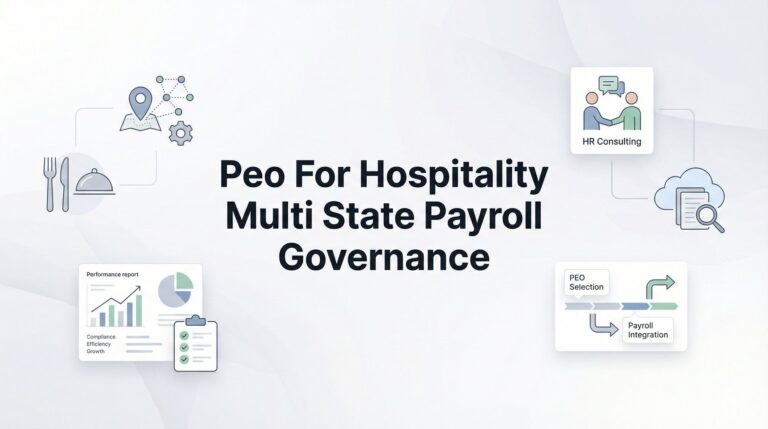
Managing hospitality payroll across multiple states means navigating drastically different compliance rules for the same roles—from tip credits and overtime calculations to meal break requirements. A PEO for hospitality multi-state payroll governance provides the systems, controls, and documentation needed to process payroll correctly in every jurisdiction, reducing compliance risk as you expand from one location to multiple states with conflicting labor laws.
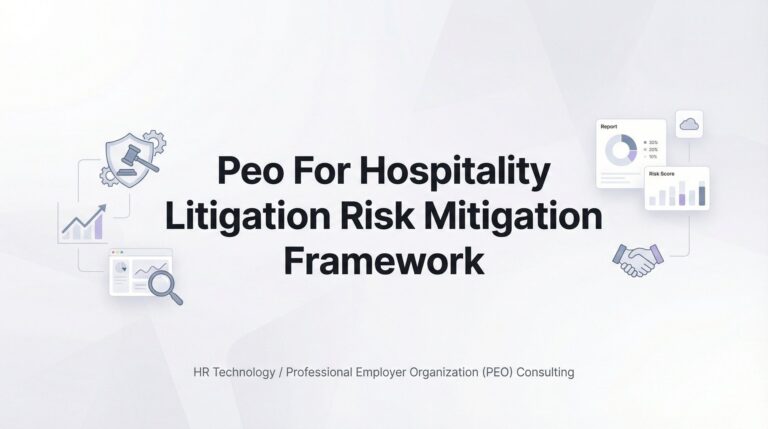
Hospitality businesses face constant employment litigation from wage disputes, harassment claims, and workplace injuries due to high turnover and complex labor conditions. A properly structured PEO for hospitality litigation risk mitigation framework provides the compliance infrastructure, documentation systems, and HR expertise needed to prevent claims and defend your operation cost-effectively when disputes arise.
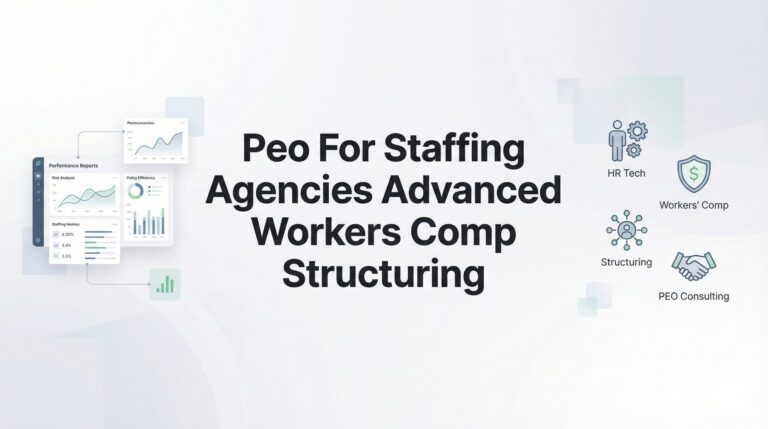
Staffing agencies face unique workers’ comp challenges when employees work at uncontrolled client sites across varying job classifications, and standard PEO arrangements often worsen costs by improper risk pooling. This guide reveals the specific, negotiable structuring strategies that separate staffing agencies with competitive workers’ comp rates from those losing money—focusing on advanced PEO mechanics for staffing agencies beyond basic arrangements to prevent experience mods and costs fr…
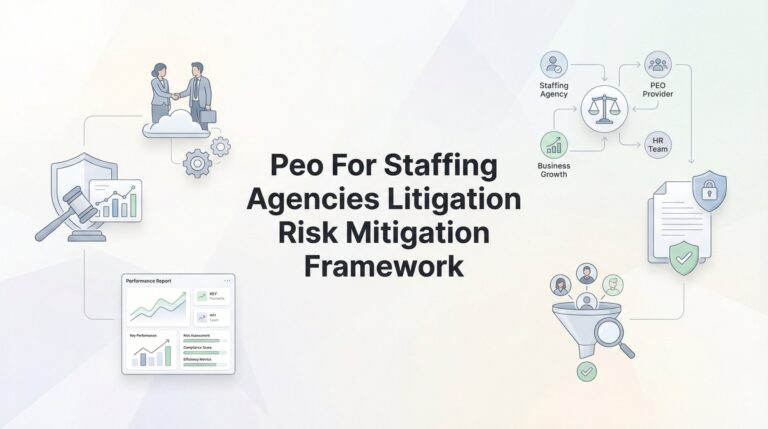
Staffing agencies face unique litigation exposure from the triangular employment relationship where they’re the employer of record but don’t control work environments or supervise placed workers. A properly structured PEO for staffing agencies litigation risk mitigation framework addresses liability gaps by clarifying responsibility for workplace injuries, harassment claims, and wage-hour compliance across multiple client sites, transforming the PEO partnership into a comprehensive legal prot…
Managing compliance across multiple education campuses involves juggling state-specific regulations, Title IX requirements, FERPA training, and standard HR obligations. A PEO for education enterprise compliance risk management can reduce your burden by handling employment law fundamentals through co-employment, but education-specific regulations like Title IX and FERPA typically remain your responsibility. Understanding this division of responsibilities is critical before partnering with a PE…
Education organizations overpay on workers comp when diverse roles—from custodians to counselors—get lumped into generic class codes. This guide explains how to partner with a PEO for education advanced workers comp structuring by separating risk pools, negotiating accurate class codes, and building a framework that matches your actual workforce exposure, helping schools and education nonprofits pay premiums that reflect real risk instead of subsidizing coverage they don’t need.
