Coverage of tax responsibility, workers’ comp, liability exposure, and regulatory obligations under co-employment.
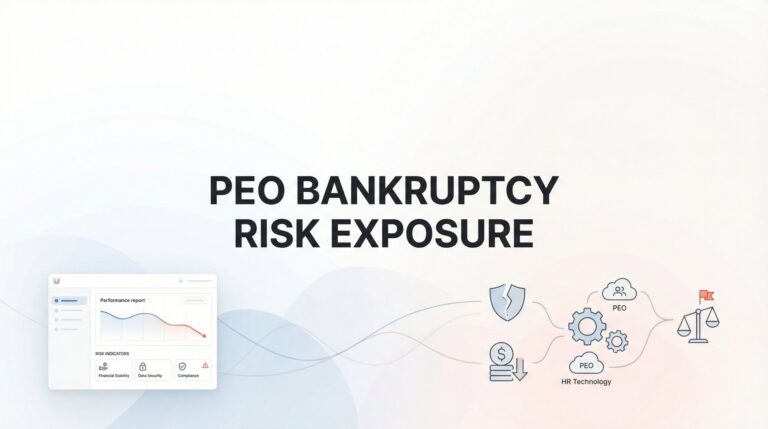
When you enter a co-employment relationship with a PEO, your business becomes directly dependent on that company’s financial stability for critical functions like payroll, benefits, and tax compliance. Understanding PEO bankruptcy risk exposure is essential because a PEO failure creates immediate operational crises—missed payroll, lapsed insurance coverage, and potential tax liability—that go far beyond losing a typical service provider. While PEO bankruptcy is uncommon, the structural nature…
When partnering with a PEO, understanding record retention legal requirements is critical because you share responsibility for compliance with federal agencies like the IRS, DOL, EEOC, and OSHA—each with different retention periods. This guide clarifies which PEO record retention legal requirements your provider handles versus what remains your responsibility, helping you avoid costly fines, failed audits, and legal vulnerabilities by building a compliant retention system that protects your b…
When a PEO compliance audit reveals violations, business owners often discover their service agreement doesn’t shield them from legal liability as expected. Co-employment arrangements don’t split compliance responsibility cleanly—regulators focus on who made decisions causing violations and who has resources to pay penalties, regardless of contractual language. Understanding your actual legal exposure in PEO compliance audit legal implications before problems surface is critical, as liability…
PEO employment documentation standards require clear frameworks to protect your business in co-employment relationships. This guide identifies seven critical documentation standards that define responsibilities between you and your PEO, addressing common gaps that create compliance exposure and potential liability. Learn which records you control versus what your PEO handles, and discover the specific documentation practices that transform your PEO arrangement from a potential risk into genui…
When partnering with a PEO, understanding data ownership clauses is critical for protecting sensitive employee information and ensuring compliance. This systematic framework guides business owners through seven essential steps to review PEO data ownership clauses, helping you identify who controls your data, what happens during transitions, and how to avoid compliance risks hidden in contract terms before signing or while managing existing agreements.
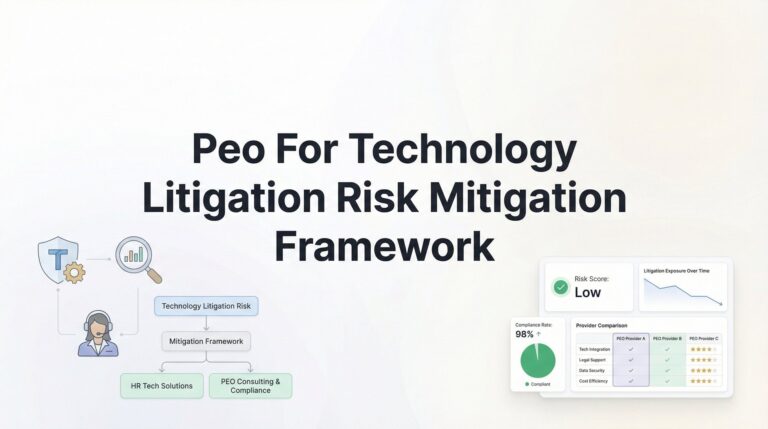
Technology companies face significant employment litigation risks, from IP theft claims to non-compete enforceability issues that can cost $80K+ to defend. This practical PEO for technology litigation risk mitigation framework helps tech companies distinguish between genuine risk reduction partnerships and basic payroll outsourcing, providing a structured approach to minimize employment-related legal exposure before investors start asking difficult questions.
Restaurant groups operating across multiple states face complex compliance challenges—from varying tip credit laws and predictive scheduling rules to jurisdiction-specific youth employment restrictions—that can result in costly DOL audits and settlements. A PEO for restaurants enterprise compliance risk management provides scalable, cost-effective solutions that deliver enterprise-grade HR infrastructure without requiring internal teams at every location, protecting multi-state operators from…
Retail operators often overpay on workers comp because standard PEO arrangements misclassify multi-function employees, handle seasonal hiring poorly, and use generic retail codes that ignore store-specific risk profiles. Advanced PEO for retail workers comp structuring addresses job function ambiguity, experience mod volatility, and format-specific exposures to materially reduce premiums beyond what basic PEO switching achieves.
Tech companies often overpay for workers’ compensation because insurers use broad classification codes that don’t reflect actual risk profiles. A PEO for technology advanced workers’ comp structuring can significantly reduce premiums, but only when you actively manage workforce classifications and premium allocations rather than accepting default arrangements. This guide explains the tactical steps to align your workers’ comp costs with your company’s actual operations and risk exposure.
When acquiring a company using a PEO for workers comp coverage, you’re not buying a traditional insurance policy—you’re inheriting a co-employment arrangement where the PEO holds the master policy, claims history is pooled, and the experience mod you need for underwriting may not exist in usable form. Understanding PEO workers comp policy integration in M&A requires early due diligence because unraveling these arrangements involves complex claims data extraction, potential coverage gaps durin…
