Coverage of tax responsibility, workers’ comp, liability exposure, and regulatory obligations under co-employment.
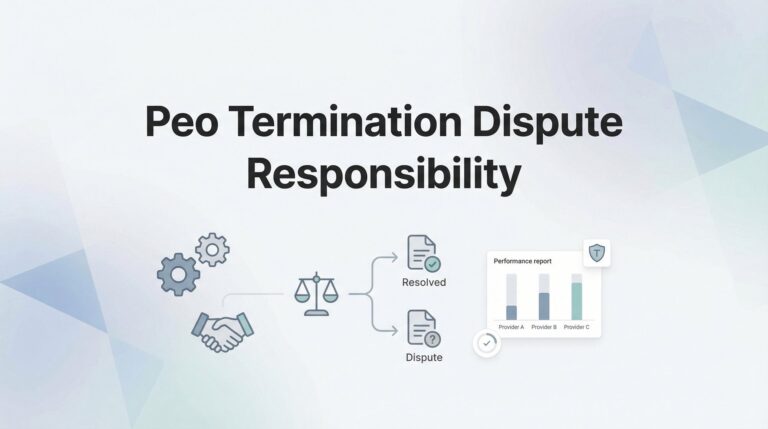
When a terminated employee sues, most business owners are shocked to find themselves liable despite using a PEO. Co-employment doesn’t automatically shield you from termination disputes—PEO termination dispute responsibility depends on who made the firing decision, whose advice was followed, and what your service agreement’s indemnification clauses actually say. Understanding this liability split before a lawsuit arrives can save you from expensive legal battles where “shared responsibility” …
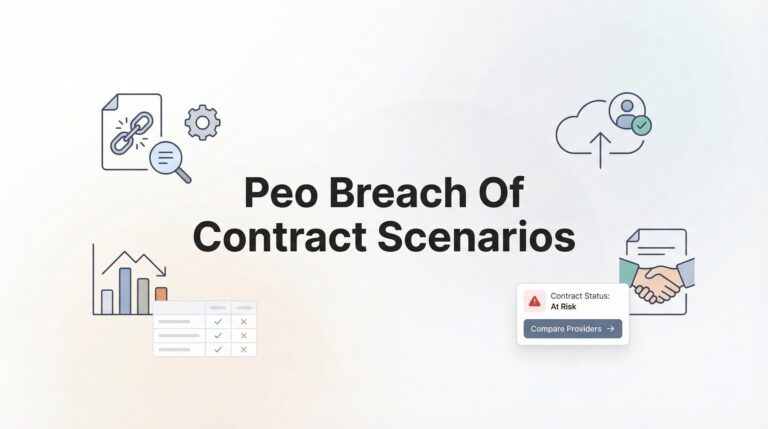
PEO breach of contract scenarios range from obvious payroll failures to subtle service disappearances, and understanding them before problems arise gives business owners critical leverage. This guide identifies the seven most common breach situations, clarifies what legally constitutes a breach versus poor service, and provides actionable steps to protect your business when your PEO fails to fulfill contractual obligations.
When you partner with a PEO, joint employment liability determines who’s legally responsible when employment claims arise—and most business owners don’t understand this until facing discrimination suits, wage disputes, or compliance issues. This guide explains how PEO joint employment liability actually works, clarifying which risks transfer to your PEO and which remain your responsibility, so you can avoid unexpected legal bills and make informed decisions before signing any agreement.
While PEOs handle payroll taxes, benefits, and compliance paperwork, businesses retain significant legal liability for workplace decisions including hiring, termination, safety, and harassment claims. This PEO client legal obligations checklist clarifies the critical distinction between administrative functions your PEO manages and the day-to-day operational decisions—and their legal consequences—that remain your responsibility under the co-employment model.
When an employee gets injured, the PEO workers comp claims advocacy model determines whether you get dedicated support or just paperwork. Some PEOs provide a specialist who coordinates medical care, manages carrier communication, and guides employees back to work, while others offer only a phone number and forms. This advocacy approach directly impacts claim outcomes, recovery times, and your future insurance costs—making it a critical factor when evaluating PEO partnerships beyond basic cove…

Your PEO workers’ comp loss ratio management directly determines your coverage costs, yet most business owners don’t realize it’s controllable. This step-by-step guide shows you how to reduce workplace injuries, handle claims efficiently, and improve your loss ratio through practical actions—whether you’re fixing a problematic ratio or maintaining a healthy one.
A PEO legal risk audit checklist reveals the hidden liability gaps in co-employment relationships that most business owners overlook. This comprehensive guide examines seven critical audit areas—from co-employment agreement language to documentation handoff points—that determine whether your PEO arrangement truly protects your company or quietly exposes you to legal risk you’re unaware of until litigation occurs.
Court rulings have established critical boundaries for PEO co-employment liability that directly affect business owners’ legal exposure. This analysis examines seven key PEO co employment court precedents that determine who bears responsibility when workplace disputes, injury claims, or employment lawsuits arise—revealing which contractual protections actually hold up in court and which clauses fail when you need them most.

Business owners partnering with a PEO often assume they’ve transferred worker misclassification liability, but in most co-employment arrangements, the legal and financial risk remains with the employer. If the IRS or Department of Labor determines workers were improperly classified as independent contractors instead of W-2 employees, business owners face substantial penalties including back taxes, unpaid overtime claims, and benefit reimbursements—even though the PEO handles payroll processin…
PEO regulatory enforcement risks often blindside businesses because the co-employment model creates shared liability that hits from unexpected directions. While PEOs handle HR administration, enforcement actions from agencies like the DOL, EEOC, and OSHA frequently target both the PEO and client company, creating joint liability for wage violations, discrimination claims, worker classification issues, and safety compliance—even when businesses assume their PEO partnership shields them from re…
