Breakdowns of PEO pricing models, fee structures, hidden costs, and long-term financial impact. Includes comparisons between percentage-of-payroll and per-employee pricing models.
Hidden profit margins in PEO contracts often go unnoticed because they’re structurally embedded in pricing models rather than clearly disclosed during sales negotiations. This guide breaks down the specific mechanisms PEO providers use to build margin into client relationships—from insurance markups to administrative fee structures—so business owners can negotiate contracts with full knowledge of where costs are actually coming from.
A peo pricing opacity analysis revealing how PEO quotes are structurally designed to resist comparison, with hidden margins buried across multiple cost layers that most business owners never examine. This forensic breakdown exposes exactly where costs hide between flat-fee and percentage-based quotes, helping you make accurate comparisons and avoid paying more than necessary for co-employment services.
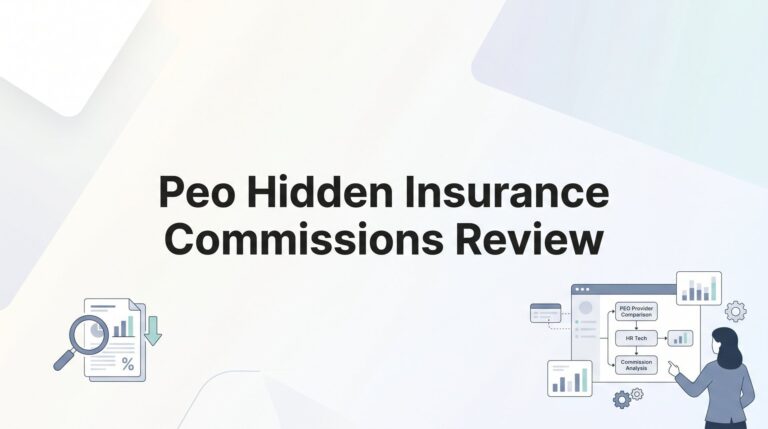
A PEO hidden insurance commissions review reveals that most business owners never see the commissions, overrides, and volume bonuses their PEO collects from insurance carriers — on top of standard admin fees. This guide breaks down how these undisclosed earnings affect your actual costs, where to find them in your billing, and what steps to take before your next renewal.

A PEO ROI analysis for manufacturing firms requires going beyond generic savings estimates to account for industry-specific cost drivers like workers’ comp exposure, EMR impact, OSHA compliance overhead, and skilled trades turnover. This guide provides a practical framework for calculating the true return on a PEO investment within the unique financial realities of manufacturing operations.
Employers with experience modification rates above 1.0 can leverage a PEO for high mod rate employers benefits cost containment strategy by accessing seven targeted approaches—including claims management infrastructure, reserve reduction tactics, and group purchasing leverage—that directly address the underlying factors driving inflated workers’ comp premiums and benefits costs rather than simply co-employing their workforce.
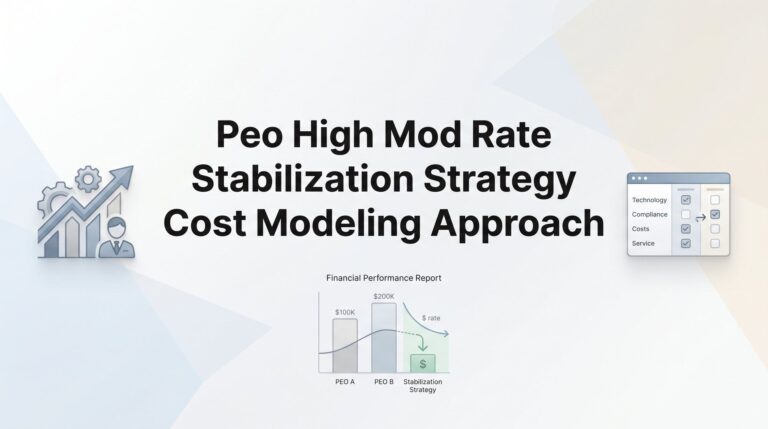
Businesses with mod rates above 1.0 face compounding workers’ comp costs that generic advice rarely addresses. This guide walks through a practical PEO high mod rate stabilization strategy and cost modeling approach, helping elevated-risk employers build accurate financial projections that account for experience rating lag and how different PEOs structure high-mod accounts — so you can evaluate proposals on your own terms.
A PEO growth stage cost comparison model must evolve alongside your business, since the variables, regulatory requirements, and service needs that matter at 12 employees look completely different at 75 or 200. This guide outlines seven practical strategies to help business owners build a scalable PEO evaluation framework that accounts for current size and future growth, avoiding the common mistake of applying a one-size-fits-all cost comparison approach.
Reducing your experience modification factor using PEO financial impact analysis requires understanding how PEO workers’ comp structures work — including whether your claims history transfers to their master policy or stays tied to your FEIN. A high e-mod above 1.0 compounds premium costs significantly each year, but the right PEO partnership, combined with genuine loss prevention investment, can help businesses systematically lower their modification rate over time.
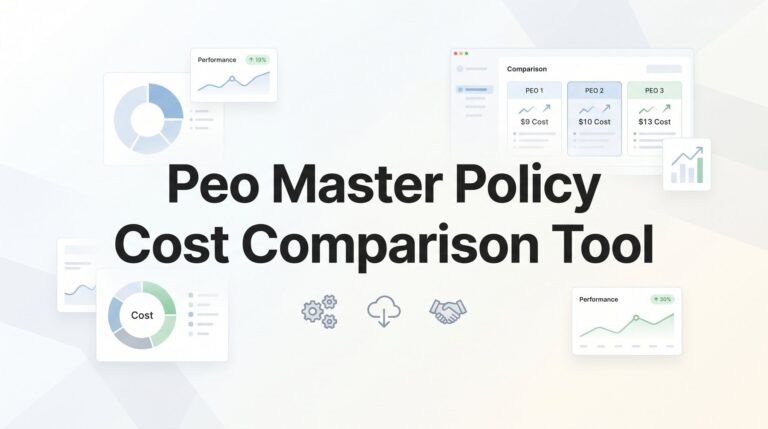
A PEO master policy cost comparison tool helps businesses cut through bundled pricing to isolate and compare the true insurance costs hidden within PEO quotes, including workers’ comp rates, EPLI coverage, and liability structures. This guide evaluates the seven best tools available in 2026 based on their ability to surface master policy components, enable side-by-side provider comparisons, and deliver actionable insights for decision-makers facing potentially thousands of dollars in annual c…
A PEO payroll error reduction cost model helps business owners move beyond surface-level corrections to quantify the true financial impact of payroll mistakes, including hidden costs most operators overlook. This practical framework walks through a structured analysis to determine whether outsourcing payroll through a PEO makes financial sense based on error reduction alone.
