Breakdowns of PEO pricing models, fee structures, hidden costs, and long-term financial impact. Includes comparisons between percentage-of-payroll and per-employee pricing models.
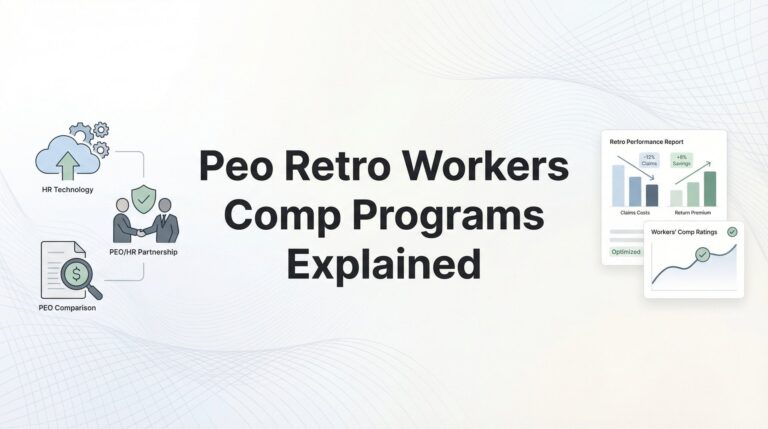
PEO retro workers comp programs explained: Unlike fixed-rate policies, retrospective rating adjusts your final workers compensation premium based on actual claims experience during the policy period. This performance-based pricing model can deliver substantial savings for companies with strong safety records, but may result in unexpected additional charges—sometimes tens of thousands of dollars—for businesses with higher claims frequency, making it critical to understand how retro programs im…
Learn how to build a PEO workers comp premium forecasting model that demystifies bundled rates and prevents year-end audit surprises. This practical guide provides the specific inputs, calculations, and stress-testing methods needed to accurately predict workers’ comp costs in PEO arrangements, helping you budget confidently and evaluate proposals with clarity.

Most business owners overlook the financial complexity hidden in PEO contracts, which can represent 20-35% of total labor costs. This peo financial transparency checklist provides eight critical checkpoints to help you establish clear visibility into how your money flows—from administrative fees and benefits premiums to workers’ comp and state-specific charges—so you can catch billing errors, negotiate better terms, and ensure you’re getting genuine value throughout your PEO relationship.
Most PEOs obscure their cost allocation methodology, making it nearly impossible to verify charges or compare proposals accurately. Understanding how providers distribute administrative fees, benefits costs, and workers’ comp expenses across their client base is essential—it reveals whether you’re paying a fair rate or unknowingly subsidizing other companies’ claims. This breakdown exposes the hidden mechanics behind your monthly PEO invoice and shows you which cost buckets are truly fixed ve…
PEO expense visibility challenges leave many businesses unable to understand their monthly invoices, with vague line items like “administrative services” and “risk management fees” that don’t break down further. While some opacity stems from PEO business model structures, it often limits your ability to identify cost increases, comparison-shop effectively, or negotiate better rates—turning the promised transparency into confusion that exceeds in-house payroll complexity.
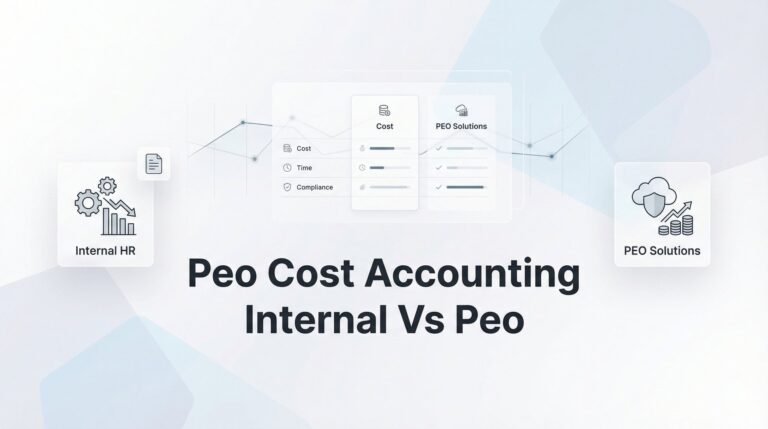
Most businesses miss 60-70% of actual costs when comparing PEO expenses to internal HR by only looking at payroll versus PEO invoices. This guide presents seven cost accounting methods to conduct an accurate PEO cost accounting comparison internal vs PEO, helping you surface hidden expenses scattered across benefits administration, compliance work, workers’ comp, and HR software to make data-driven decisions based on complete financial pictures rather than incomplete comparisons.
Understanding PEO impact on EBITDA margin requires looking beyond simple per-employee fees to analyze how the arrangement affects multiple P&L line items including COGS and SG&A. The net effect on your profitability depends on your current cost structure, the specific services provided, and fee arrangements—making it essential to model the complete financial impact rather than just comparing payroll processing costs.
When you partner with a PEO, the co-employment structure creates specific changes to your balance sheet that affect loan covenants, business valuations, and investor perceptions. Understanding the PEO impact on balance sheet items—including how liabilities shift, assets are reclassified, and financial ratios change—is critical for business owners preparing for financing, exits, or managing existing debt agreements.

When you use a PEO for payroll, their consolidated invoicing can obscure a critical accounting distinction: which labor costs belong in cost of goods sold versus operating expenses. For manufacturers, contractors, and product-based businesses, properly allocating PEO costs between direct production labor and administrative staff directly impacts your gross margin calculations, pricing decisions, and how lenders or buyers evaluate your profitability. Misclassifying these expenses can either in…
When you switch to a PEO, your labor cost reporting structure changes dramatically—what once appeared as separate line items for wages, taxes, insurance, and workers’ comp now typically shows up as a single consolidated invoice. This restructuring doesn’t mean your costs have changed, but the PEO impact on labor cost reporting can make it challenging to track departmental spending, analyze year-over-year trends, and explain expenses to stakeholders, requiring business owners to proactively ma…
