Breakdowns of PEO pricing models, fee structures, hidden costs, and long-term financial impact. Includes comparisons between percentage-of-payroll and per-employee pricing models.
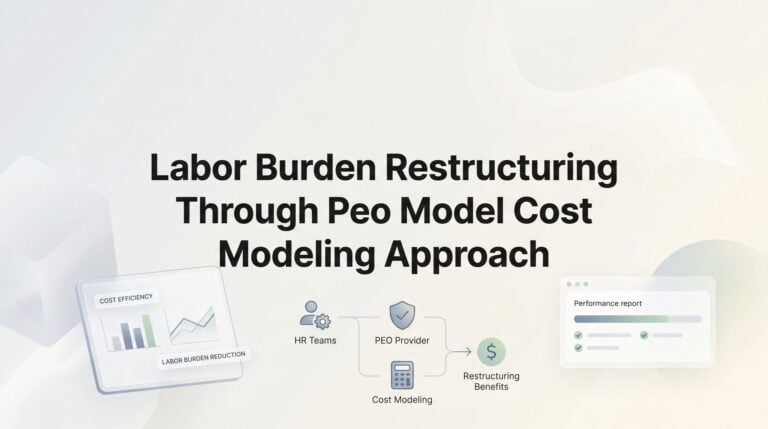
This practical guide walks business owners through building a complete labor burden cost model and applying a labor burden restructuring through PEO model cost modeling approach to accurately evaluate whether co-employment arrangements generate real savings. Rather than relying on a PEO provider’s projected numbers, readers learn a repeatable framework for inventorying every true labor cost component and comparing current spending against proposed PEO structures with confidence.
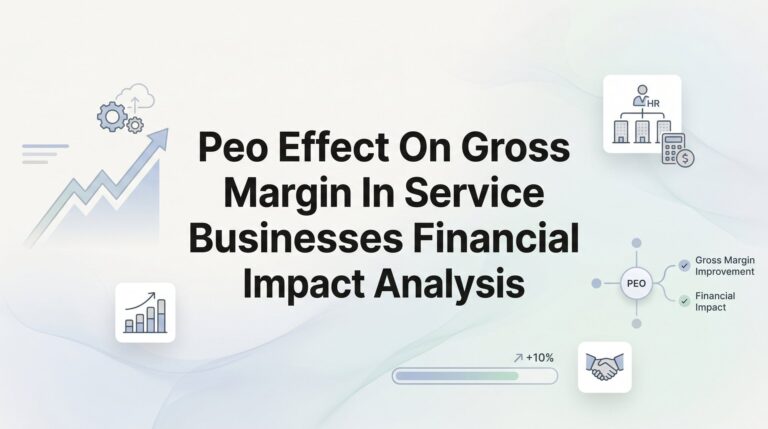
For service businesses where labor dominates delivery costs, understanding the PEO effect on gross margin in service businesses requires a financial impact analysis that goes beyond convenience and compliance benefits. This guide examines how PEO arrangements directly affect your all-in labor burden—including wages, benefits, payroll taxes, and workers’ comp—to determine whether they genuinely improve gross margin or quietly erode it.
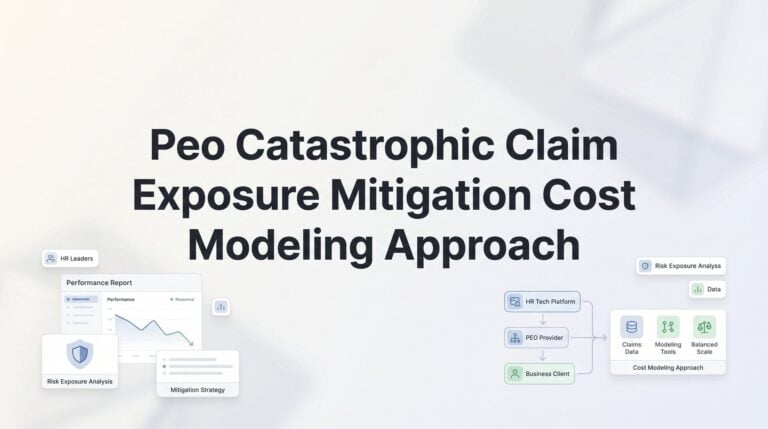
When evaluating PEO providers, most businesses focus on visible fees while overlooking catastrophic claim exposure—a single severe workers’ comp or health insurance claim that can devastate cost projections for years. This guide provides a practical PEO catastrophic claim exposure mitigation cost modeling approach to help business owners analyze how different PEO structures handle worst-case scenarios before signing, preventing costly surprises from loss-sensitive rating, retro adjustments, o…
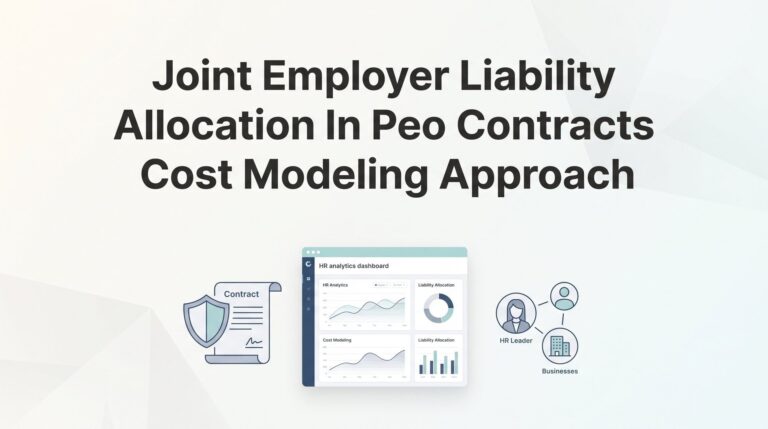
A practical cost modeling framework for business owners using PEO arrangements, this guide breaks down how to quantify joint employer liability allocation in PEO contracts using a dollars-and-cents approach. It covers hidden contract exposures in wage-and-hour claims, safety violations, and discrimination lawsuits, and provides negotiation strategies to reduce financial downside before something goes wrong.
PEO workers’ comp premium benchmarking helps business owners determine whether their current PEO pricing is competitive or inflated — a difficult task given the structural information asymmetry in PEO contracts. This guide walks HR leaders and employers through practical methods for evaluating their workers’ comp rates against meaningful baselines, so they can negotiate from a position of knowledge rather than guesswork.
A PEO partnership doesn’t just reduce payroll costs — it fundamentally restructures when cash leaves your business. This guide to the PEO impact on working capital management through a cost modeling approach helps growing companies evaluate funding cadence shifts, benefits billing cycles, and tax remittance changes to build a complete financial picture beyond simple line-item comparisons.
Businesses stuck in the assigned risk pool face inflated premiums with no negotiating leverage, but transitioning from assigned risk pool to PEO master policy cost modeling approach requires more than accepting a bundled quote at face value. This guide walks through how to calculate your true assigned risk costs, obtain comparable PEO quotes, and build a rigorous side-by-side financial model to verify whether the switch actually delivers savings before you commit.
The impact of PEO adoption on EBITDA margin extends well beyond simple benefits cost savings, affecting multiple operating line items that collectively determine whether the arrangement improves or dilutes your actual margin. This analysis breaks down each specific cost and savings lever a PEO touches, helping business owners and operators build an accurate net picture before committing to a structure that directly influences valuation and exit outcomes.
The PEO cost structure for logistics companies is significantly more complex than other industries due to high-risk workers’ comp classifications, DOT compliance requirements, seasonal workforce fluctuations, and mixed employee types spanning drivers, dock workers, and office staff. Understanding these specific cost drivers can mean the difference of tens of thousands of dollars annually when evaluating and negotiating PEO pricing.
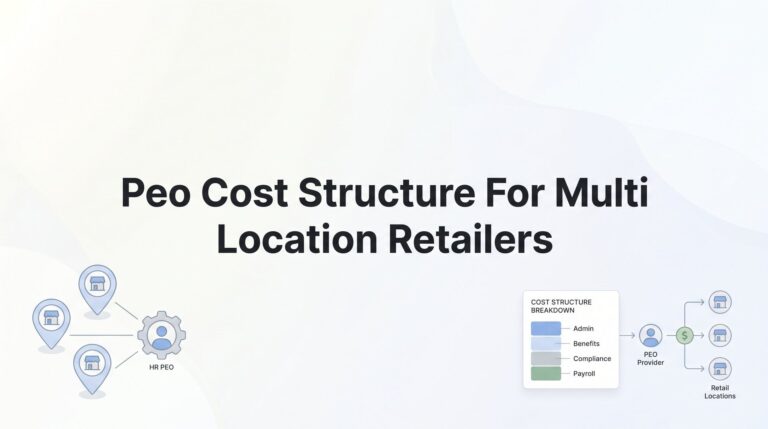
Multi-location retailers face uniquely complex PEO cost structures driven by workforce volatility, multi-state compliance requirements, and seasonal hiring patterns that standard pricing models fail to account for. Understanding the true PEO cost structure for multi-location retailers—including hidden contract terms that penalize fluctuating headcounts—is essential before signing with any provider.
