Breakdowns of major PEO companies, who they serve best, and where they may not be the right fit.
Pool service companies with 50 employees face unique HR challenges including seasonal staffing, high workers’ comp costs for chemical handling, and multi-state compliance issues. This guide evaluates the best Pool Service PEO for 50 Employees based on their ability to handle field service realities like variable headcounts, industry-specific risk management, and benefits that retain skilled technicians in this critical growth stage.
Tree service companies need specialized PEO providers that understand their unique challenges—seasonal staffing, high workers’ comp rates for climbing and chainsaw work, and multi-site crew management. This guide evaluates the top tree service PEO providers for 2026 based on their experience with high-risk outdoor industries, flexible staffing solutions, and competitive pricing for arborist businesses of all sizes.
Pool service companies face unique HR challenges including seasonal staffing, high workers’ comp risks from chemical handling, and managing dispersed field crews that generic PEO solutions can’t address. This comprehensive guide identifies the top pool service PEO providers for 2026 that offer specialized workers’ compensation programs, mobile-friendly platforms for technicians, and flexible contracts designed specifically for the seasonal nature of pool maintenance businesses.
Discover the seven best PEO providers tailored for tree service companies with five employees, addressing the unique challenges of managing high workers’ comp costs, payroll, and compliance without a dedicated HR team. This guide evaluates Tree Service PEO for 5 Employees options that understand arborist risk profiles and offer fair pricing for small crews handling dangerous work with chainsaws and bucket trucks.
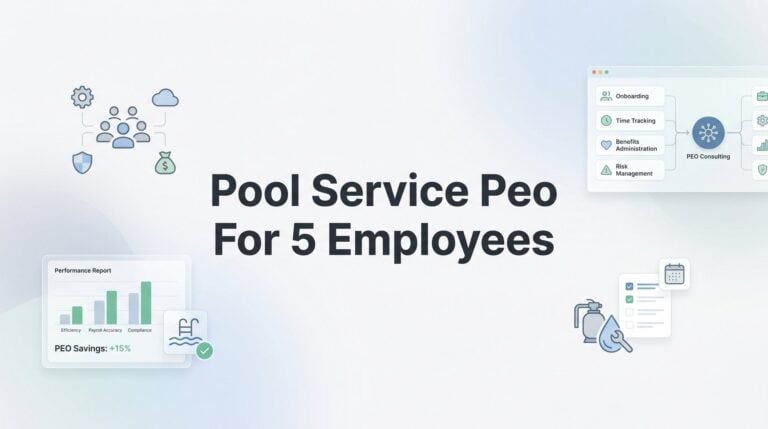
Pool service companies with 5 employees face unique HR challenges including high workers’ comp costs for outdoor chemical handling, seasonal hiring fluctuations, and compliance management that traditional PEOs don’t address well. This guide identifies the best Pool Service PEO for 5 Employees options that offer realistic pricing for small operations, specialized workers’ compensation for field technicians, mobile payroll access, and flexible plans that accommodate the seasonal nature of pool …

Running a pool service company with 25 employees requires managing seasonal staffing, workers’ comp for chemical and equipment hazards, and multi-site payroll—challenges a specialized Pool Service PEO for 25 Employees can streamline. This guide reviews seven PEO providers that understand field service operations at the mid-size level, comparing their costs, industry-specific features, and ideal use cases to help you find the right HR partner without the enterprise overhead.
Pest control companies face unique HR challenges including seasonal staffing, high workers’ comp rates from chemical and ladder work, and complex licensing requirements that generic PEOs can’t handle. This guide reviews the top pest control PEO providers in 2026 that specialize in field service operations and understand the specific risks, compliance needs, and workforce fluctuations pest control businesses experience year-round.

Flooring contractors need specialized PEO providers who understand industry-specific challenges like seasonal workforce changes, workers’ comp classifications for installers, and multi-state compliance requirements. This guide evaluates the top flooring PEO providers based on construction-adjacent risk expertise, payroll flexibility for variable crews, and proven experience serving installation contractors—helping you avoid generic providers that don’t match your business needs.
Landscaping companies face unique HR challenges including seasonal workforce changes, high workers’ comp risks, and field worker compliance issues that generic PEOs can’t address. This guide evaluates the top landscaping PEO providers in 2026 based on industry-specific criteria like workers’ comp expertise for outdoor labor, seasonal hiring flexibility, and field-friendly onboarding tools that accommodate the green industry’s operational demands.

Lawn care companies need specialized PEO providers that understand seasonal staffing, high workers’ comp risks from equipment use, and multi-site crew management. This guide reviews the top lawn care PEO providers for 2026, comparing their workers’ compensation handling, seasonal workforce flexibility, and pricing models designed specifically for landscaping businesses rather than generic HR solutions.
