Contract reviews, exit planning, transition steps, and what happens when you leave a PEO.
Switching cybersecurity firms to a PEO can consolidate complex HR, compliance, and benefits administration without disrupting your specialized team — but the transition requires careful planning around employment restructuring, sensitive data migration, and government contract requirements unique to the industry.
Switching SaaS companies to a PEO requires more than signing a contract — it demands a structured transition process covering HR audits, provider evaluation, and employee communication to avoid compliance gaps and disruption. This guide walks through each practical step, tailored to the specific scaling challenges SaaS companies face as headcount and complexity grow.
Switching tech startups to a PEO between 15 and 50 employees can free up significant operational bandwidth and reduce HR costs, but the transition requires careful planning to avoid payroll disruptions, compliance gaps, and employee confusion. This guide walks through the practical steps to make the switch without derailing your startup’s day-to-day operations.
Law firm PEO cancellation policies carry exit costs and administrative complexities that most administrators don’t fully understand until they’re already trying to leave. This guide breaks down what a law firm PEO cancellation policy typically requires—from notice windows and termination fees to benefits continuity and co-employment unwinding—so firms can negotiate smarter terms before signing.
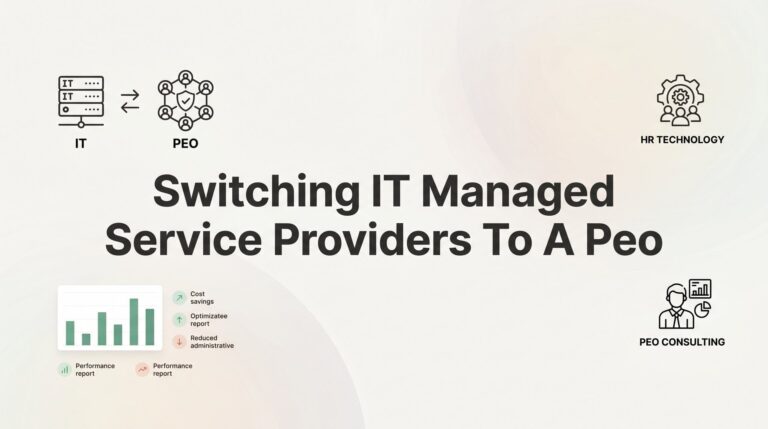
Switching IT managed service providers to a PEO requires careful planning around the unique workforce complexities MSPs face, including multi-site employees, contractors, and client contract considerations. This step-by-step guide walks MSP owners and HR leads through executing a smooth PEO transition without disrupting payroll, employee experience, or existing client relationships.

Switching accounting firms to a PEO can streamline payroll, HR, and benefits administration, but the transition itself is where most businesses run into compliance gaps and missed payroll runs. This guide covers the operational steps to execute a clean handoff, what your accountant should still handle after the move, and how to avoid the mistakes that derail the switch.

Switching marketing agencies to a PEO requires careful planning around mixed workforce structures, multi-state compliance, and benefits continuity to avoid disruption. This step-by-step guide walks agency leaders through the transition process, covering contractor classification, timing, employee communication, and what to verify before your first payroll runs under the new arrangement.

Switching law firms to a PEO requires a different approach than other industries, given the complexities of partner compensation structures, trust accounting, multi-state employment exposure, and attorney-specific benefits expectations. This step-by-step guide gives managing partners and firm administrators a practical operational roadmap to execute the transition without disrupting payroll, compliance, or staff confidence.
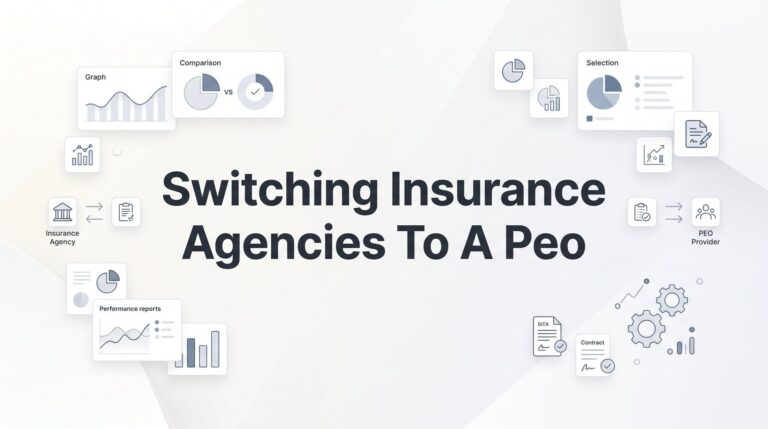
Switching insurance agencies to a PEO involves more than canceling existing policies — it requires careful timeline management, coordinated policy wind-downs, and clear employee communication to avoid coverage gaps or duplicate billing. This guide walks business owners through the complete transition process so they can consolidate HR administration and access better group benefits without the costly surprises that come from making the switch without a plan.
Leaving a PEO means your health, workers’ comp, and liability coverage stops the moment the relationship ends, leaving businesses vulnerable to costly coverage gaps if replacement policies aren’t secured in advance. This guide walks through the critical steps to manage an insurance PEO cancellation policy correctly — before, during, and after your exit — so your employees stay covered and your business stays protected.
