
Most advice on HR outsourcing trends is backward. It tells employers to track buzzwords, ask whether a provider has AI, and compare a few per-employee fees. That's not how expensive PEO mistakes happen. Companies usually overpay, accept weak service terms, or pick the wrong operating model because they don't translate market trends into bargaining power.
A useful read on HR outsourcing trends should answer three questions. What changes total cost. What reduces compliance risk. What improves bargaining power before signing and at renewal. Everything else is noise.
That matters because HR outsourcing is no longer a niche purchasing decision. One industry source estimates the global market at USD 44.3 billion in 2023 and projects it will reach USD 65.3 billion by 2030, while also reporting that companies outsourcing one or more HR functions can save 20% to 40% compared with a fully in-house HR team (Tawzef HR outsourcing statistics). For employers evaluating a PEO, that doesn't mean every outsourced model is a bargain. It means the category is large, mature, and full of pricing variance, packaging tricks, and real opportunities if the buyer knows what to test.
A company with 25 employees and one state has a different buying problem than a 600-person business hiring across multiple states, dealing with benefits pressure, and carrying payroll error risk. Both are shopping in the same market. They should not buy the same way. Employers that want a stronger evaluation framework can start with a broader look at human resources outsourcing options before narrowing into specific PEO structures.
Table of Contents
- Beyond the Buzzwords What HR Trends Really Mean for Your Business
- The Shift from Cost Cutting to Outcome Based Models
- AI and Automation Are Redefining Service Delivery
- Platform Consolidation vs Specialized Niche Providers
- The Rising Demand for Remote and Global Workforce Support
- How to Use These Trends in Your PEO Negotiations
Beyond the Buzzwords What HR Trends Really Mean for Your Business
The phrase HR outsourcing trends gets abused because it often treats technology language as strategy. A provider says "AI-enabled," "multi-process," or "global-ready," and buyers assume that must mean lower cost or better service. It often doesn't. Those labels only matter if they change contract terms, operating risk, or the amount of internal labor the employer still has to carry.
A CFO shouldn't care that a PEO has an elegant dashboard if payroll corrections still require three emails and a callback. An HR director shouldn't care that a sales rep says "strategic partner" if the implementation team can't map leave policies correctly across states. Owners shouldn't care that a proposal looks modern if the agreement still allows broad fee increases and vague service obligations.
The practical test is simple. If a trend doesn't improve service accountability, reduce manual work, or strengthen negotiating leverage, it's not a trend that helps the buyer.
The market has grown because employers are outsourcing more HR functions, but growth by itself doesn't make a vendor right for a given company. What it does mean is that buyers now have more alternatives, and alternatives provide an advantage when used correctly.
The buying mistake most employers make
Many companies still evaluate providers in this order:
- First they compare headline fees. The quoted PEPM rate looks clean, but fees tied to implementation, off-cycle payrolls, benefit administration, or year-end support often sit outside the headline.
- Then they react to brand familiarity. A well-known national provider feels safer, even when the service model is thin for a smaller client.
- Last they ask service questions. By then, the commercial framing is already set, and the buyer is negotiating from the vendor's package instead of from operational needs.
That sequence should be reversed. Service model first. Compliance fit second. Commercial structure third. Price only becomes meaningful once the employer knows what is included.
What matters more than trend watching
A useful market read should help employers answer questions like these:
| Buyer issue | What to test |
|---|---|
| Cost control | Which functions are included in the base fee and which trigger add-ons |
| Risk control | Who owns compliance execution, documentation, and escalation |
| Practical service | Whether the provider uses named contacts, pooled support, or a hybrid model |
| Negotiation leverage | Which terms can be tied to service levels, credits, or renewal protections |
That's where trend awareness becomes useful. Not as industry trivia, but as a way to challenge bad assumptions before they harden into a contract.
The Shift from Cost Cutting to Outcome Based Models
A basic PEPM pricing model still exists, and for some employers it's fine. If the company needs straightforward payroll, standard benefits administration, and light HR support, a simple structure can work. The problem starts when employers assume a lower unit fee automatically means a better deal.
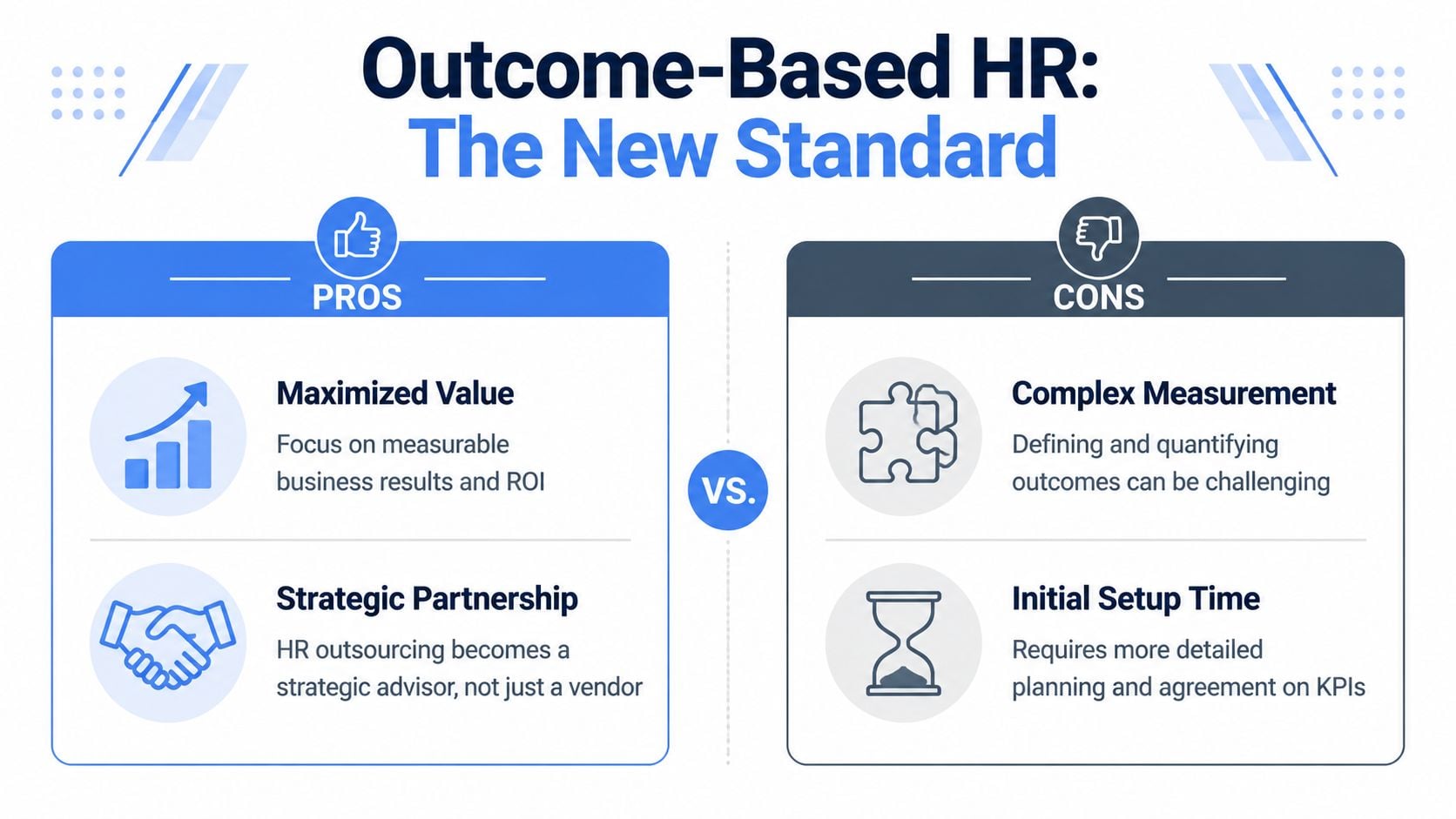
A recent Deloitte survey summary reports that 67% of organizations are adopting outcome-based outsourcing relationships, meaning contracts are increasingly tied to measurable delivery targets rather than simple administrative offloading (DevsData on current trends in HR outsourcing). That shift matters because it changes what buyers should negotiate.
Why fee compression changes the buying conversation
Under the old model, buyers mostly asked one question. What's the monthly cost per employee? Under the newer model, the better question is different. What results is the provider prepared to stand behind?
That doesn't require an exotic contract. It requires precision. A provider might price payroll, onboarding, benefits support, and compliance administration into one bundle, but the employer should still break the bundle into expected outcomes:
- Payroll execution: How are errors tracked, corrected, and escalated?
- Service response: Is there a defined turnaround for employee and employer issues?
- Compliance support: Which filings, notices, and workflow controls are included?
- Implementation: What happens if setup delays push payroll, benefits enrollment, or tax registration off schedule?
A discerning buyer won't accept "white glove service" as a substitute for those answers.
Practical rule: If a provider can't define success in operational terms, it probably won't accept accountability in contractual terms.
The same shift is visible in adjacent finance outsourcing categories. Buyers comparing AP partners, for example, increasingly focus on workflow control, exception handling, and measurable processing outcomes rather than simple labor arbitrage. That logic carries over well when employers outsource accounts payable and HR operations at the same time, because both functions depend on clean ownership of approvals, exceptions, and deadlines.
What a better contract discussion looks like
Consider two hypothetical proposals for the same employer.
| Proposal style | What it sounds like | Hidden issue |
|---|---|---|
| Traditional PEPM | Low monthly fee, broad service description | Buyer carries more execution risk because obligations are vague |
| Outcome-based | Fee tied to defined service levels and implementation deliverables | More planning required up front, but fewer gray areas later |
The second option usually takes more work in diligence. That's a feature, not a flaw. A contract that requires clear definitions before signing often prevents disputes after go-live.
Three terms deserve extra attention in this model:
Service levels need consequences
A service level without a remedy is mostly a marketing statement. If the provider misses key obligations, the contract should address service credits, escalation paths, or termination rights tied to chronic underperformance.
Implementation should be treated as part of the deal
Many bad PEO outcomes aren't pricing failures. They're implementation failures. Benefits setup, payroll mapping, policy configuration, and tax account coordination are where expensive mistakes begin. Employers should document responsibilities, dates, and required inputs before signature, not after.
Outcome language should match business reality
A 15-person local firm doesn't need the same reporting package as a 900-person multi-state employer. The right outcomes depend on the company's complexity. Buyers should avoid importing enterprise language that sounds impressive but isn't operationally useful.
The core takeaway is simple. The market is moving away from "we'll take HR off your plate" and toward "here is what we will deliver, how it will be measured, and what happens if we miss." Employers who negotiate that way usually get cleaner terms and fewer surprises.
AI and Automation Are Redefining Service Delivery
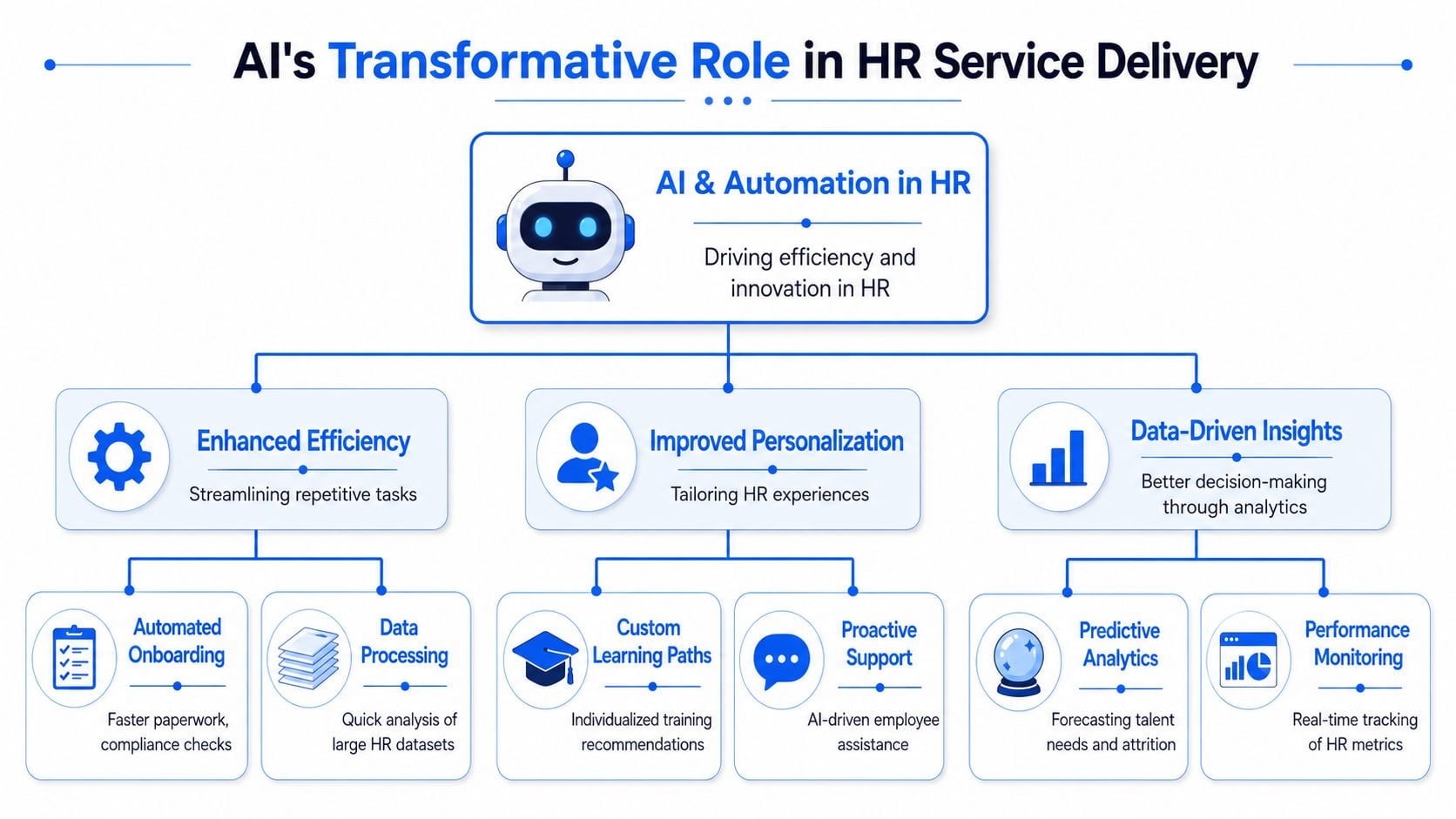
AI talk in PEO sales has become relentless. Most buyers should ignore half of it. The relevant question isn't whether the provider has AI. The relevant question is whether automation removes real work from the employer's team and improves control.
One industry report says 87% of organizations are turning to outsourcing to scale AI and overcome execution challenges, and the same source says PEO administration fees have fallen 21% over the last five years as automation and competition have increased (Auxis on HR outsourcing trends transforming the future of HR). Buyers should read that as a negotiating signal. If a vendor's platform meaningfully automates service delivery, the employer should expect either sharper pricing, stronger service terms, or both.
A more detailed review of PEO HR technology platforms can help buyers compare what is embedded in a platform versus what still depends on manual service tickets.
What to ask instead of do you use AI
"Do you use AI?" is a weak buying question because every provider can answer yes. Better questions force demonstration.
- Show the workflow. Ask the provider to walk through onboarding, payroll changes, leave administration intake, and employee support. Where does automation begin and where does a human intervene?
- Ask about exception handling. A platform isn't valuable because it handles clean cases. It is valuable if it handles messy ones without forcing the client into manual cleanup.
- Request a compliance use case. If the provider claims automated compliance support, ask how state-specific policy changes, required notices, and workflow triggers are surfaced and applied.
- Push on ownership. If the system flags a problem, who acts on it. The platform. The service team. Or the client.
That last point gets missed constantly. Plenty of platforms can produce alerts. Fewer providers have a disciplined operating model for acting on them.
Buyers shouldn't pay extra for dashboards that simply report problems back to the client. The useful system is the one that reduces the number of problems the client has to manage.
Teams trying to separate real operating value from AI branding often benefit from broader frameworks around AI for operational efficiency, especially when evaluating whether automation is embedded into workflow or just layered onto reporting.
Where automation actually changes value
The strongest use cases tend to be ordinary, not flashy.
Employee support
A self-service knowledge base or automated intake tool can reduce repetitive tickets. That matters when the internal HR team is small and managers keep forwarding basic questions.
Payroll validation
Automation can catch routine data issues before payroll closes. That doesn't eliminate payroll risk, but it can reduce preventable corrections and end-of-cycle scrambles.
Onboarding coordination
New hire setup often spans payroll, benefits, policy acknowledgment, and device or access workflows. Providers that automate those handoffs usually create a smoother implementation and fewer first-paycheck problems.
Reporting and audit readiness
The best technology doesn't just generate reports. It keeps records organized enough that the client can answer tax, benefits, or compliance questions without stitching together screenshots and email chains.
What doesn't work is buying "AI" as a standalone feature. If automation doesn't shorten turnaround times, lower admin friction, or improve accuracy, it isn't changing the economics of the relationship. It's just presentation.
Platform Consolidation vs Specialized Niche Providers
This is one of the more consequential HR outsourcing trends because it affects both cost structure and service fit. Buyers are seeing two models at the same time. Large providers are pushing integrated, cloud-based HR platforms that combine payroll, benefits, compliance, recruiting support, and analytics. At the same time, specialist firms keep winning accounts because some employers need sharper industry expertise rather than broad software coverage.
The case for integrated platforms is backed by durable market demand. Credence Research, as summarized by HR University, values the global HR outsourcing market at USD 42.46 billion in 2024 and projects it will reach USD 68.98 billion by 2032, with multi-process, cloud-based platforms driving much of that demand (HR University on HR outsourcing trends).
When the integrated platform wins
A consolidated platform usually makes sense when the employer has fragmentation problems.
That often looks like this:
- payroll with one vendor
- benefits administration with another
- leave tracking on spreadsheets
- recruiting handled through a separate tool
- compliance advice coming from a broker, lawyer, or whoever answers fastest
In that setup, data breaks constantly. Someone on the client side reconciles everything by hand. Errors don't come from a single catastrophic event. They come from dozens of small handoffs.
For those employers, one contract and one operating environment can be worth more than a lower fee from a niche provider. A useful way to quantify that is with a PEO vendor consolidation savings calculator, especially when the company is comparing platform simplicity against specialized service.
A fast-growing software company is a good example. It may need standardized onboarding, clean system access across states, simple benefits communication, and consolidated reporting for finance. A broad platform can help because scale and consistency matter more than niche policy interpretation.
When the niche provider is worth the trade-off
Specialized providers tend to win when the employer's complexity isn't primarily technical. It's operational or regulatory.
That might include:
- Construction or field-heavy employers: Workers' compensation handling, class code discipline, and location-driven labor issues often matter more than platform elegance.
- Healthcare groups: Credentialing-related workflows, leave complexity, and staffing volatility can expose weak generic support models.
- Employers with unusual workforce structures: Seasonal swings, union exposure, or highly decentralized operations often benefit from a provider that has already seen those patterns.
A stable manufacturing business with multiple sites but predictable headcount may prefer a provider that knows its workforce profile, claims patterns, and state-level practical issues. In that case, broader software isn't the deciding factor. The deciding factor is whether the provider's service team can manage the employer's actual messes.
A platform can centralize data. It can't automatically replace judgment, especially in industries where employment rules collide with safety, scheduling, and local operating realities.
Recruiting can sharpen the distinction further. Employers expanding in Latin America, for example, may need a narrower partner set for talent acquisition than for payroll or benefits administration. Resources that help buyers find RPO partners to scale in LATAM can be useful because they separate recruiting specialization from broader HR outsourcing decisions.
A practical comparison for buyers
| Question | Integrated platform | Specialized provider |
|---|---|---|
| Main strength | Standardization and fewer vendor handoffs | Industry-specific judgment and tailored support |
| Best fit | Growing firms needing unified systems | Employers with unusual compliance or workforce patterns |
| Main risk | Service can feel generic for smaller accounts | Tool stack may be narrower or less unified |
| Negotiation focus | Integration scope, support model, add-on fees | Depth of expertise, escalation access, process ownership |
The mistake is assuming one model is universally better. The right choice depends on what kind of complexity the company is buying help for.
The Rising Demand for Remote and Global Workforce Support
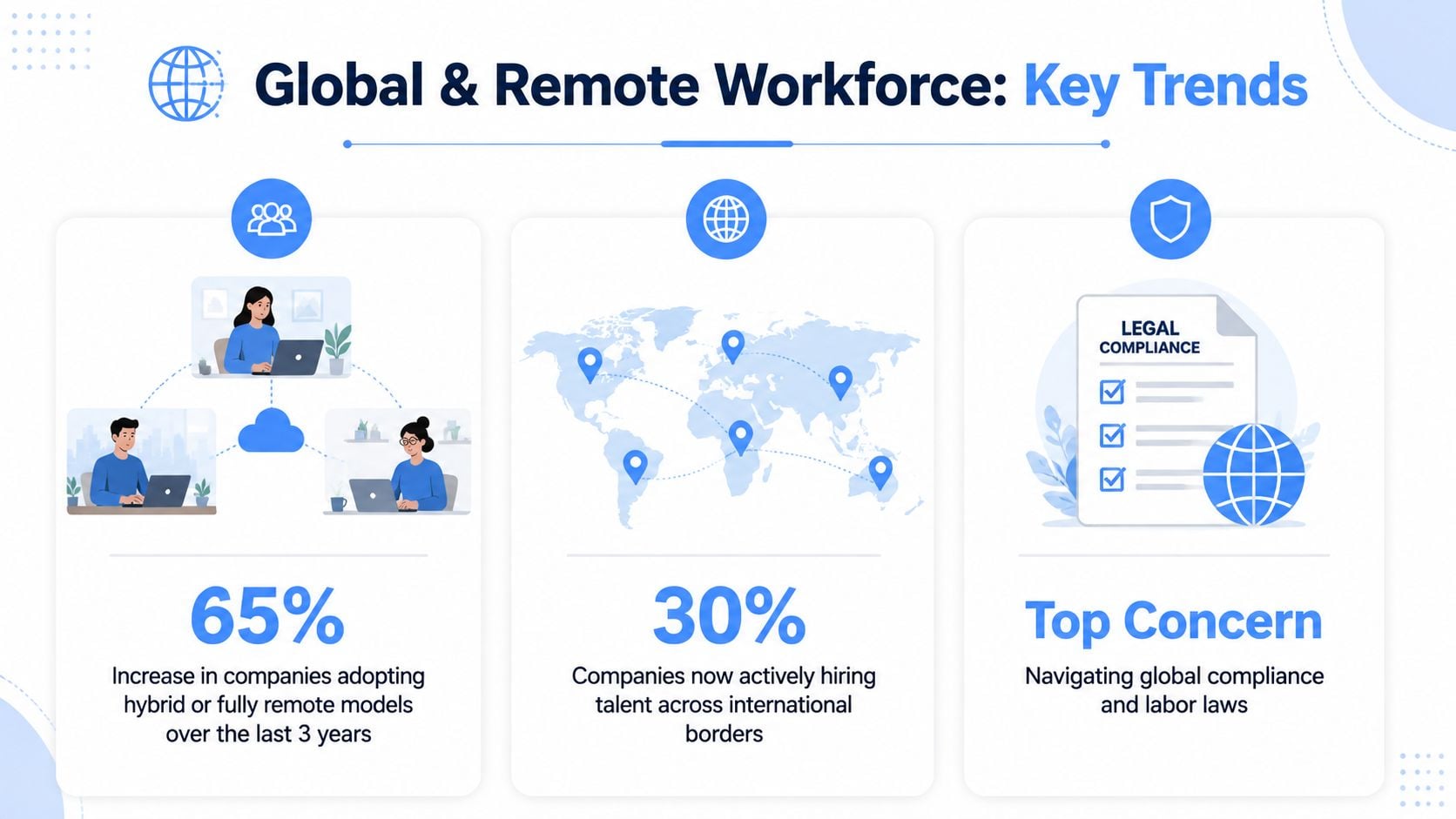
Many employers don't start by saying they need advanced remote-workforce infrastructure. They start by hiring one employee in another state because the candidate is strong. Then another manager does the same. Then payroll, leave administration, workers' compensation, and tax registration get more complicated than anyone expected.
That pattern is one reason distributed-workforce support has moved from a niche issue to a common buying criterion. Companies that want to evaluate how a provider handles that operating reality can start with a closer look at PEO support for remote workforce management.
A common growth path and where it breaks
Consider a hypothetical company that begins with one office and a local employee base. At that stage, the internal team can often manage payroll and HR administration with a payroll system, a broker, and some discipline.
Then the business hires remote employees in several states.
At first, nothing dramatic seems to change. Employees still get paid. Benefits still run. The HR team assumes it can absorb the extra administration. The problems usually show up later, in areas that don't look connected at the start. State registration, leave rules, unemployment setup, workers' compensation coordination, local notices, and policy consistency all begin to pull in different directions.
The issue isn't only legal exposure. It's operating drag. Managers stop knowing which rules apply where. HR spends time checking requirements manually. Finance loses confidence in whether payroll treatment is being handled consistently.
What employers should separate early
Buyers often confuse two different needs.
A PEO is usually the discussion when the employer has U.S. employees across multiple states and wants support with payroll, benefits, HR administration, and compliance infrastructure. An EOR is a different structure typically used when the company wants to employ workers internationally without setting up an entity in each country.
That distinction matters because many proposals blur it. A provider may be strong in domestic multi-state support and weak internationally, or the reverse.
Three practical tests help:
- Domestic state complexity: Can the provider support policy administration, payroll controls, and risk management across all the states where the company hires now and expects to hire next?
- Documentation discipline: Does the provider have a repeatable process for employee work-state changes, location updates, and notice requirements?
- Boundary clarity: Which obligations stay with the employer, and which move into the provider's operating scope?
The remote-work challenge isn't only about where people work. It's about whether the employer has a system for tracking what changes when they do.
A strong multi-state provider acts like prebuilt HR infrastructure. A weak one leaves the client with the same fragmented tasks, just wrapped in a new contract.
How to Use These Trends in Your PEO Negotiations
The value of following HR outsourcing trends is simple. It gives employers better questions, stronger comparison points, and less patience for generic proposals.
Negotiation usually improves when buyers stop reacting to what a provider chooses to present and start forcing a side-by-side operational comparison. That means testing contract structure, service model, platform reality, and geographic support in one evaluation process.
A negotiation checklist that actually helps
- Reframe the pricing discussion. Don't ask only for a lower PEPM quote. Ask what service commitments, implementation protections, and escalation rights are included at that price.
- Test the platform in workflows, not features. Have the provider demonstrate onboarding, employee changes, payroll adjustments, leave intake, and reporting. Marketing language won't survive a real workflow review.
- Match provider type to company complexity. If the business has fragmented systems, platform consolidation may matter most. If the company has unusual labor patterns or industry-specific compliance issues, specialization may matter more.
- Force clarity on multi-state support. Ask what changes operationally when the company adds employees in new states. Vague answers usually mean the client will be doing more than expected.
- Negotiate remedies, not promises. If service levels matter, attach credits, escalation rights, or exit protections to them.
- Review renewal language early. Buyers often spend all their energy on initial pricing and ignore future fee flexibility, notice windows, and termination mechanics.
- Use independent comparison where needed. PEO Metrics is one example of a firm that analyzes provider pricing, benefits, service terms, and contract risk side by side for employers evaluating or renegotiating PEOs.
The conversations that save money are often uncomfortable
A surprising number of buyers avoid hard questions because they don't want to disrupt momentum late in the process. That's a mistake. If a vendor becomes evasive when asked about implementation ownership, response standards, fee triggers, or liability boundaries, that friction is useful data.
Some negotiations also stall because internal stakeholders want different things. HR wants service responsiveness. Finance wants predictable cost. Ownership wants lower exposure and simpler administration. Those aren't conflicting goals, but they do require direct discussion. Teams that handle those internal tensions early are less likely to sign a contract built around only one stakeholder's priorities.
A practical framework for those internal conversations can borrow from broader work on conflict and confrontation, especially when leadership teams need to challenge assumptions before committing to a provider relationship.
The strongest buyers don't chase trends. They use trends to pressure-test claims, identify strategic advantages, and buy a structure that fits the business they run.
PEO decisions get expensive when employers rely on polished demos and shallow fee comparisons. PEO Metrics helps companies compare providers side by side, understand pricing and contract trade-offs, and negotiate stronger terms before they commit.
