

Logistics companies operate on razor-thin margins where labor costs can make or break profitability. Between warehouse workers, drivers, dispatchers, and dock crews, you’re juggling high workers’ comp premiums, multi-state compliance requirements, and seasonal workforce swings that complicate everything from benefits administration to tax filing. A Professional Employer Organization can help optimize these costs—but only if they actually understand the transportation and warehousing world. Generic PEOs that treat your truck drivers like office workers won’t cut it. Here are the top solutions and platforms that can help logistics companies genuinely reduce labor costs while maintaining coverage and staying compliant.
1. PEO Metrics
Best for: Logistics companies comparing multiple PEO options to find the best cost-to-value fit
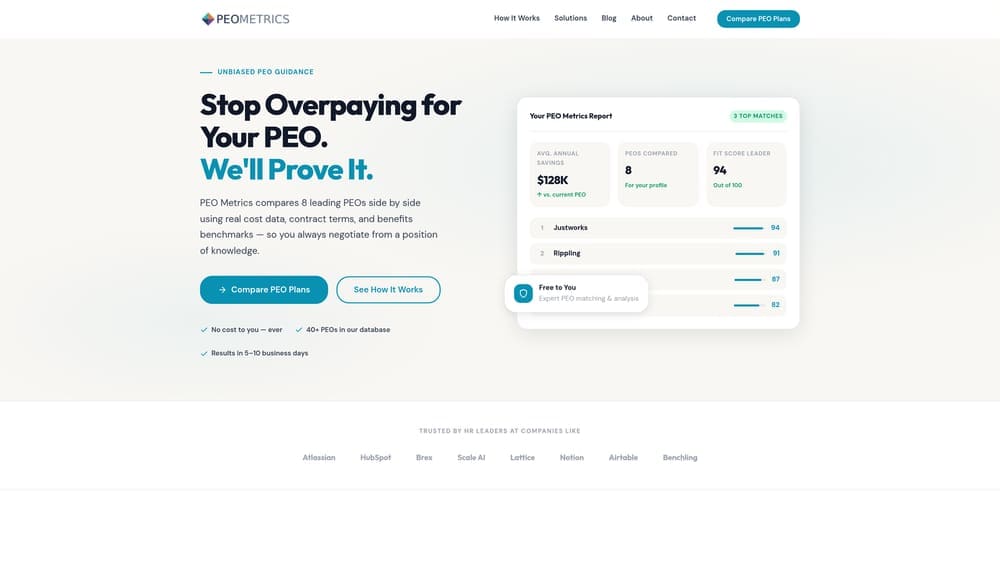
PEO Metrics is a comparison platform that provides unbiased, data-driven analysis to help businesses evaluate PEO providers side-by-side with detailed metrics and transparent pricing breakdowns.
Where This Tool Shines
Most logistics companies end up with their PEO through a referral or sales pitch, never seeing how it stacks up against alternatives. PEO Metrics changes that by letting you compare providers using criteria that actually matter for transportation and warehousing operations—workers’ comp experience with high-risk classifications, multi-state payroll capabilities, and transparent cost structures.
The platform helps you identify hidden fees and bundled markups that can inflate costs by 20-30% without adding real value. For logistics companies operating across multiple states with mixed employee classifications, this kind of transparency prevents expensive mistakes before you’re locked into a three-year contract.
Key Features
Side-by-Side Provider Comparisons: Evaluate PEOs using logistics-specific criteria like workers’ comp rate handling and multi-state compliance infrastructure.
Transparent Pricing Analysis: Identify hidden administrative fees, bundled markups, and contract terms that affect total cost of ownership.
Workers’ Comp Rate Assessment: Compare how different PEOs handle high-risk classification codes common in trucking and warehousing.
Multi-State Capability Review: Evaluate which providers can actually handle complex multi-jurisdiction payroll and compliance requirements.
Unbiased Recommendations: Get guidance based on your specific operational needs rather than commission-driven sales pitches.
Best For
Logistics companies evaluating PEO options for the first time, businesses coming up on renewal and questioning whether they’re getting competitive value, and operations expanding into new states who need to ensure their PEO can scale with them.
Pricing
Free comparison service with no obligation to use any particular provider.
2. Insperity
Best for: Logistics operations needing strong safety program support and risk management
Insperity is a full-service PEO offering comprehensive HR, benefits, payroll, and risk management with dedicated safety consultants for higher-risk industries.

Where This Tool Shines
Insperity assigns dedicated safety and risk management consultants who understand the specific hazards of warehouse operations and commercial driving. They don’t just process claims—they help you build safety programs that reduce incidents in the first place, which directly impacts your experience mod rate and future workers’ comp costs.
For logistics companies struggling with high claim frequency or poor safety records, this proactive approach can deliver measurable ROI. The consultants conduct site visits, develop tailored training programs, and help implement protocols that address the most common injury types in your specific operation.
Key Features
Dedicated Safety Consultants: Industry-experienced professionals who develop customized safety programs for warehouse and transportation operations.
Workers’ Comp Claims Management: Active claims oversight with return-to-work coordination to minimize claim duration and costs.
Comprehensive Benefits Packages: Access to competitive health insurance and retirement plans that help with driver and warehouse worker retention.
Performance Management Tools: Systems for tracking employee performance, training compliance, and safety metrics.
Multi-State HR Compliance: Support for navigating different state requirements for overtime, meal breaks, and classification rules.
Best For
Mid-sized logistics companies with 50-500 employees who need hands-on safety program development, operations with elevated workers’ comp claims history, and businesses where driver or warehouse worker retention is a competitive challenge.
Pricing
Custom pricing based on employee count and service selection, typically running 3-5% of total payroll. Higher-risk operations may see pricing at the upper end of that range.
3. Paychex PEO
Best for: Multi-state logistics operations needing robust payroll infrastructure
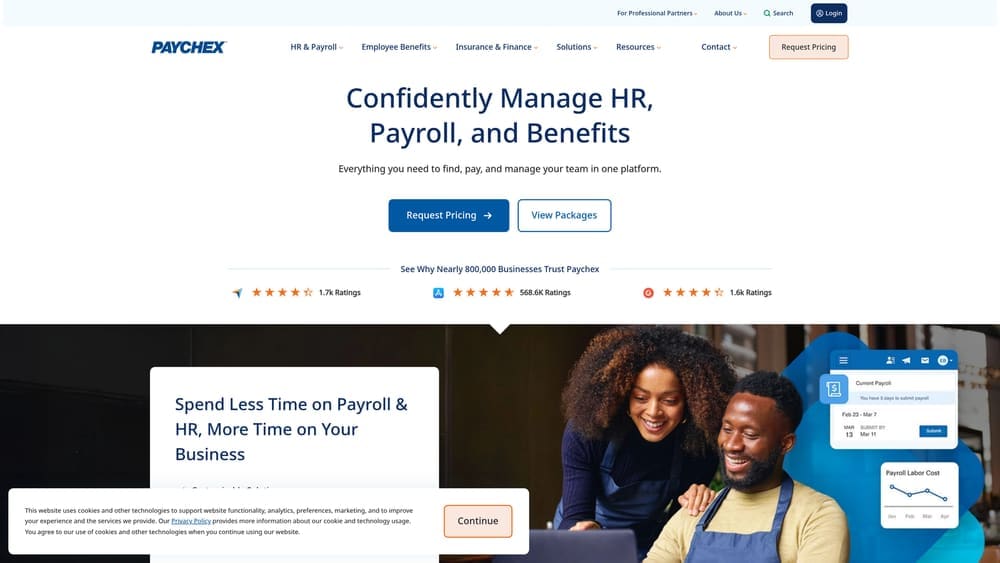
Paychex PEO is a scalable PEO solution with strong multi-state payroll capabilities and compliance support for companies operating across multiple jurisdictions.
Where This Tool Shines
If you’re running trucks or warehouses across five or ten states, payroll gets complicated fast. Different overtime rules, varying meal break requirements, state-specific tax filings—it’s a compliance minefield. Paychex built their infrastructure specifically to handle this complexity without requiring you to become a multi-state tax expert.
Their pay-as-you-go workers’ comp option is particularly valuable for logistics companies with fluctuating headcount. Instead of paying estimated premiums upfront and reconciling later, you pay based on actual payroll each period. This improves cash flow and eliminates year-end surprises.
Key Features
Multi-State Payroll Processing: Automatic tax filing and compliance management across all operating jurisdictions without manual intervention.
Integrated Time and Attendance: Track driver hours, warehouse shifts, and overtime automatically with mobile clock-in options.
Pay-As-You-Go Workers’ Comp: Pay workers’ comp premiums based on actual payroll each period rather than estimated annual amounts.
Mobile Employee Self-Service: Drivers and warehouse workers can access pay stubs, benefits information, and time-off requests from their phones.
Scalable Infrastructure: System handles growth from small regional operations to large multi-state fleets without platform changes.
Best For
Logistics companies operating in multiple states, businesses with seasonal workforce fluctuations that complicate workers’ comp budgeting, and operations where drivers need mobile access to HR and payroll information.
Pricing
Custom quotes based on employee count and geographic footprint. Generally competitive for multi-state operations, with pricing typically in the 2.5-4% of payroll range.
4. TriNet
Best for: Smaller logistics companies competing for talent against larger carriers
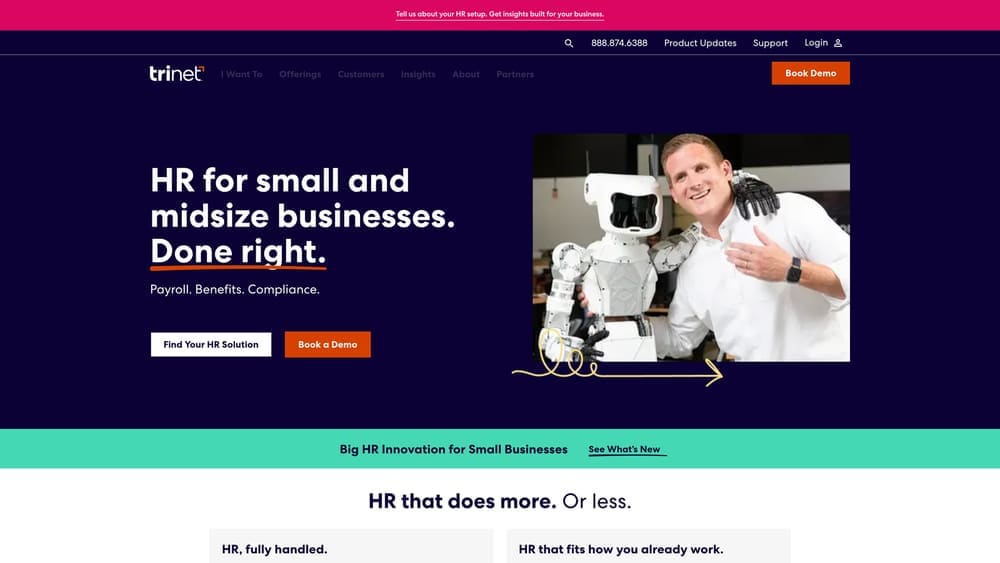
TriNet is a PEO known for providing access to premium benefits packages typically reserved for large enterprises, helping smaller companies compete for qualified drivers and warehouse workers.
Where This Tool Shines
Driver shortages have made benefits competitiveness crucial for retention. TriNet gives smaller logistics companies access to Fortune 500-level health insurance plans and retirement options that would be impossible to negotiate independently. When you’re competing against national carriers for qualified CDL drivers, this levels the playing field.
Their industry-specific HR expertise means you’re not explaining what a driver qualification file is or why DOT compliance matters. They understand the regulatory environment you operate in and can provide guidance that’s actually relevant to transportation and warehousing.
Key Features
Premium Benefits Access: Fortune 500-level health insurance plans, dental, vision, and life insurance at rates smaller companies can’t negotiate alone.
Industry-Specific HR Support: HR advisors with transportation and logistics experience who understand your regulatory environment.
Comprehensive Compliance Management: Support for navigating FMCSA requirements, OSHA regulations, and state-specific employment laws.
Employee Wellness Programs: Health and wellness initiatives that can reduce insurance costs and improve driver health outcomes.
Competitive Retirement Plans: 401(k) options with institutional pricing that helps attract and retain experienced drivers.
Best For
Small to mid-sized logistics companies with 20-200 employees, operations struggling to compete on benefits against larger carriers, and businesses where driver retention directly impacts profitability.
Pricing
Per-employee-per-month model that varies based on benefits selection. Expect costs in the $150-$250 per employee monthly range depending on coverage levels chosen.
5. ADP TotalSource
Best for: Larger logistics operations needing advanced analytics and enterprise-grade infrastructure
ADP TotalSource is an enterprise-grade PEO with deep workforce analytics capabilities and integration with ADP’s broader HR technology ecosystem.

Where This Tool Shines
Once you’re managing hundreds of employees across multiple facilities, you need more than basic payroll processing—you need data. ADP TotalSource provides workforce analytics that help you identify cost drivers, track productivity patterns, and make informed decisions about staffing levels and compensation structures.
The integration with ADP’s broader platform means you’re not dealing with disconnected systems. Time tracking, payroll, benefits administration, and compliance management all work together seamlessly, reducing administrative overhead and eliminating data reconciliation headaches.
Key Features
Advanced Workforce Analytics: Detailed reporting on labor costs, productivity metrics, turnover patterns, and compensation trends across locations.
Seamless Platform Integration: Native integration with ADP payroll, time tracking, and HR management tools without data syncing issues.
Dedicated HR Business Partners: Assigned advisors who understand your operation and provide strategic guidance rather than just transactional support.
Comprehensive Benefits Administration: Full-service benefits management including enrollment, changes, COBRA administration, and compliance reporting.
Enterprise Compliance Infrastructure: Robust systems for managing complex multi-state operations with automated compliance tracking and alerts.
Best For
Logistics companies with 100+ employees, operations running multiple facilities across different states, and businesses that need strategic workforce analytics rather than just payroll processing.
Pricing
Custom enterprise pricing that scales with employee count and service complexity. Best value typically starts around 100 employees, with costs generally in the 3-5% of payroll range.
6. Justworks
Best for: Growing logistics companies wanting transparent, predictable pricing
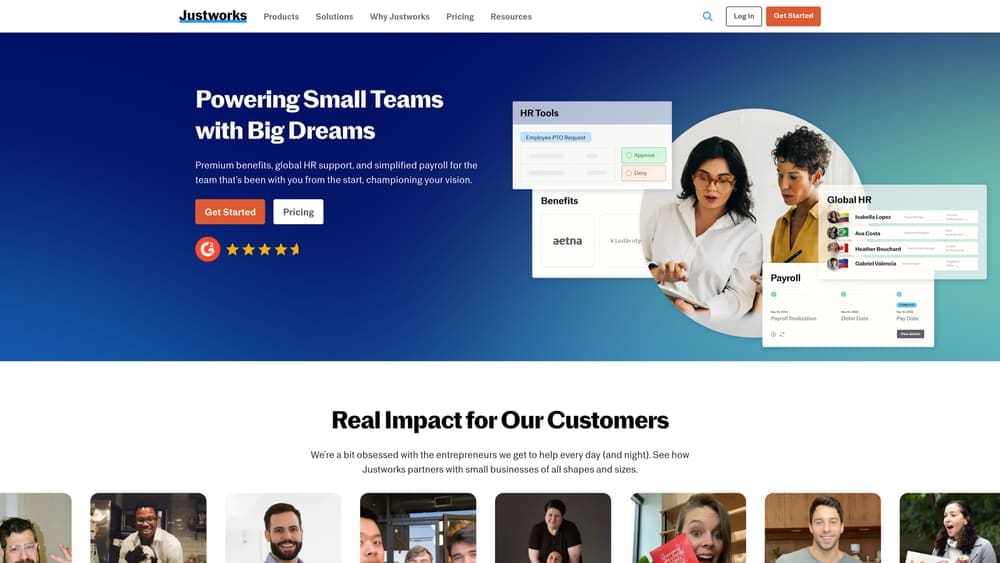
Justworks is a modern PEO platform emphasizing transparent, flat-rate pricing and simplified user experience for growing companies.
Where This Tool Shines
Most PEO pricing is opaque—you get a custom quote with bundled fees that make it nearly impossible to understand what you’re actually paying for. Justworks takes the opposite approach with clear per-employee-per-month pricing published on their website. You know exactly what it costs before you start the conversation.
The platform is built for simplicity. If you don’t need extensive hand-holding and prefer intuitive software over dedicated account managers for every question, Justworks delivers core PEO functionality without the complexity or premium pricing of full-service providers.
Key Features
Transparent Flat-Rate Pricing: Clear per-employee-per-month costs with no hidden fees or bundled markups to decipher.
Intuitive Platform Interface: User-friendly system that doesn’t require extensive training for basic payroll and benefits administration.
Flexible Service Models: Choose between full PEO services or payroll-only options depending on your needs.
Competitive Health Insurance Access: Group health plans with reasonable rates for smaller companies.
24/7 Customer Support: Access to support whenever you need it, not just during business hours.
Best For
Growing logistics companies with 10-100 employees, operations that prefer self-service software over high-touch account management, and businesses frustrated by opaque PEO pricing structures.
Pricing
Basic plan starts at $59 per employee per month for core payroll and compliance. Plus plan at $109 per employee per month includes full benefits administration and HR support.
7. Oasis (Paychex)
Best for: Logistics companies wanting dedicated HR partnership with Paychex infrastructure
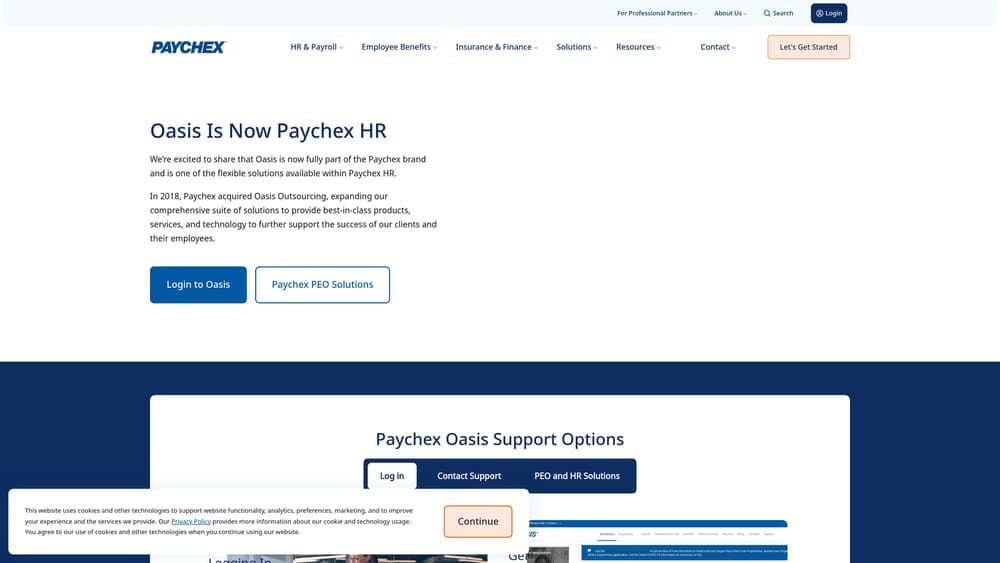
Oasis is a PEO offering high-touch HR support with dedicated business partners, now backed by Paychex’s payroll and compliance infrastructure.
Where This Tool Shines
Oasis combines personalized service with enterprise-grade infrastructure. You get a dedicated HR business partner who learns your operation, understands your challenges, and provides proactive guidance—not just reactive problem-solving when something breaks. This matters when you’re dealing with driver qualification files, DOT compliance, or state-specific employment law questions.
The Paychex acquisition means Oasis now has access to robust payroll infrastructure and multi-state capabilities while maintaining the high-touch service model that made them successful. You’re not sacrificing technology for personal attention or vice versa.
Key Features
Dedicated HR Business Partner: Assigned advisor who knows your operation and provides personalized guidance rather than generic call center support.
Hands-On Compliance Guidance: Proactive alerts and recommendations for regulatory changes affecting your operation.
Workers’ Compensation Management: Claims administration with active oversight to minimize costs and duration.
Multiple Benefits Plan Options: Flexibility to choose benefit levels that match your budget and competitive needs.
Paychex Payroll Infrastructure: Reliable multi-state payroll processing backed by one of the largest payroll providers.
Best For
Mid-sized logistics companies with 50-300 employees, operations that value personal relationships over self-service platforms, and businesses dealing with complex compliance situations that benefit from dedicated expertise.
Pricing
Custom pricing based on employee count and service selection. Generally competitive with other mid-market PEOs, typically in the 3-4.5% of payroll range.
8. CoAdvantage
Best for: Logistics operations with elevated risk profiles and challenging workers’ comp classifications
CoAdvantage is a PEO with specific experience serving industries with higher risk profiles, including transportation, warehousing, construction, and manufacturing.
Where This Tool Shines
If you’ve been turned down by other PEOs because of your workers’ comp classification codes or claims history, CoAdvantage understands your situation. They specialize in industries that other providers consider too risky, and they’ve built their master workers’ comp policies and safety programs specifically for operations like yours.
Their risk management team doesn’t just process claims—they work with you to implement safety protocols that actually reduce incidents. For logistics companies with challenging loss histories, this expertise can be the difference between affordable coverage and prohibitively expensive premiums.
Key Features
High-Risk Classification Experience: Proven track record with workers’ comp codes common in trucking, warehousing, and distribution operations.
Risk Management and Safety Programs: Dedicated support for developing safety protocols tailored to transportation and warehouse environments.
Flexible Service Models: Options ranging from full-service PEO to administrative services only, depending on your needs.
Multi-State Compliance Capabilities: Support for operations spanning multiple jurisdictions with varying regulatory requirements.
Claims Management Expertise: Active claims oversight with focus on minimizing duration and controlling costs.
Best For
Logistics companies with challenging workers’ comp histories, operations in high-risk classification codes that struggle to find coverage, and businesses where safety program development is a priority for cost control.
Pricing
Custom quotes based on risk profile, claims history, and service needs. Generally competitive for higher-risk operations where other PEOs decline coverage or price prohibitively.
Matching Your Logistics Operation to the Right PEO
The right PEO decision depends on your specific operational complexity and cost structure. If you’re running multi-state operations with fluctuating headcount, prioritize providers with strong payroll infrastructure and pay-as-you-go workers’ comp options. Companies with challenging safety records benefit most from PEOs offering dedicated risk management support and proactive claims oversight.
Smaller operations competing for drivers against national carriers should focus on benefits access and competitive packages. Larger companies managing hundreds of employees need analytics capabilities and strategic HR partnership rather than just transactional processing.
The biggest mistake is assuming all PEOs deliver similar value. A provider optimized for professional services won’t understand the specific challenges of managing commercial drivers and warehouse workers. Your workers’ comp classification codes, multi-state compliance requirements, and seasonal workforce patterns require a PEO that’s actually worked with logistics operations before.
Before you commit to a three-year contract, understand the total cost structure. PEO fees typically run 2-6% of payroll, but the real ROI depends on what you’re replacing—current workers’ comp rates, benefits costs, internal HR overhead, and compliance risk exposure. A PEO charging 4% of payroll that reduces your workers’ comp costs by 25% and eliminates a full-time HR position delivers clear value. One charging 3% with minimal impact on your actual cost drivers doesn’t.
Before you sign that PEO renewal, make sure you’re not leaving money on the table. Many businesses unknowingly overpay because of bundled fees, hidden administrative markups, and contracts designed to limit flexibility. We give you a clear, side-by-side breakdown of pricing, services, and contract terms—so you can see exactly what you’re paying for and choose the option that truly fits your business. Contact us
