
Most PEO versus EOR comparisons begin with a services checklist, then declare that both models handle payroll, benefits, and compliance. That advice is convenient and often wrong. The decisive issue in the PEO EOR difference is structural: where the employee works, whether the client already has a legal entity there, and who carries employment liability on paper.
A PEO is built around co-employment. An EOR is the legal employer where the client lacks a registered entity. Those are not interchangeable versions of outsourced HR, and confusing them can produce a mispriced contract, unclear responsibility during a dispute, and an internal HR team that owns risks it thought the provider had accepted.
The comparison below gives the fast answer. The sections that follow explain the mechanics, cost shape, use cases, transition risks, and contract terms without treating the choice as a popularity contest.
Table of Contents
- Why the PEO EOR Difference Matters More Than the Acronyms Suggest
- What Each Model Actually Does Under the Hood
- Side by Side Comparison Across the Decision Criteria That Matter
- Pricing and Total Cost Mechanics for PEO vs EOR
- Matching the Model to Your Use Case
- Transitioning Between PEO, EOR, and Direct Employment
- Contract Red Flags and Negotiation Leverage by Model
- Decision Checklist and Next Steps
Why the PEO EOR Difference Matters More Than the Acronyms Suggest
A PEO makes sense when a company already operates in the relevant market and wants help administering employment. An EOR makes sense when the company wants to hire in a market where it doesn't have its own legal entity. That distinction determines much more than the vendor's invoice. It affects the employment contract, payroll reporting, benefits access, workers' compensation, unemployment administration, and the party expected to answer regulators.
The domestic PEO model has substantial roots in the United States. One neutral industry source reports that PEOs serve about 173,000 small and mid-sized businesses, employ about 4 million workers, and serve clients representing 15.3% of U.S. employers with 10 to 99 employees. Those figures reflect a long-established domestic model centered on payroll, benefits, workers' compensation, and compliance support for companies already operating in the country. The ACC's overview of professional employer organizations provides the underlying context.
EORs solve a different problem. They let a business hire across borders without first forming a local entity, while the client continues directing the employee's day-to-day work. That makes an EOR an employment relationship, not a payroll-only service.
Practical rule: Start the evaluation with the employee's physical work location and the entity that can legally employ that person. Start with features only after those two answers are clear.
The popular shortcut, “PEO for domestic hiring and EOR for international hiring,” is directionally useful but incomplete. A multi-state U.S. company may use a PEO in its established footprint and need another arrangement for a jurisdiction where it lacks registration. A company with a foreign subsidiary may not need an EOR for that country at all.
Even adjacent staffing decisions require the same discipline. Companies comparing permanent employment with a flexible hiring route can use this explanation of contract-to-hire model benefits, but contractor and employee arrangements shouldn't be confused with either PEO or EOR employment. The following analysis names which model fits each situation, where each one breaks, and what finance teams should challenge before signing.
What Each Model Actually Does Under the Hood
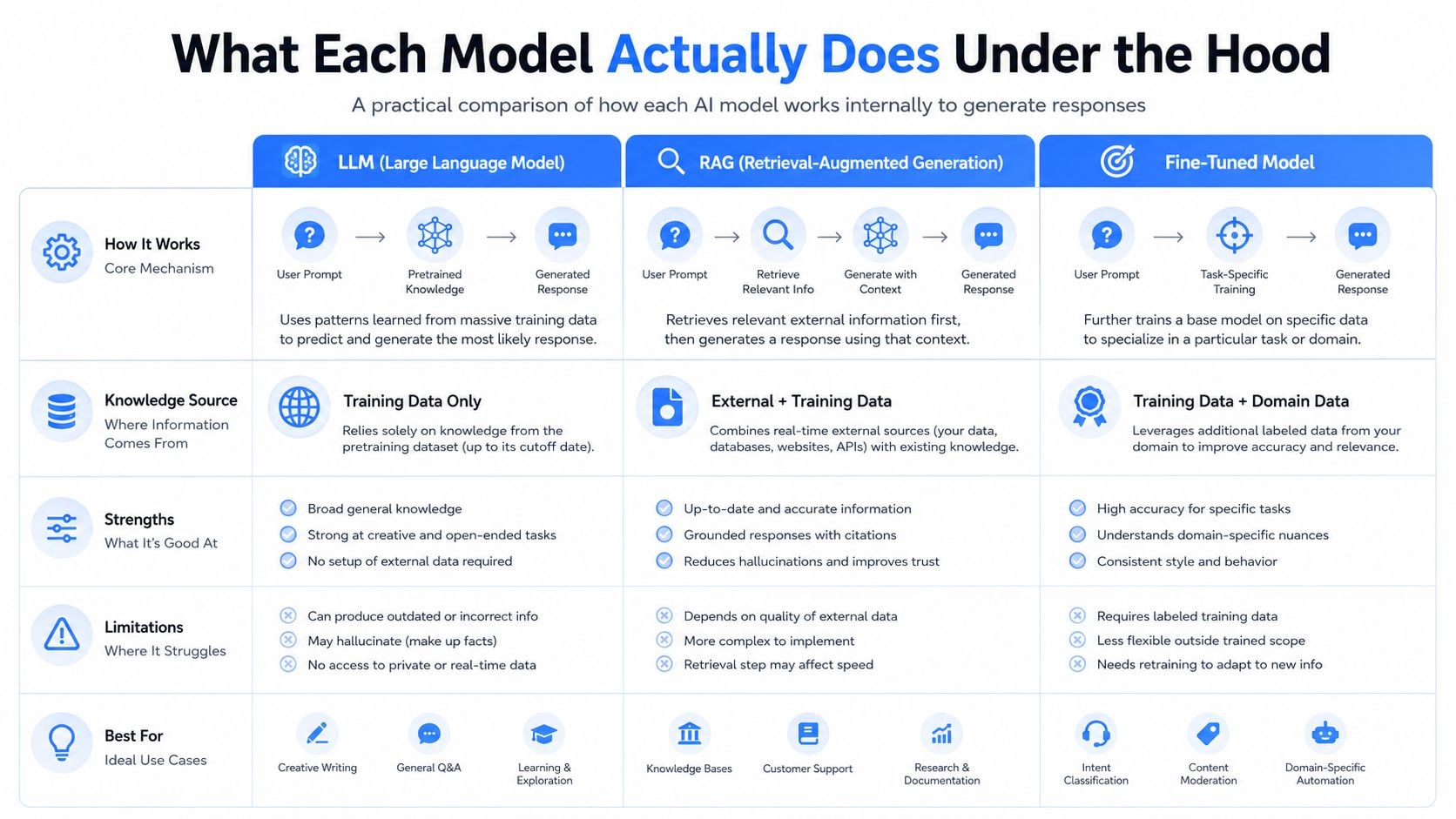
A PEO operates through co-employment. The client retains control over business decisions and daily supervision, while the PEO administers payroll, benefits, employment tax reporting, workers' compensation, and related HR functions. The client still has an employment relationship and remains exposed to employment obligations.
An EOR is the sole legal employer for the worker in the relevant country or jurisdiction. The EOR signs the employment contract, runs payroll, administers statutory benefits, and handles local employment compliance. The client directs the person's work, sets objectives, and manages performance, but the provider carries the formal employer role.
The IRS describes an important technical nuance. Federal tax law doesn't recognize “co-employer” as a tax concept, but a PEO can be designated to perform employer acts for wages under Treasury Regulation 31.3504-2 when it pays wages under a service agreement. That mechanism explains how a PEO can manage payroll tax filing and wage reporting without turning the arrangement into an EOR relationship. The IRS guidance on PEO third-party payer arrangements sets out that distinction.
A domestic PEO example
Consider a 75-person U.S. company with offices in Texas and California. The company already operates in both states and signs a PEO agreement. Employees remain connected to the client's business, but the PEO may run payroll through its federal EIN and issue W-2 reporting under the PEO structure. The PEO coordinates benefits access, workers' compensation coverage, payroll tax administration, and HR support.
The client still directs work, makes hiring decisions, sets compensation within the agreed process, and manages performance. State unemployment account treatment, workers' compensation arrangements, and state registrations must be documented rather than assumed, because the PEO structure doesn't erase the client's underlying operating presence.
An international EOR example
Now consider a Series B startup hiring its first engineer in Berlin without a German entity. An EOR's German legal entity signs the employment contract and issues the local payslip. It handles payroll deductions, statutory benefits, local employment requirements, and employer obligations. The startup manages the engineer's technical work and performance but isn't the legal employer on the contract.
That's why an EOR isn't merely a payroll bureau. It exists to provide the legal employment infrastructure the client doesn't possess. A PEO isn't merely a bulk benefits buyer either. Its value comes from a co-employment arrangement that combines administration, risk processes, and benefits access in a domestic structure. A detailed PEO versus EOR comparison can help teams map those mechanics before requesting proposals.
Side by Side Comparison Across the Decision Criteria That Matter
The following table keeps the decision anchored to entity presence and liability instead of feature volume.
PEO versus EOR decision matrix
| Criterion | PEO, Co-Employment | EOR, Sole Employer on Paper | 25-Person FL to NC Expansion | 200-Person SaaS Acquiring Canadian Team | 10-Person Fund Hiring in Singapore and UAE |
|---|---|---|---|---|---|
| Jurisdiction coverage | Primarily supports domestic employment where the client operates | Supports hiring where the provider has a local employing entity | Useful if the company can establish the required North Carolina footprint | EOR may cover Canada before the acquired structure is integrated | EOR is the practical starting point where the fund lacks local entities |
| Entity requirement | Client generally needs the relevant legal entity or registration | Client doesn't need its own local entity, subject to provider coverage and local rules | PEO works only if the company can legally employ in North Carolina | Existing Delaware entity doesn't itself create Canadian employment capacity | PEO is a poor fit without Singapore and UAE entities |
| Employment liability | Shared operational and employment responsibility | Provider is the legal employer for the worker | Client retains meaningful exposure in the new state | EOR carries formal Canadian employer obligations during integration | EOR reduces the fund's direct foreign-employer exposure |
| Tax filing responsibility | PEO handles agreed payroll tax acts, often under its structure | EOR handles local payroll and statutory filings | Responsibility must be allocated for state payroll and unemployment matters | EOR manages Canadian payroll compliance until direct employment begins | EOR handles local payroll requirements in each covered market |
| Benefits access | Domestic benefits pooling and administration can be a major advantage | Local statutory and market benefits are arranged by the EOR | PEO may improve benefits consistency across U.S. operations | EOR supplies local Canadian employment benefits during the carve-out | EOR provides location-specific packages rather than one domestic plan |
| Contract structure | Client and PEO sign a service agreement, with co-employment terms | EOR signs the employment contract with the worker and contracts with the client | PEO works if the client accepts shared responsibility | EOR is suitable as a bridge while the acquisition is integrated | EOR fits a market-entry employment bridge |
A 25-person domestic services firm expanding from Florida to North Carolina should first determine whether it has the registration and operational basis to employ in North Carolina. If it does, a PEO can consolidate payroll, benefits, workers' compensation, and HR administration. If it doesn't, an EOR may solve the immediate employment issue, but using an EOR for a domestic expansion can be unnecessarily expensive or operationally awkward if the company's long-term plan is to establish its own state footprint.
A 200-person SaaS company with a Delaware C-corp acquiring a small Canadian team has a different problem. A Delaware entity doesn't automatically authorize Canadian employment. An EOR can provide a compliant bridge while the buyer decides whether the acquired operation should sit in a Canadian subsidiary, remain separate, or be reorganized. The EOR wins because the entity gap is real.
A 10-person crypto fund hiring five contractors-to-employees in Singapore and the UAE should not force a U.S. PEO into the decision. The fund needs country-specific employment analysis, local contracts, and a provider with actual coverage in both markets. An EOR is the likely fit for employees, but contractor classification still needs separate review. Neither model should be used to disguise an engagement that remains independent.
EOR coverage also isn't universal. Some jurisdictions impose labor rules that restrict third-party employment or require specific local sponsorship structures, so provider marketing isn't enough. A PEO fails when the client has no relevant entity, while an EOR fails when its local structure cannot legally support the intended arrangement.
Pricing and Total Cost Mechanics for PEO vs EOR
PEO and EOR invoices use different economic engines. A PEO commonly combines an administrative fee, benefits charges, workers' compensation costs, payroll services, and optional HR or compliance add-ons. An EOR generally applies a markup to gross local salary and adds or incorporates employer taxes, statutory benefits, payroll administration, and local insurance.
The headline quote is therefore a poor comparison. A PEO's per-employee fee can look low while medical benefits and workers' compensation drive the actual cost. An EOR's salary markup can look high while it replaces entity setup, local payroll infrastructure, and immediate foreign employment administration.
| Cost Component | PEO | EOR |
|---|---|---|
| Core administration | Often priced per employee per month, with services defined in the agreement | Usually included in a salary-based markup or a combined fee |
| Payroll tax work | PEO performs agreed employer acts and reporting under the PEO structure | EOR handles local employer payroll and statutory filings |
| Benefits | Domestic plan access and employee elections can be a significant cost driver | Country-specific statutory and supplemental benefits affect the invoice |
| Workers' compensation or local insurance | Often separately priced or experience-rated within the PEO arrangement | Usually incorporated into local employment costs or itemized by market |
| Entity costs | Client maintains its operating entities and registrations | Provider supplies the employing entity where it has coverage |
| Setup and renewal | Setup charges and renewal terms can materially change first-year cost | Onboarding, deposits, FX terms, and country-specific changes require review |
| Exit | Contract notice, employee transfers, and tax records need a defined process | Employee termination or transfer must follow local law and contract terms |
Independent pricing guides report PEO implementation or setup charges commonly in the $500 to $2,500 range, with some providers charging $1,500 to $5,000 or more upfront. They also report annual renewal increases frequently ranging from 3% to 7%. Those figures come from this PEO agreement fee analysis, and finance teams should treat them as market-reported ranges, not guaranteed quotes.
A U.S. engineer earning $120,000 through a PEO should be modeled using the quoted administrative fee, health plan cost, workers' compensation, payroll taxes, and any implementation or renewal charges. The same role in Germany through an EOR shouldn't be priced by converting the U.S. salary and applying a casual percentage. German employer taxes, statutory benefits, local insurance, exchange rates, and payroll rules create a different invoice base.
A proposal should also identify extra payroll runs, ACA tracking, employee transfers, deposits, FX adjustments, and contract renewal mechanics. A useful outsourced HR cost guide can support the budgeting exercise, but the signed schedule of fees controls the decision.
Matching the Model to Your Use Case
The right model depends on the employer's operating reality, not the vendor category receiving the most attention in the market.
Domestic SMB with one office
A domestic business with fewer than 50 employees and one established office should usually choose a PEO. The company can gain access to broader benefits administration, payroll support, workers' compensation processes, and HR infrastructure without handing legal employment to an EOR.
An EOR is overkill in this situation. It can create unnecessary contractual distance between the company and its employees while failing to solve a problem the company has. The client already has a local operating structure, so co-employment is the more natural fit.
Multi-state U.S. employer
A multi-state employer needs a state-by-state entity and registration review. If headquarters is covered by a PEO but a satellite state lacks the required footprint, an EOR can be considered for that satellite population while the headquarters remains on the PEO. Once the company has enough activity to justify its own state entity, direct employment may become the cleaner long-term structure.
That hybrid approach requires careful payroll and unemployment-tax coordination. It shouldn't be adopted because an EOR promises faster onboarding.
Cross-border hiring without foreign entities
For a company hiring employees abroad without foreign entities, an EOR is usually the only practical immediate path. The provider becomes the local employer, handles country-specific administration, and lets the client test a market without forming a subsidiary first.
An EOR still can't sponsor an immigration visa by itself. Work authorization, visa sponsorship, and right-to-work obligations require a separate country-specific assessment.
Contractor-heavy and project-based teams
Neither a PEO nor an EOR is a universal contractor solution. A PEO is designed for employees in a co-employment structure, while an EOR generally converts the relationship into employment rather than preserving a genuine independent-contractor arrangement. Misclassification risk doesn't disappear because a platform processes the invoice.
Companies should classify the work based on the actual relationship, control, and local law. A contractor management or contractor-of-record service may be more appropriate where the engagement is legitimately contingent.
M&A carve-outs and transitional populations
M&A carve-outs deserve special treatment. Keeping a target's employees on a PEO during a 100-day integration can be sensible for continuity, but it can also hide unresolved ownership, benefit, payroll, and liability issues. The buyer should establish an end date, data-transfer plan, employment-contract strategy, and decision point for direct employment or EOR continuation.
Companies that need broader administrative support can also review outsourced human resources options, but the provider should be selected only after the entity and liability decision is documented.
Transitioning Between PEO, EOR, and Direct Employment
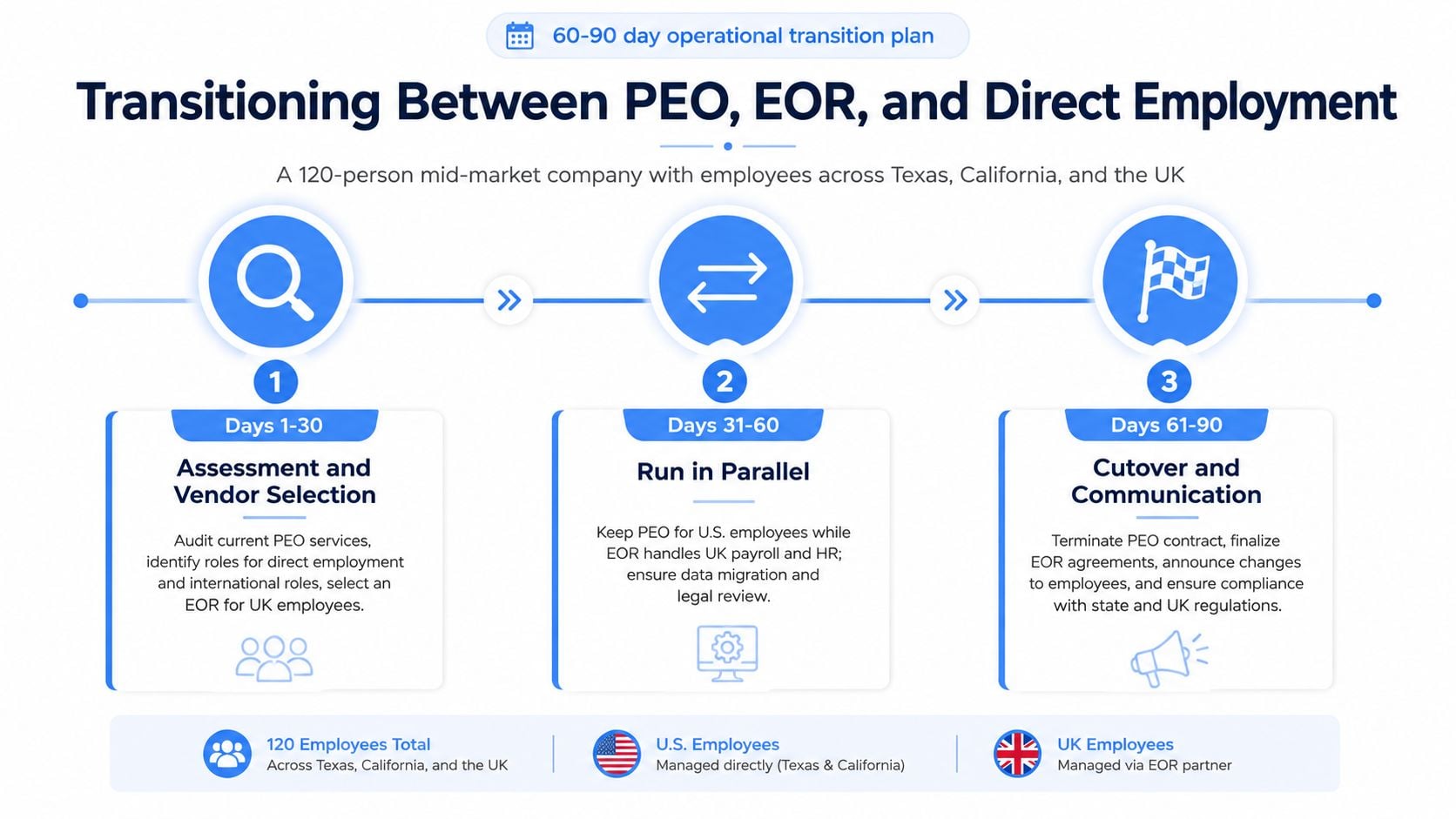
A representative 120-person mid-market company with employees across Texas, California, and the UK is moving from a PEO arrangement to a direct-plus-EOR structure. The intended outcome is direct employment for the U.S. population and EOR employment for the UK population while the company evaluates longer-term entity ownership.
The transition needs an operating calendar, not just a termination notice. A 60 to 90 day window is a practical planning horizon for sequencing vendor selection, legal review, employee communications, data migration, benefits decisions, and payroll cutover. The exact timing depends on the contract, jurisdictions, and provider implementation requirements.
Days 1 through 30
The company audits the PEO agreement, employee census, benefits elections, payroll calendars, tax accounts, workers' compensation records, equity documents, and open claims. Finance models the direct-employment cost for Texas and California separately from the EOR cost for UK employees.
Legal and HR then confirm who will issue final PEO payroll records and which entity will employ each U.S. worker. This is also the point to select the UK EOR and verify that its entity supports the intended employment arrangement.
Days 31 through 60
The PEO continues paying the U.S. employees while the EOR prepares UK contracts and payroll. The company may need two payroll systems operating during at least one cycle, with a controlled reconciliation between them.
The payroll team must determine who issues W-2s for the PEO period and any stub period, rather than assuming the direct employer can reproduce the PEO's records. State unemployment tax account assignment also needs attention after the new employer takes over. The rate and account treatment should be confirmed with the relevant state authorities and payroll advisors.
Days 61 through 90
The company communicates the change in plain language. Employees need to know whether pay dates, benefits, equity vesting, service dates, managers, and employment terms change. Equity vesting continuity requires document review, while benefits portability windows can close before employees realize an election is required.
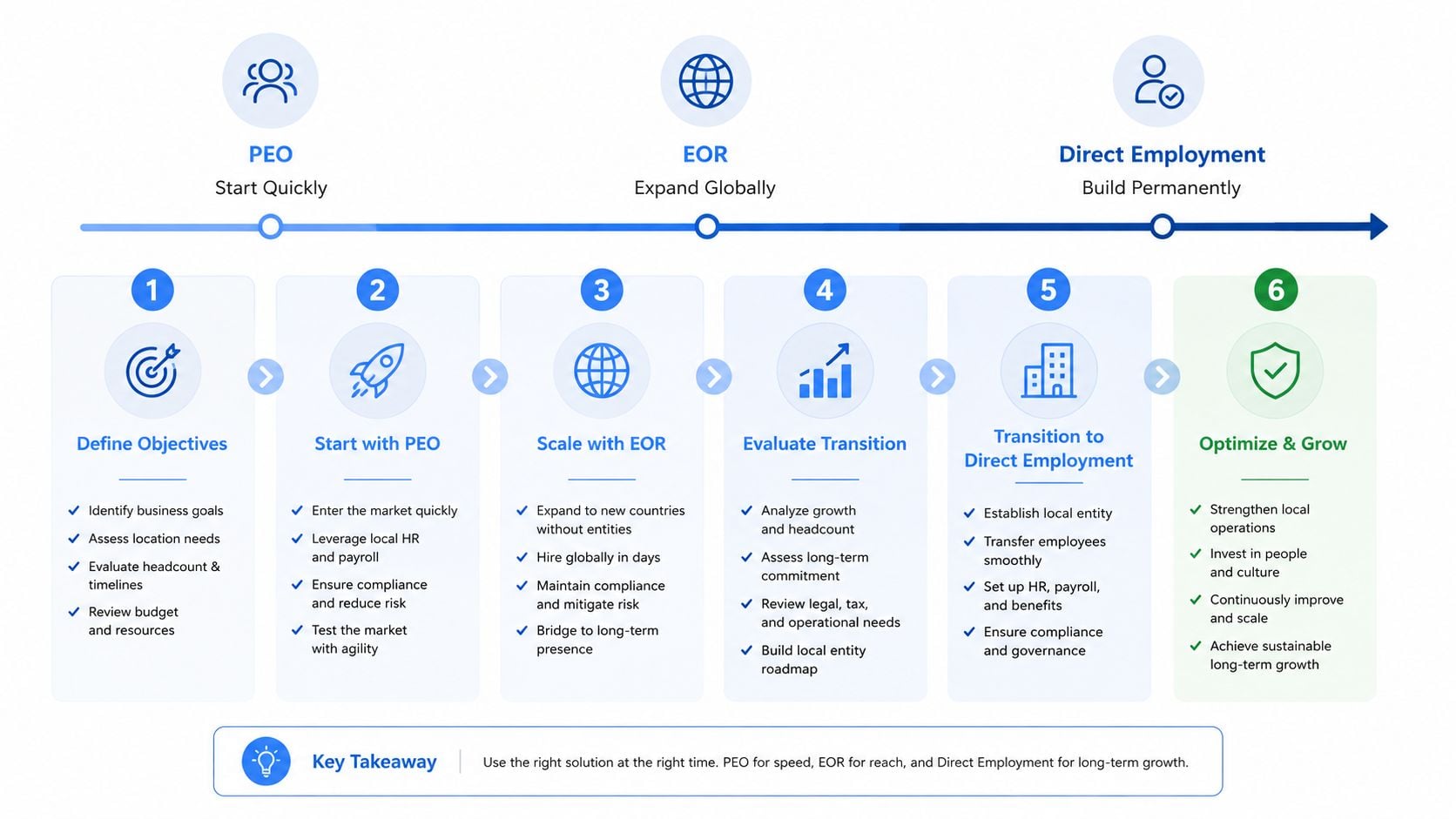
The inverse path also matters. When a country develops a sufficiently large local population, the company can compare an owned entity and direct payroll against continuing EOR markup. A provider's exit process should be documented before the first employee transfer, which is why an EOR and PEO exit strategy belongs in the original implementation plan, not in the crisis folder.
Transition warning: Payroll continuity is only one workstream. Equity, service dates, benefits elections, tax records, and employee communications can create larger problems than the vendor cutover itself.
Contract Red Flags and Negotiation Leverage by Model
The contract determines whether the advertised risk transfer survives a real dispute. PEO and EOR buyers should negotiate the clauses that define cost escalation, responsibility boundaries, employee transfers, intellectual property, and termination.
| Risk Area | PEO Red Flag | PEO Counter | EOR Red Flag | EOR Counter |
|---|---|---|---|---|
| Price escalation | Annual PEPM increase above 4% without service justification | Request a rate cap, advance notice, and a right to terminate without penalty | Unilateral markup or FX changes | Require itemized changes, notice, and a termination right |
| Liability scope | Worksite employee carve-outs excluding higher-paid or sensitive roles | Require all covered employees to receive the same stated protection, or list exclusions clearly | Provider claims broad protection but contract leaves client indemnity open-ended | Define provider responsibility for employer acts and cap client exposure |
| Exit terms | Voluntary termination fee or long notice period | Request a defined transition period and no fee for convenience termination | Benefits or payroll records become inaccessible after termination | Require data delivery, employee-transfer cooperation, and record retention |
| Co-employment termination | PEO can exit during a misclassification audit | Require notice, orderly remediation, and continued support for existing claims | EOR can terminate country coverage without a replacement plan | Require advance notice and transition assistance |
| Intellectual property | Client isn't explicitly named as IP owner in local employment documents | Add direct assignment language and confirm local-law mechanics | Local contract assigns IP only to the EOR | Require present assignment or enforceable pass-through assignment to the client |
| Benefits portability | Employees can lose access during a provider change | Add continuity obligations and defined election windows | Benefits cease immediately on EOR exit | Require portability information and transition support |
A PEO proposal with a PEPM escalator above 4% should receive a direct counterproposal for a cap, a service-level explanation, and advance notice. A PEO may also push back on carve-outs, exit fee limits, and audit-related termination language. U.S.-focused PEOs often negotiate hardest around insurance, workers' compensation, and underwriting terms.
For EORs, any markup above a 5% to 8% spread over local salary should be itemized rather than accepted as a single opaque percentage. That threshold is a negotiation screen, not a universal market rule. The buyer should request the components covering employer taxes, statutory benefits, payroll, insurance, FX, deposits, and any implementation fee.
Global EOR aggregators may resist IP, FX, and country-substitution language because they rely on multiple local entities. Regional specialists may defend local contract terms more firmly but can offer clearer control over the employing entity. The buyer should bring a redlined agreement, a target rate, and a backup provider quote. These PEO contract negotiation red flags provide a useful checklist for preparing that conversation.
Decision Checklist and Next Steps
The decision can be reduced to four tests. Each one should be answered for the actual employee population, not for the company in the abstract.
Entity footprint
- Existing entities: Does the company have a legal entity or required registration where each employee works?
- Expansion plan: Will hiring remain domestic, or will employees be added abroad?
- Provider coverage: Does the proposed EOR employ workers in every target jurisdiction?
If the company has the required domestic footprint and no foreign hiring plan, default toward a PEO. If it lacks foreign entities, examine an EOR first.
Liability tolerance
- Employment claims: Can the company manage direct exposure to wage, termination, unemployment, and workers' compensation matters?
- Local expertise: Does the internal team understand the relevant employment rules?
- Ownership: Is the client prepared to remain responsible for day-to-day employment compliance under co-employment?
Lower tolerance for foreign employment liability favors an EOR. A PEO remains appropriate when the company wants domestic support but accepts shared responsibility.
Cost shape
- Predictability: Is a per-employee administrative fee easier to budget than a salary-based markup?
- Benefits: Will domestic benefits access materially affect the workforce budget?
- Scale: Would an owned entity or direct payroll become more efficient as the population grows?
PEO costs tend to be built around domestic workforce administration and benefits. EOR costs follow local salary and country requirements.
Exit optionality
- Notice: Can the company leave within the required business window?
- Records: Will payroll, tax, benefits, and employment records be delivered promptly?
- Continuity: Can employees preserve service dates, equity treatment, and benefits access?
If exit terms are unclear, the contract isn't ready to sign.
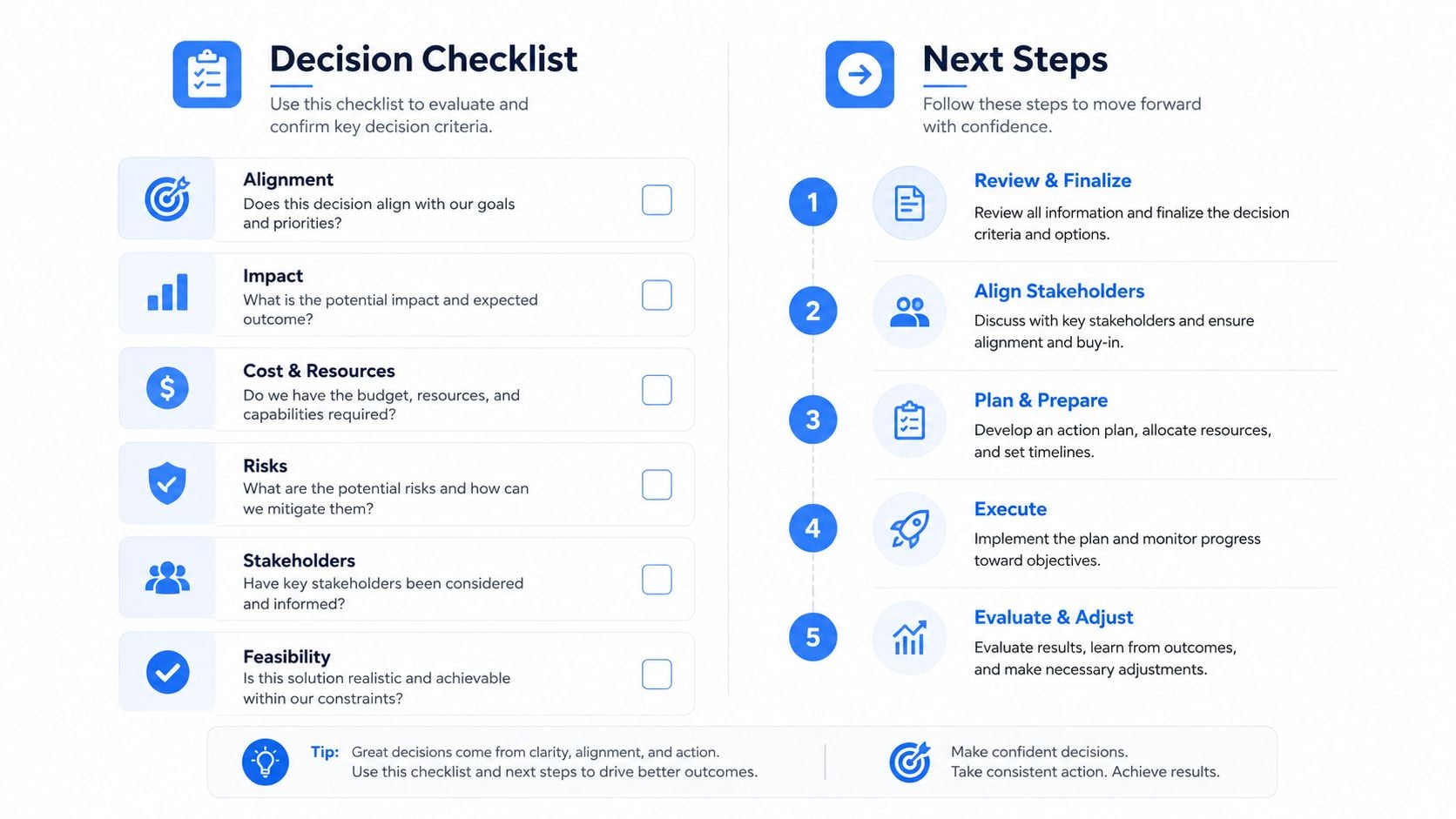
Domestic, entity-rich employers should shortlist two PEOs and request complete PEPM proposals, including setup, renewal, benefits, workers' compensation, and exit charges. Employers hiring abroad without entities should request country coverage maps and itemized EOR markups from two providers. Companies on the boundary should run a dual-track RFP comparing continued PEO co-employment with the cost of building another U.S. entity or using direct employment.
The question that resolves most hesitation is simple: where do the employees physically work, and who is on the hook if something goes wrong there?
PEO Metrics helps HR, finance, and leadership teams compare PEO pricing, benefits, service models, contract terms, and compliance support, including the trade-offs between PEO and EOR structures. Visit PEO Metrics to request an independent comparison before selecting, switching, or renegotiating a provider.
