
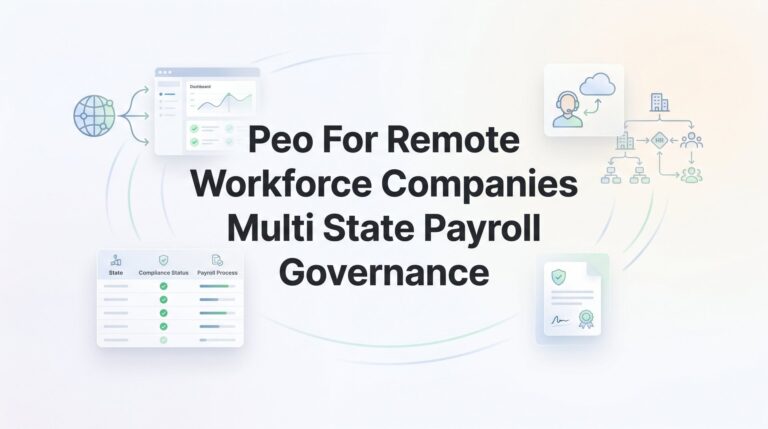
PEO for remote workforce companies navigating multi-state payroll governance offers a practical solution to the complex tax nexus, registration obligations, and state-level compliance variations that distributed teams face. This guide examines how the right PEO absorbs the week-to-week administrative burden of managing employees across multiple states, helping remote-first companies scale without drowning in payroll compliance complexity.
Logistics companies scaling from dozens to hundreds of employees across multiple states face compounding HR challenges that generic solutions can’t handle. This guide explains how hr infrastructure scaling using peo for logistics companies works in practice — covering payroll complexity, DOT compliance, workers’ comp classifications, and multi-location benefits management tailored specifically to warehouse, driver, and dispatch workforces.
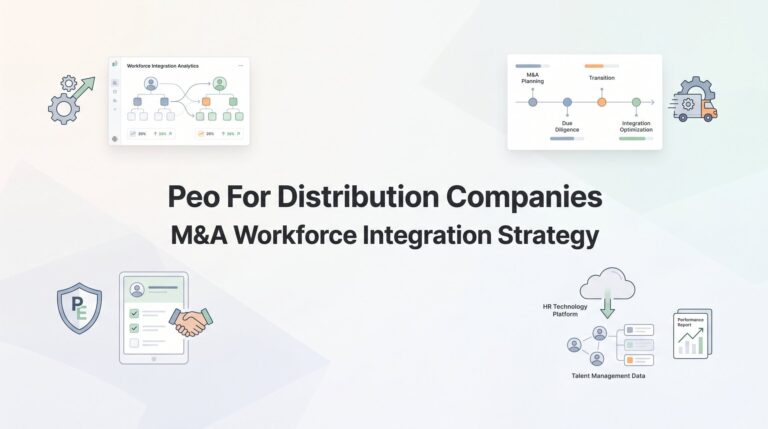
Distribution companies navigating post-acquisition workforce integration face complex challenges—from merging hourly crews and blending mid-year benefits to reconciling workers’ comp classifications across facilities. This guide evaluates the eight best PEO providers for distribution companies’ M&A workforce integration strategy, ranking them on onboarding speed, benefits harmonization flexibility, multi-site compliance consolidation, and proven experience with logistics and distribution work…
Remote-first companies managing employees across multiple states face compounding employment law complexity that creates serious litigation exposure. A PEO for remote workforce companies litigation risk mitigation framework provides the operational infrastructure to navigate multi-state compliance requirements—covering overtime rules, termination protocols, workers’ comp, and leave mandates—reducing legal vulnerability without eliminating the need for sound HR practices.
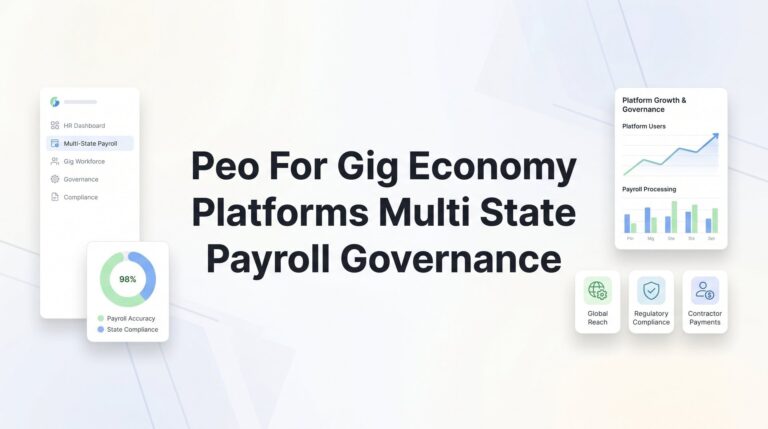
PEO for gig economy platforms offers a practical solution for managing multi-state payroll and governance challenges unique to hybrid workforces that combine 1099 contractors with W-2 employees across rapidly expanding jurisdictions. This guide explains how a PEO can handle state-specific tax registration, compliance obligations, and HR infrastructure so platform operators can scale into new markets without building costly internal compliance systems from scratch.
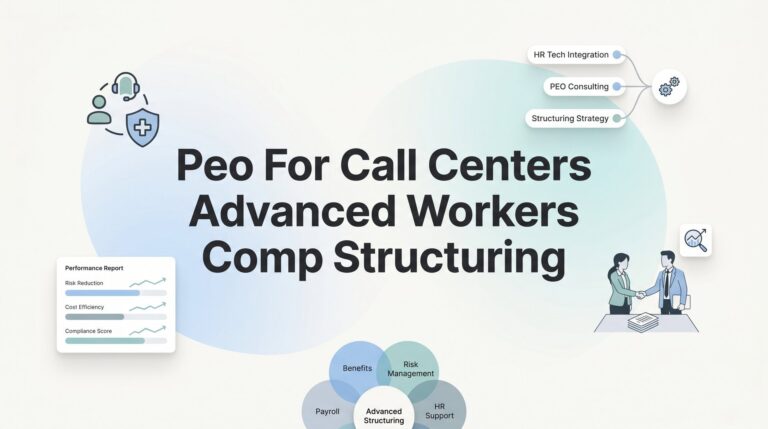
Call centers often overpay for workers’ comp by getting lumped into generic class codes that don’t reflect their actual risk profile. This guide covers seven advanced strategies for PEO for call centers advanced workers comp structuring, helping operators move beyond default pricing to intelligently manage claims, class codes, and coverage costs through co-employment arrangements.
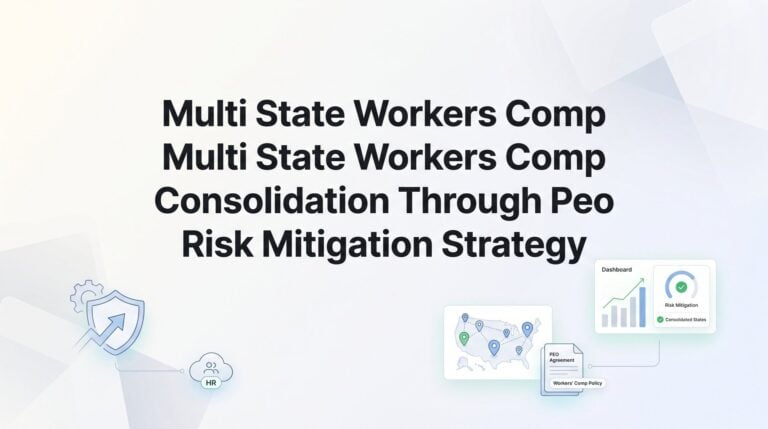
Multi-state workers’ comp consolidation through a PEO risk mitigation strategy can dramatically reduce administrative burden, lower experience modification rates, and unlock better master policy pricing — but only when executed correctly. This playbook walks business owners through the key considerations for evaluating PEO partnerships, avoiding common pitfalls like hidden premium markups and coverage gaps, and building a sustainable compliance framework across multiple state jurisdictions.
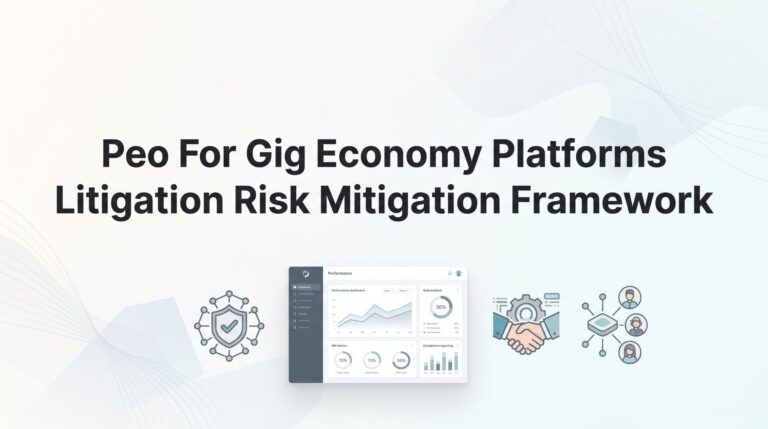
Gig economy platforms face escalating worker misclassification risks from state enforcement actions and class action lawsuits, making a structured litigation risk mitigation framework essential. A PEO for gig economy platforms litigation risk mitigation framework offers a strategic approach to managing classification exposure across multi-state operations, even for platforms that rely heavily on 1099 contractors rather than traditional W-2 employees.
Call centers facing high turnover, shift-based scheduling, and rising HR expenses can leverage a PEO for call centers benefits cost containment strategy through seven specific tactics that address real operational cost pressures. This guide goes beyond generic outsourcing claims to identify where a PEO relationship actually reduces spending—and where it doesn’t—based on your headcount, state footprint, and workforce structure.
PEO for ecommerce companies managing multi-state payroll and governance challenges offers a practical solution for brands that have rapidly expanded across multiple states, accumulating complex tax registrations, employment laws, and compliance risks. This guide examines how a PEO can handle multi-state payroll, workers’ comp, and regulatory obligations for ecommerce operations with mixed workforces—including warehouse staff, remote employees, and seasonal workers—while highlighting where the…

PEO payroll consolidation for financial reporting is essential when your PEO bundles wages, taxes, benefits, and admin fees into a single invoice that obscures true labor costs. This guide provides a step-by-step process for breaking apart PEO billing data and mapping it correctly to your general ledger, so your P&L, balance sheet, and audit documentation accurately reflect what your organization spends on people.
Marketing agencies scaling toward enterprise contracts face unique compliance challenges—managing mixed workforces of W-2 employees, contractors, and freelancers across multiple states while satisfying rigorous vendor qualification requirements. This guide evaluates the 8 best PEOs for marketing agencies’ enterprise compliance risk management, focusing on multi-state regulatory depth, worker classification support, data security standards, and the flexibility to handle the irregular workforce…