
PEO for ecommerce companies offers benefits, cost containment, and a scalable HR strategy specifically designed for the industry’s complex workforce challenges — including seasonal headcount swings, multi-state compliance, and mixed employee classifications. This guide breaks down how partnering with a Professional Employer Organization can reduce overhead, streamline payroll and benefits administration, and build an HR infrastructure that grows alongside your operation without eroding alread…
SaaS companies navigating multi-state hiring, equity compensation, and enterprise due diligence scrutiny need more than basic payroll support. This guide evaluates the 8 best PEO for SaaS companies enterprise compliance risk management solutions, covering how each platform handles contractor misclassification, IP agreements, SOC 2 alignment, and the layered regulatory exposure that comes with distributed tech workforces in 2026.
Transitioning your workforce to a PEO requires careful workers comp class code restructuring under a PEO compliance framework, as existing codes get re-evaluated against the PEO’s master policy and carrier underwriting rules. This guide covers how to audit, restructure, and validate your classifications before and during the transition to avoid misclassification penalties, inflated premiums, and coverage gaps under co-employment.
Understanding when a PEO makes compliance worse is critical for businesses that assume co-employment automatically reduces regulatory risk. This article examines the specific failure modes—from misaligned accountability to false confidence—that can lead to audit letters, tax liens, and employment lawsuits, helping you identify and protect against the compliance gaps that PEO sales pitches never mention.
Merging two SaaS workforces after an acquisition creates immediate payroll, benefits, and compliance complexity that the wrong HR partner can turn into a retention crisis. This guide evaluates the best PEO for SaaS companies M&A workforce integration strategy, highlighting providers built to handle stock option administration, contractor reclassification, and aggressive 60-120 day integration timelines across distributed remote teams.
Logistics companies facing rising benefits costs and high workforce turnover can leverage a PEO for logistics benefits cost containment strategy to access large-group health plan pricing, streamlined workers’ comp management, and HR infrastructure — without sacrificing the competitive benefits packages needed to retain drivers and warehouse staff in a demanding labor market.
A strong PEO workers comp strategy for construction companies requires more than simply signing with a PEO — it demands understanding class codes, EMR calculations, and subcontractor liability before structuring the arrangement. This guide walks construction firms through how to evaluate, negotiate, and implement a PEO relationship that actually reduces comp costs across complex, multi-trade jobsites.
SaaS companies face unique employment litigation risks—remote workforces, contractor misclassification, equity complications, and rapid headcount changes—that generic PEO solutions aren’t equipped to handle. This guide evaluates the best PEOs for SaaS companies using a litigation risk mitigation framework focused on multi-state compliance depth, EPLI coverage, contractor classification support, and the operational flexibility software companies require to stay protected through every growth s…
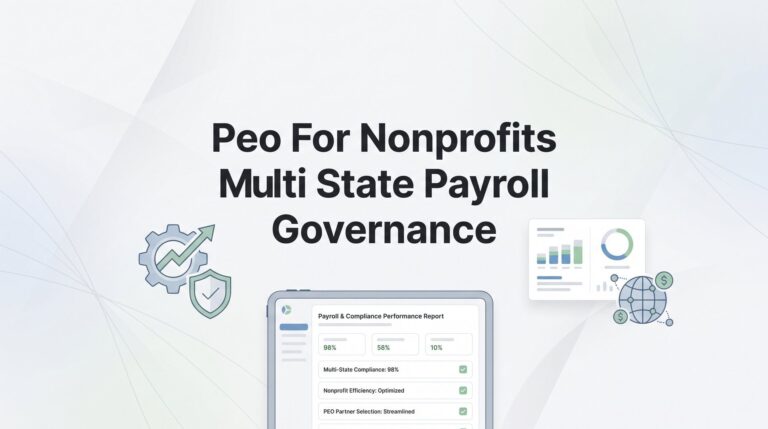
Nonprofits operating across multiple states face unique payroll compliance and governance challenges that standard PEO guidance often overlooks. This guide explores how PEO for nonprofits multi-state payroll governance decisions differ from for-profit arrangements, covering unemployment tax treatment, board oversight responsibilities, and the critical questions mission-driven organizations must ask before entering a co-employment relationship.
Most advice about the employee handbook for small business gets the sequence wrong. It starts with a template, a mission statement, and…
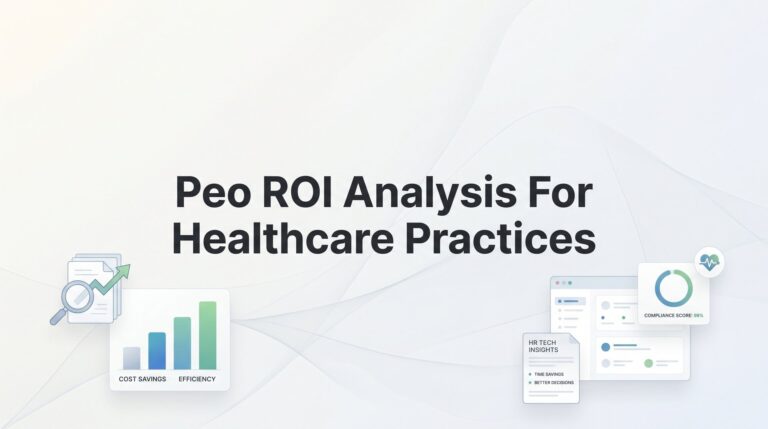
A PEO ROI analysis for healthcare practices requires a specialized approach that accounts for high clinical benefits costs, multi-layered compliance obligations across HIPAA and OSHA, and the unique staffing mix of physicians, medical assistants, and administrative staff. This guide provides a step-by-step framework to accurately calculate whether a PEO delivers genuine savings for your practice.
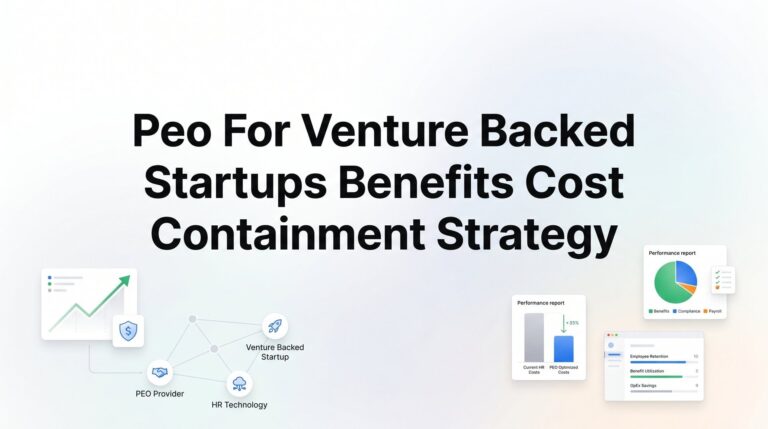
Venture-backed startups can significantly reduce benefits spending and compliance overhead by leveraging a PEO for venture backed startups benefits cost containment strategy that goes beyond basic health insurance access. This guide outlines seven actionable tactics founders use between Series A and Series B to negotiate smarter PEO arrangements, benchmark costs, and optimize burn rate without sacrificing the talent-competitive benefits packages investors expect to see.