
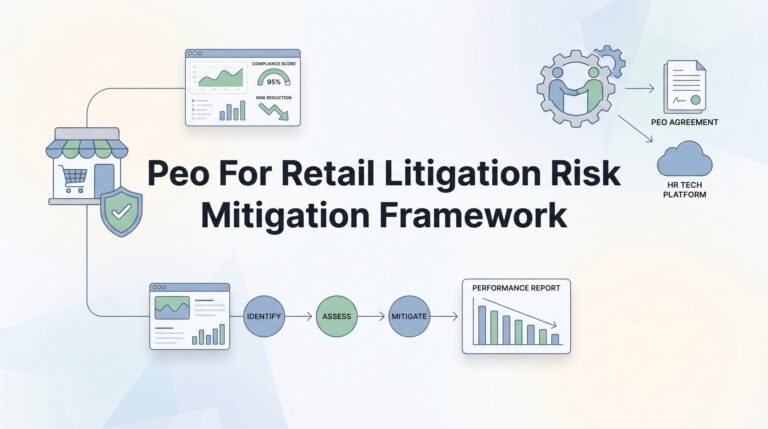
Retail businesses face compounding legal exposure from high turnover, inconsistent documentation, and complex scheduling laws, making a structured peo for retail litigation risk mitigation framework essential. Unlike standard PEO arrangements focused on payroll and benefits, the right co-employment partnership actively reduces lawsuit vulnerability through retail-specific compliance systems, termination protocols, and workforce documentation practices that protect operators before disputes es…
Security companies face unique HR and compliance challenges—from multi-state guard licensing to high-risk workers’ comp classifications—that generic PEO providers often mishandle. This guide evaluates the best PEOs for security companies’ enterprise compliance and risk management needs, focusing on providers with proven experience handling armed guard classifications, government contract obligations, and high-turnover workforce infrastructure.
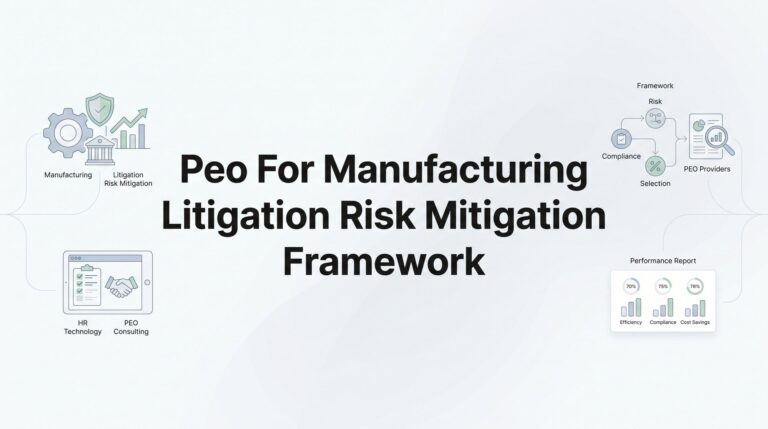
Manufacturing operations face simultaneous litigation exposure from OSHA violations, workers’ comp disputes, and wrongful termination claims that can strike all at once. This practical PEO for manufacturing litigation risk mitigation framework breaks down where legal exposure actually lives on the production floor and how a properly structured co-employment arrangement can meaningfully reduce that risk—rather than simply layering compliance theater over existing HR administration.
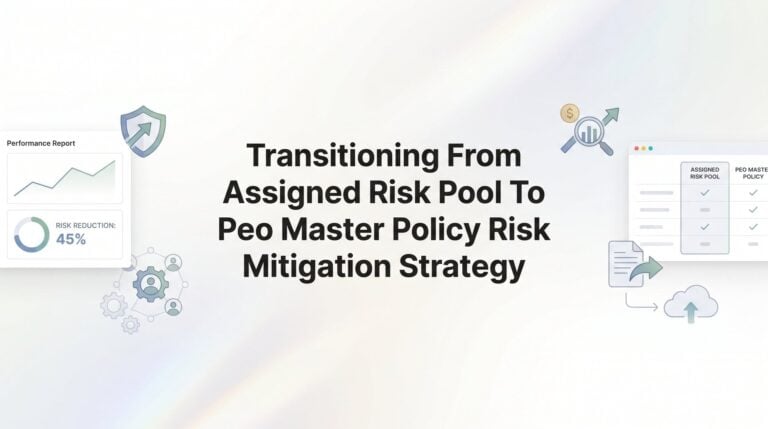
Businesses trapped in an assigned risk pool can escape punitive premiums by transitioning from assigned risk pool to PEO master policy risk mitigation strategy, which involves joining a pooled workers’ comp program that improves rates and restores coverage options. This step-by-step guide covers how to qualify, what PEOs evaluate during underwriting, and how to strategically position your claims history to gain acceptance into a master policy program.
A PEO growth stage cost comparison model must evolve alongside your business, since the variables, regulatory requirements, and service needs that matter at 12 employees look completely different at 75 or 200. This guide outlines seven practical strategies to help business owners build a scalable PEO evaluation framework that accounts for current size and future growth, avoiding the common mistake of applying a one-size-fits-all cost comparison approach.
Healthcare businesses face compounding litigation risks—from wage-and-hour claims to HIPAA-adjacent employment conflicts—that most small-to-midsize practices lack the infrastructure to manage. A well-structured PEO for healthcare litigation risk mitigation framework can meaningfully reduce exposure, but only when the PEO brings healthcare-specific compliance depth rather than generic HR templates that may introduce new vulnerabilities.
Reducing your experience modification factor using PEO financial impact analysis requires understanding how PEO workers’ comp structures work — including whether your claims history transfers to their master policy or stays tied to your FEIN. A high e-mod above 1.0 compounds premium costs significantly each year, but the right PEO partnership, combined with genuine loss prevention investment, can help businesses systematically lower their modification rate over time.
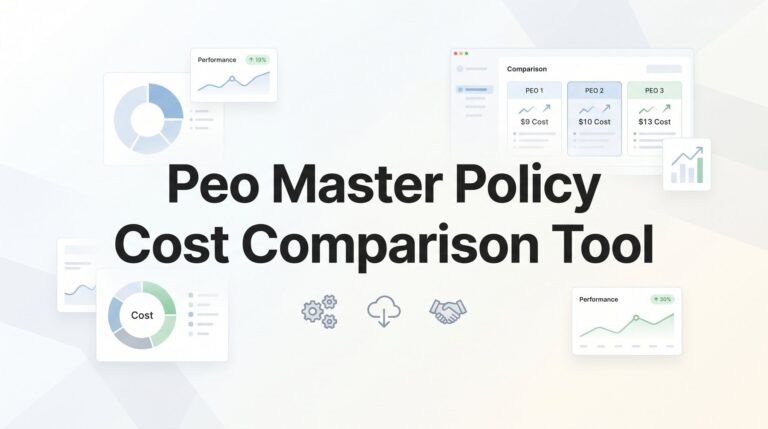
A PEO master policy cost comparison tool helps businesses cut through bundled pricing to isolate and compare the true insurance costs hidden within PEO quotes, including workers’ comp rates, EPLI coverage, and liability structures. This guide evaluates the seven best tools available in 2026 based on their ability to surface master policy components, enable side-by-side provider comparisons, and deliver actionable insights for decision-makers facing potentially thousands of dollars in annual c…
A PEO payroll error reduction cost model helps business owners move beyond surface-level corrections to quantify the true financial impact of payroll mistakes, including hidden costs most operators overlook. This practical framework walks through a structured analysis to determine whether outsourcing payroll through a PEO makes financial sense based on error reduction alone.
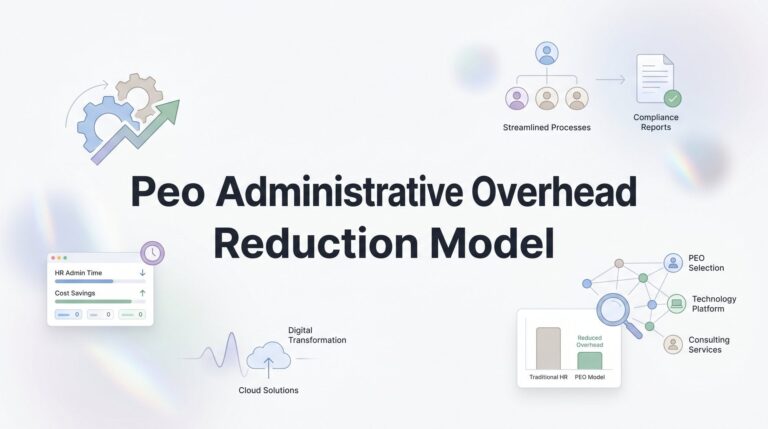
A PEO administrative overhead reduction model breaks down exactly where administrative costs live in your business, what a PEO actually absorbs versus what remains your responsibility, and how to calculate whether the arrangement delivers real savings or simply shifts expenses. Understanding the mechanics before signing helps business owners avoid paying PEO fees on top of existing costs rather than replacing them.
Businesses often lack visibility into whether their PEO costs are competitive or inflated, making it difficult to negotiate effectively. This guide reviews eight leading PEO financial benchmarking tool options that provide real cost comparisons, expose hidden fees, and deliver actionable pricing data to help companies make smarter decisions when evaluating or renewing PEO contracts.
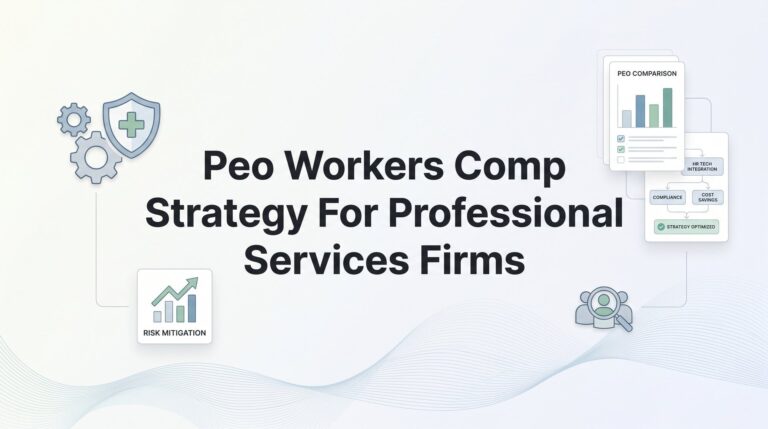
Professional services firms using PEOs often overpay for workers’ comp due to misclassified job codes, inflated experience modification rates, and poorly structured master policies that don’t reflect their low-risk workforce. A deliberate PEO workers’ comp strategy for professional services firms helps law practices, accounting firms, IT consultancies, and similar businesses audit their current setup, correct classification errors, and negotiate coverage that accurately matches their actual r…