
Construction companies can achieve significant insurance cost control using a PEO by leveraging shared workers’ comp pools, better classification codes, and specialized underwriting relationships that reduce premiums across workers’ comp, general liability, and health coverage. This guide explains how to evaluate whether a PEO is the right fit for your construction business and how to structure the arrangement to maximize savings based on your specific claims history and workforce.
Building a PEO workforce governance documentation framework helps businesses clearly define ownership, responsibilities, and accountability within co-employment relationships, preventing costly ambiguity during audits, employee disputes, and provider transitions. This guide outlines seven practical strategies for creating living documentation—covering policies, process maps, and accountability records—that protects your organization when compliance issues arise and ensures smoother PEO relati…

A PEO payroll tax risk cost model helps businesses move beyond headline pricing to quantify their true tax exposure under a PEO arrangement. This practical framework covers missed deposits, worker misclassification, and multi-state unemployment tax variables—giving employers a risk-adjusted way to evaluate PEO proposals before signing and avoid costly surprises during audits or contract disputes.
A practical PEO workers comp strategy for multi location retailers requires deliberate setup to manage state-by-state classification codes, rate structures, and varying risk profiles across store locations. This tactical guide walks retail operators through the specific steps to consolidate workers’ comp complexity through a PEO while staying compliant with each state’s regulatory requirements and keeping multi-location operations manageable.

Building an effective PEO cross-functional coordination model requires deliberate structure across finance, operations, legal, IT, and HR to prevent costly breakdowns in your co-employment relationship. This guide outlines seven practical strategies specifically designed for companies with 25–150 employees to streamline handoffs, maintain compliance, and eliminate the duplicated work that derails most PEO implementations once the initial setup phase ends.
A PEO HR investment return framework gives businesses a structured way to measure what their PEO actually delivers beyond the invoice, capturing hidden returns like reduced workers’ comp premiums, recovered HR time, avoided compliance penalties, and competitive benefits access. This practical decision-making approach helps you move past gut feelings and vendor-supplied renewal reports to evaluate your PEO investment with real financial clarity.
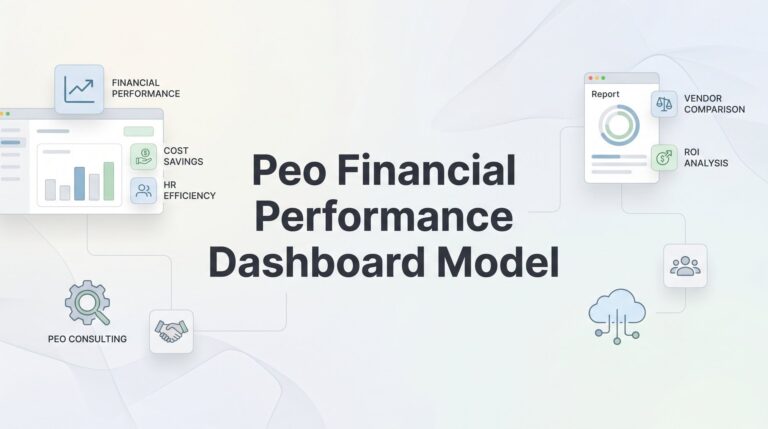
A PEO financial performance dashboard model gives business owners and HR leaders an independent framework to track whether their PEO arrangement is genuinely saving money over time. Rather than relying on vendor-provided reports or renewal presentations, this self-built model uses your own pulled data to measure real financial performance, replacing gut feelings with structured, ongoing visibility into the true value of your PEO relationship.
Businesses running a hybrid HR model often struggle with duplicated work, unclear ownership, and cost inefficiencies between their PEO and internal HR teams. This guide reviews the 9 best tools for building a PEO hybrid HR service optimization framework in 2026, selected for their ability to improve cost transparency, clarify service ownership, and support smarter decision-making as your organization scales.

Managing benefit fiduciary liability under a PEO model requires a proactive risk mitigation strategy, as partnering with a PEO shifts—but never fully eliminates—your ERISA responsibilities. This guide breaks down exactly which fiduciary duties transfer, which remain yours, and the practical steps business owners should take to protect themselves through proper documentation, contract review, and ongoing oversight.
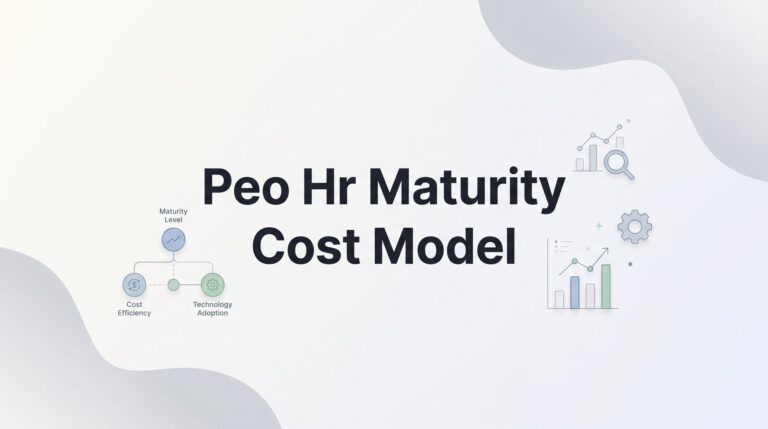
The PEO HR maturity cost model reveals why two identical-sized companies can pay the same PEO fees yet receive vastly different value — and it comes down to your existing HR sophistication, not headcount. This framework helps businesses assess their internal HR capabilities before signing a PEO contract, so they can accurately determine fair pricing, identify negotiation leverage, and avoid overpaying for services they already handle in-house.
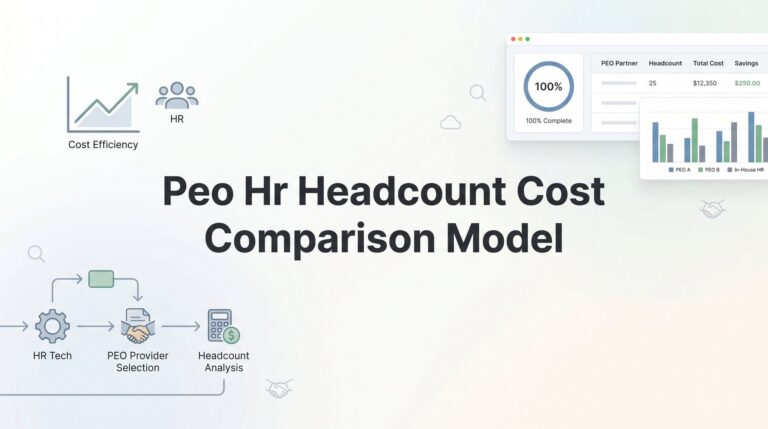
Building a reliable PEO hr headcount cost comparison model requires more than lining up quotes — it means projecting how pricing structures shift as your workforce grows. This guide outlines seven strategies for modeling PEO costs across headcount tiers, payroll percentages, and growth trajectories so you can identify the provider that remains cost-effective long-term, not just at your current employee count.
The PEO labor cost volatility reduction model helps businesses stabilize unpredictable labor expenses—including workers’ comp spikes, health insurance increases, and unemployment tax shifts—by pooling risk across thousands of co-employed workers through a Professional Employer Organization. This practical framework explains how co-employment spreads cost shocks so individual employers avoid absorbing the full financial impact of a bad year, though results vary significantly by provider.