

A PEO administrative efficiency model gives business owners a structured framework to measure whether their PEO partnership genuinely reduces total HR administration hours or simply shifts the workload elsewhere. This practical approach helps companies evaluate PEO performance beyond the initial sales pitch, identifying hidden time costs like duplicate data entry, portal management, and unresolved employee questions that erode the promised administrative relief.
PEO internal rate of return analysis provides a more accurate framework for evaluating PEO engagements than simple ROI calculations by accounting for the timing of uneven cash flows across multiple years. This practical approach applies standard capital budgeting methodology to model upfront costs, compounding benefits savings, and exit expenses, giving business owners an annualized return rate that reflects the true financial impact of their PEO investment.
Government contractors managing split workforce risk profiles can leverage PEO for government contractors advanced workers comp structuring to access better rates through master policies while protecting their experience modification rate. This guide covers how to align class codes with contract requirements, navigate co-employment EMR reporting, and avoid compliance pitfalls under the Defense Base Act and Service Contract Act.
A PEO HR risk financial exposure model helps business owners quantify the true dollar cost of HR liabilities—wrongful termination claims, worker misclassification, and benefits errors—before comparing those risks against PEO service fees. By modeling existing HR exposure first, companies can evaluate PEO partnerships as a genuine financial decision rather than an intuitive cost comparison.
Government contractors managing employees across multiple states face a complex intersection of federal acquisition regulations, prevailing wage requirements, and varying state employment laws that standard payroll solutions can’t handle. This guide explains how to structure PEO for government contractors multi state payroll governance correctly, addressing DCAA-auditable records, SBA affiliation risks, and contract-specific compliance requirements that generic PEO arrangements typically over…
The PEO benefit negotiation savings model works by pooling employees across multiple companies to secure lower insurance rates, but actual savings depend heavily on your workforce size, demographics, and current costs. This breakdown explains the real mechanics behind PEO pooled buying power—including the structural quirks rarely disclosed in sales meetings—so business owners can accurately evaluate whether joining a PEO will genuinely reduce benefit costs or simply shift where the money …
Government contractor M&A deals involve far more than headcount consolidation — security clearances, SCA wage determinations, and DCAA compliance requirements create integration risks that can jeopardize the contracts driving the acquisition’s value. This guide outlines a practical PEO for government contractors M&A workforce integration strategy that addresses FAR compliance, clearance continuity, and cost-accounting standards while using a PEO to stabilize benefits, normalize payroll, and m…
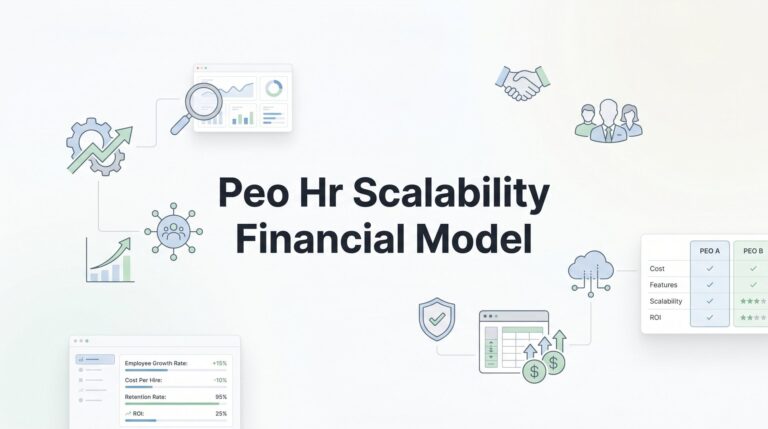
A PEO HR scalability financial model helps growing businesses track how PEO costs shift as headcount increases, revealing when the original pricing logic breaks down. This practical framework shows business owners how to map expenses against growth milestones, identify when to renegotiate contracts, and determine the optimal timing for transitioning away from a PEO arrangement.
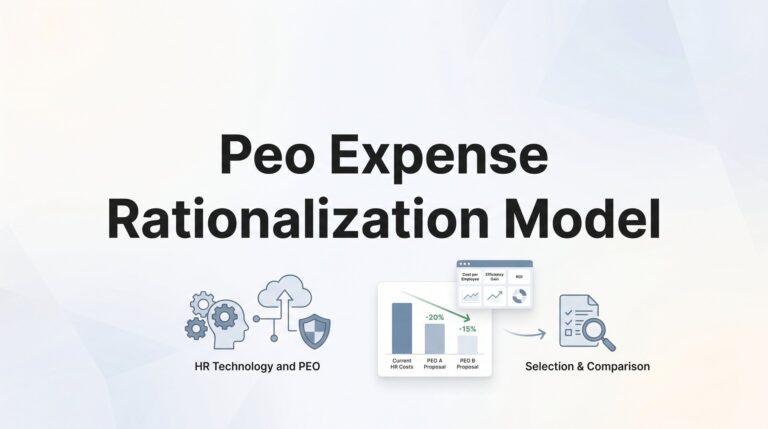
A PEO expense rationalization model provides a structured framework for breaking down bundled PEO invoices into individual cost components — administrative fees, workers’ compensation, benefits, and payroll processing — so businesses can accurately compare what they’re paying against market alternatives. This practical approach cuts through the intentional opacity of PEO pricing, helping companies determine whether their current arrangement delivers genuine value or quietly inflates costs.
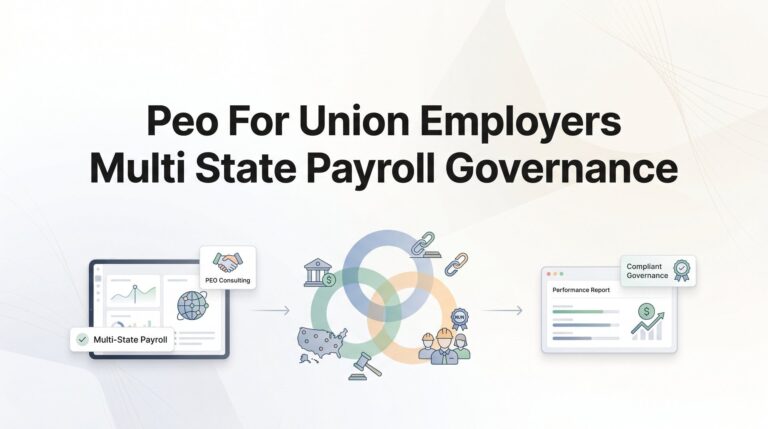
PEO for union employers managing multi-state payroll governance requires a specialized approach that accounts for collective bargaining agreements, union trust fund remittances, prevailing wage requirements, and jurisdictional reporting obligations that standard PEO providers often can’t handle. This guide outlines how to evaluate, structure, and govern a PEO relationship specifically designed for unionized workforces operating across multiple states.
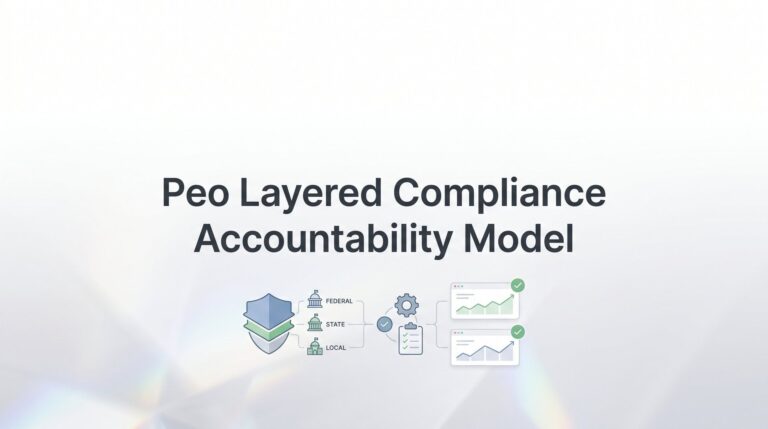
The PEO layered compliance accountability model defines exactly which compliance obligations belong to your PEO, which remain with you as the worksite employer, and how to manage the gray zones where shared responsibility creates dangerous gaps — helping businesses avoid costly surprises when regulators come calling.
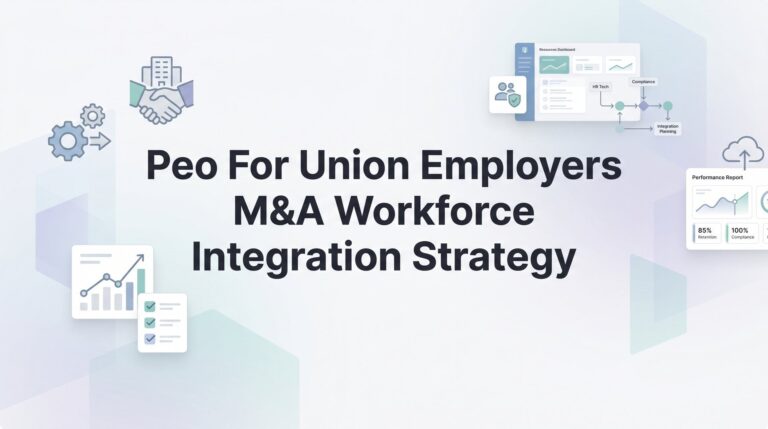
A practical step-by-step guide for business owners and HR leaders on implementing a PEO for union employers M&A workforce integration strategy, covering how to navigate collective bargaining agreements, co-employment tensions, and administrative complexity from pre-close due diligence through post-integration stabilization when acquiring a unionized workforce.