
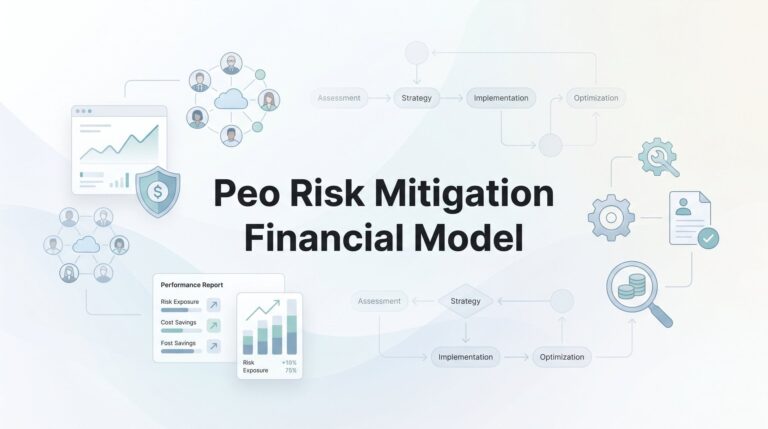
A PEO risk mitigation financial model gives business owners a structured framework to quantify the true financial value of their PEO arrangement—moving beyond visible admin fees to assign real dollar amounts to compliance exposure, workers’ comp volatility, employment practices liability, and benefits cost instability. This approach transforms PEO evaluation from guesswork into a defensible financial analysis you can present to any CFO or board.

After acquiring a gig economy platform, a PEO for gig economy platforms M&A workforce integration strategy can accelerate onboarding of inherited W-2 employees, establish benefits infrastructure, and resolve multi-state payroll compliance gaps — but only when deployed with a clear understanding of contractor classification risks and workforce model differences that traditional acquisitions don’t face.
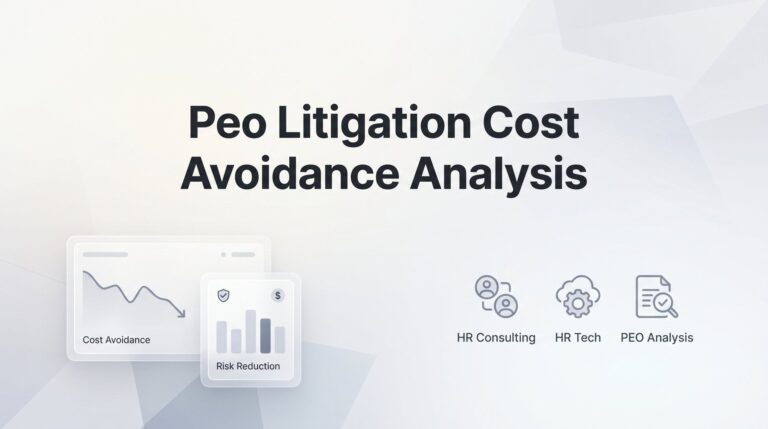
A PEO litigation cost avoidance analysis can reveal significant financial benefits of partnering with a professional employer organization, but most sales-deck projections rely on generic assumptions that don’t reflect your company’s actual risk profile. This guide breaks down how to conduct an honest, credible analysis—accounting for your industry, state, and claims history—so you can evaluate real protection value rather than inflated headline numbers.
Ecommerce businesses with mixed workforces—warehouse staff, remote developers, and seasonal employees—face significant overpayment risks when PEOs apply blended workers’ comp rates across all roles. This guide covers advanced workers’ comp structuring strategies for PEO for ecommerce companies, helping operators align premiums with actual NCCI class codes and risk profiles across their entire workforce.
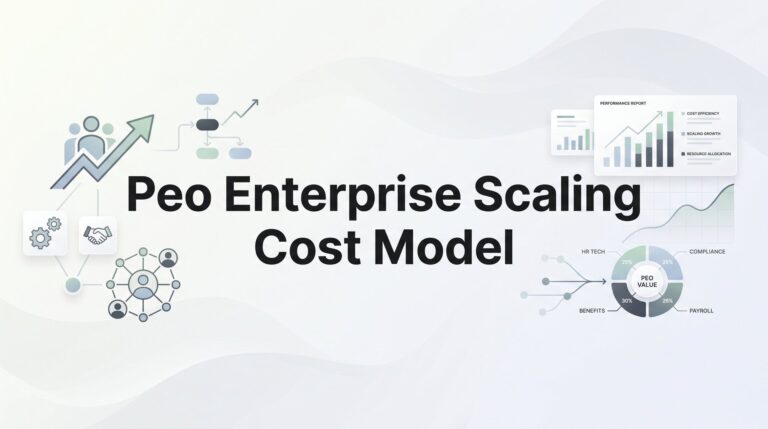
Understanding the PEO enterprise scaling cost model is critical for growing companies, as the per-employee pricing structure that works at 50 employees often becomes financially inefficient at 200 or more. This analysis breaks down how benefits markups, bundled fees, and workers’ comp dynamics shift at enterprise scale—and what HR leaders should evaluate before their PEO contract quietly becomes a cost liability.
A PEO cash flow improvement model reveals how co-employment arrangements affect working capital beyond just payroll convenience — shifting when money leaves your account, restructuring insurance liabilities, and potentially improving your balance sheet in ways most business owners never consider before signing. Understanding these cash flow mechanics upfront helps you determine whether a PEO relationship creates genuine financial benefit or introduces timing problems that could strain operati…
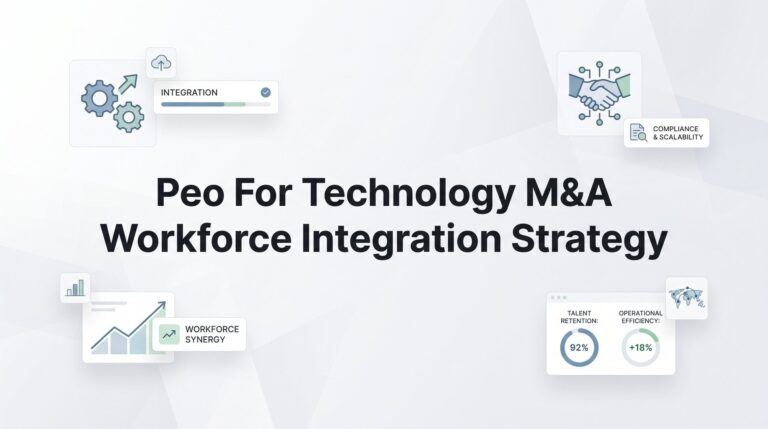
A PEO for technology M&A workforce integration strategy provides the operational infrastructure needed to consolidate payroll, benefits, and multi-state compliance during the critical post-close period. This guide explains how acquiring companies can use a Professional Employer Organization to stabilize inherited engineering and product teams, reduce compliance risk, and retain top talent before transition chaos drives them to competitors.
The PEO insurance premium stabilization model promises predictable benefits costs by pooling risk across thousands of employees, but the reality is more nuanced than the sales pitch suggests. This breakdown explains the actual mechanics of how pooled risk affects your premiums, who genuinely benefits from the model, and the tradeoffs that PEO proposals rarely mention upfront.
Logistics companies operating across multiple states face complex payroll compliance challenges involving varying withholding rules, workers’ comp classifications, and wage-and-hour laws. This guide walks logistics business owners through building a PEO for logistics multi-state payroll governance framework, from auditing current state tax exposure to structuring the PEO relationship correctly for mobile drivers, warehouse staff, and distribution employees.
Understanding a PEO compensation administration cost model is challenging because most PEO contracts bundle compensation admin fees with benefits, compliance, and other services, making direct cost comparisons nearly impossible. This breakdown reveals how compensation administration costs are actually structured within PEO agreements, what factors drive pricing, and how business owners can isolate and benchmark what they’re truly paying for this specific service layer.
A PEO for logistics M&A workforce integration strategy gives acquiring companies a practical way to consolidate fragmented payroll systems, benefits, workers’ comp policies, and compliance obligations across drivers, warehouse teams, and seasonal workers without disrupting active supply chain operations. This guide explains how co-employment structures can serve as a stabilizing bridge during the critical post-acquisition transition period.
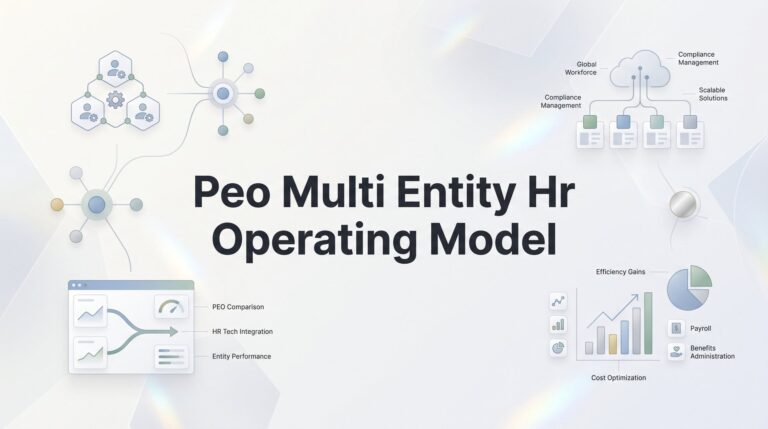
A PEO multi-entity HR operating model can consolidate HR functions across multiple business units, but the arrangement requires deliberate structuring from the start. This guide explains how PEO relationships actually function across different legal entities, EINs, and state footprints—covering where the model holds up, where it breaks down, and the critical considerations before committing to or renewing a multi-entity PEO agreement.