
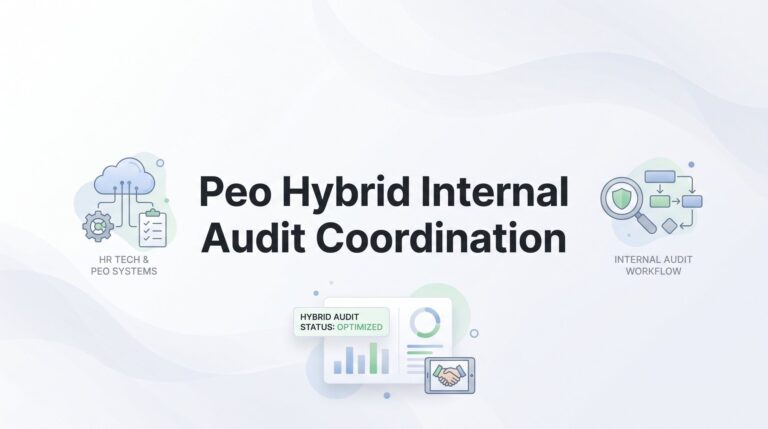
PEO hybrid internal audit coordination becomes complex when two entities share HR and payroll responsibilities without clearly defined ownership boundaries. This guide helps companies map control responsibilities between their internal team and PEO before audit season, preventing reconciliation gaps and compliance blind spots in co-employment arrangements.

Using a PEO for high mod rate employers pursuing M&A workforce integration can shield a combined entity from compounding workers’ comp costs when either side carries a damaging experience modification rate. This guide provides a practical, step-by-step strategy for leveraging a PEO’s master workers’ comp policy to isolate legacy risk profiles, stabilize insurance costs, and protect the merged workforce’s bottom line during acquisition.

A PEO strategic HR alignment model is a structured evaluation process that helps businesses identify their actual HR priorities, risk exposure, and operational needs before selecting a PEO provider. Rather than discovering a costly mismatch 18 months into a contract, this framework ensures the PEO you choose is genuinely built for the way your specific business operates.
PEO hybrid policy enforcement governance defines who owns HR decisions when your business shares employer responsibilities with a co-employment partner — and most companies don’t discover the gaps until a termination, handbook conflict, or state compliance issue forces the question. This guide breaks down how to map policy ownership, prevent enforcement gaps, and establish clear governance structures before ambiguity creates legal or operational risk.
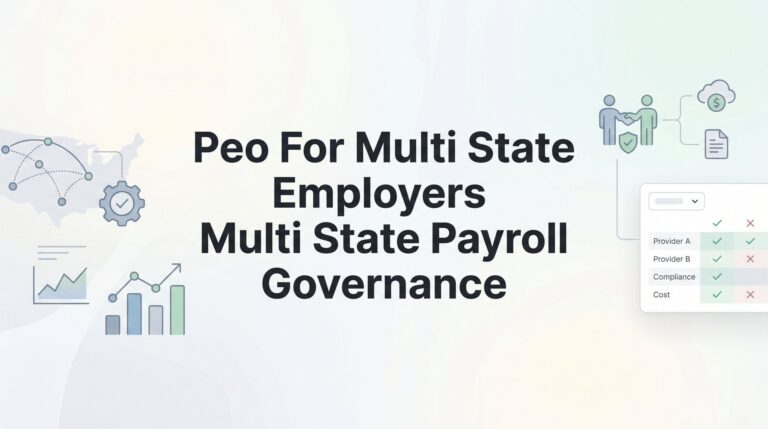
A PEO for multi-state employers can dramatically simplify multi-state payroll governance, but only when the co-employment structure is configured correctly from the start. This step-by-step guide walks growing businesses through establishing clear compliance responsibilities, verifying state-by-state registrations, and aligning internal processes to eliminate penalty risks, paycheck errors, and the administrative drain that comes with managing employees across multiple states.
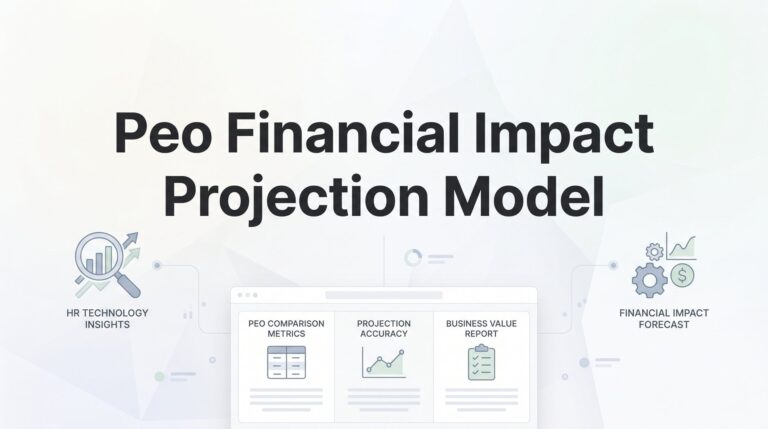
A PEO financial impact projection model goes beyond vendor pricing proposals to forecast the true multi-year cost of co-employment by layering quoted fees against your fully-loaded HR baseline, growth assumptions, and risk variables. This guide walks business owners through building a rigorous 12-36 month projection that reveals whether a PEO partnership genuinely saves money—and under what conditions it doesn’t.

Integrating a remote workforce after an M&A deal means inheriting employees across multiple state jurisdictions with complex compliance requirements that can derail your timeline. This guide explains how to strategically deploy a PEO for remote workforce companies M&A workforce integration strategy, compressing onboarding timelines while managing multi-state payroll, benefits, and employment law obligations before costly compliance gaps emerge.
Most advice on peo vs staffing agency starts with a shallow checklist. Payroll. Benefits. Recruiting. Compliance. That framing causes bad decisions because…
A practical peo benefits cost savings model that cuts through vendor claims by explaining exactly where health insurance, dental, vision, and retirement savings come from, what assumptions drive those numbers, and how to build a realistic calculation framework tailored to your company’s size and workforce before committing to a PEO arrangement.
Gig economy platforms converting workers to W-2 status face complex workers’ comp challenges that standard PEO arrangements aren’t built to handle. This guide covers advanced workers’ comp structuring through a PEO for gig economy platforms, addressing fluctuating headcounts, multi-state classification issues, and how to build a PEO arrangement that actually fits a dynamic, role-shifting workforce to control costs and minimize risk exposure.
A PEO multi-state compliance cost model helps businesses understand exactly what they’re paying for when outsourcing complex, state-by-state employment obligations—from unemployment insurance registrations and workers’ comp policies to paid leave administration and wage-and-hour compliance. As remote teams expand across states like Colorado, Washington, and California, the regulatory burden compounds quickly, making a clear cost framework essential for evaluating whether co-employment deliver…
A finance leader usually reaches the peo vs hro decision at a messy moment, not a theoretical one. Headcount is growing, payroll…