
The PEO compliance penalty avoidance model offers businesses a structured framework for reducing exposure to IRS payroll tax penalties, ACA filing violations, and wage-and-hour audit risks through co-employment — but understanding exactly which obligations legally transfer to the PEO versus which remain your responsibility is critical to making the arrangement work effectively.
A PEO for transportation M&A workforce integration strategy helps acquiring companies manage the complex process of merging driver pools, benefits packages, CDL compliance requirements, and multi-state regulatory obligations after a fleet acquisition. This guide outlines specific steps to leverage a PEO during the integration window to reduce compliance risk and capture deal value faster.
A PEO cost benefit analysis framework goes far beyond comparing admin fees to payroll processing costs—it requires evaluating the complete financial picture on both sides of the equation. This practical guide helps business owners identify hidden costs in their current setup, understand the true total cost of a PEO arrangement, and accurately assess where financial value is created or lost before signing a contract.
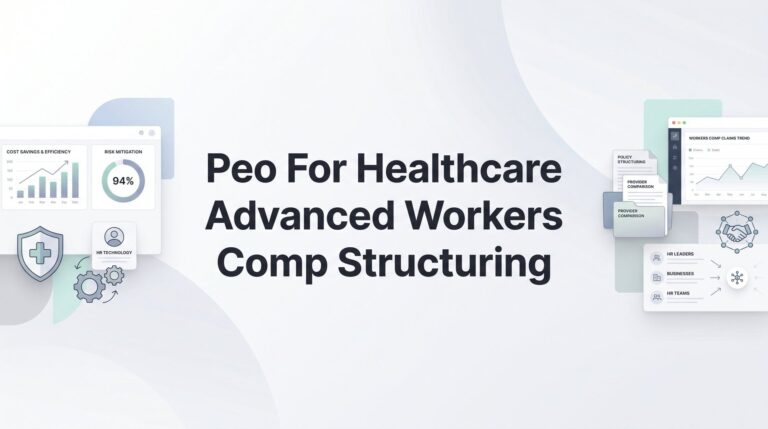
Healthcare businesses managing diverse employee roles—from nurses to janitorial staff—face complex workers’ comp challenges that require strategic PEO for healthcare advanced workers comp structuring. This practical guide walks HR leaders and business owners through auditing class codes, negotiating experience mod treatment, managing high-hazard role classifications, and building reporting workflows to control premium costs within a PEO master policy arrangement.
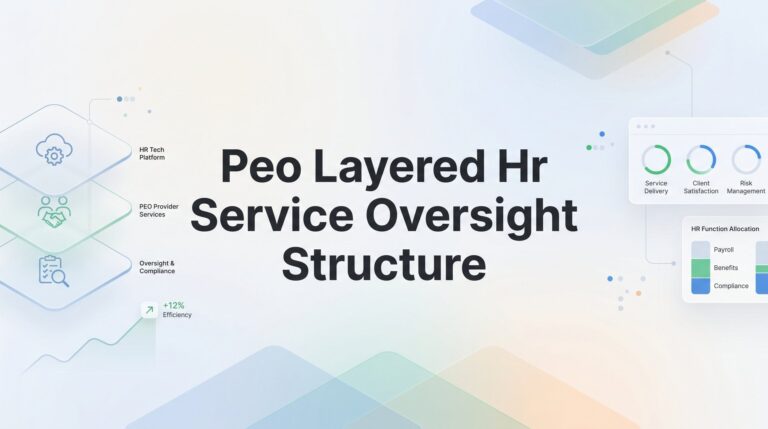
Understanding the PEO layered HR service oversight structure is critical for businesses that assume their provider handles everything—because gaps between internal teams and PEO responsibilities are where compliance failures and liability actually live. This breakdown clarifies who owns what across each layer of a typical PEO arrangement, helping companies eliminate the dangerous assumption that someone else is monitoring whether HR tasks are getting done.
Nonprofits face unique workers’ comp challenges—misclassified roles, volunteer liability gaps, and seasonal grant positions—that generic policies rarely address correctly. This guide covers PEO for nonprofits advanced workers comp structuring, walking through how to evaluate class code alignment, negotiate mod rate dynamics, and build a compliant, cost-effective arrangement that reflects your organization’s actual risk profile.
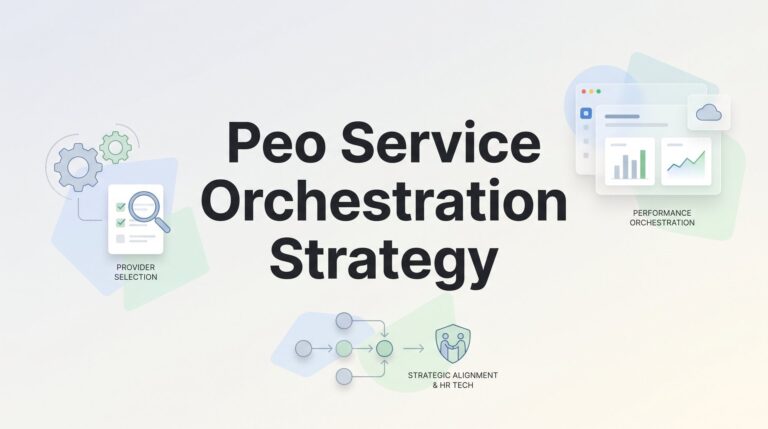
A PEO service orchestration strategy solves the common problem of fragmented HR functions by deliberately mapping how payroll, benefits, compliance, and workers’ comp connect within your PEO relationship. This guide explains how to define ownership, establish clean handoffs, and align internal operations with PEO services so nothing falls through the cracks.
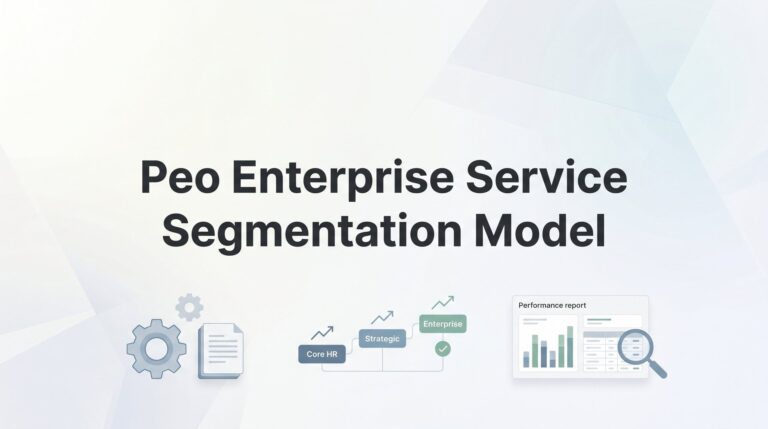
Large PEOs use a structured peo enterprise service segmentation model to tier their offerings based on company size, risk profile, and complexity — meaning most buyers only see a curated slice of available services during the sales process. Understanding how these tiers work, what changes between them, and how pricing and support structures shift gives businesses the negotiating leverage needed to secure the right service level for their actual needs.

A PEO can streamline the complex workforce integration challenges that arise during healthcare M&A deals by consolidating HR infrastructure, benefits administration, and multi-state compliance obligations under one system. This guide explains how to strategically deploy a PEO for healthcare M&A workforce integration to protect clinical staff retention, maintain regulatory compliance, and reduce administrative redundancy during a compressed post-merger timeline.
A practical PEO M&A integration cost savings model requires moving beyond generic HR synergy assumptions to accurately account for co-employment contracts, bundled insurance pools, and compliance infrastructure. This walkthrough helps business owners and finance leads quantify real HR consolidation value during a deal, avoiding the costly projection errors that occur when standard G&A frameworks are misapplied to PEO arrangements.
Transportation companies operating in high-risk class codes can leverage PEO for transportation advanced workers comp structuring to move beyond generic pooled coverage and access programs that accurately reflect their actual risk profile. This guide walks transportation operators through the specific strategies needed to structure workers’ comp intelligently through a PEO, avoiding costly mismatches that treat trucking fleets the same as lower-risk industries.
A PEO total cost of ownership analysis reveals that the admin fee is just one layer of what businesses actually pay — workers’ comp bundling, benefits spread, payroll tax float, and hidden exit costs significantly impact the true price of a PEO relationship. This guide breaks down every cost bucket, what drives variability in each, and how to pressure-test vendor proposals before signing.