
Electrical contractors managing 100 employees face unique PEO challenges that require specialized strategies beyond generic HR outsourcing. This guide outlines seven targeted approaches for selecting and maximizing an Electrical Contractors PEO for 100 Employees, addressing workers’ comp classification accuracy, multi-state licensing compliance, seasonal workforce management, and jobsite-specific risk mitigation to help mid-sized electrical contracting businesses optimize costs while maintain…

Choosing the right PEO for your painting business directly impacts workers’ comp costs, crew flexibility, and operational efficiency—differences that can mean $20,000 in audit savings and the ability to scale your team for seasonal commercial projects without contract renegotiations. Unlike generic small businesses, painting contractors face unique challenges including dramatic payroll fluctuations, shifting employee-subcontractor mixes, and variable workers’ comp exposure that require specia…
Electrical contractors with 50 employees face unique HR challenges including workers’ comp management, apprenticeship compliance, and prevailing wage calculations that are too complex for informal handling but don’t justify a full HR department. This guide outlines seven strategic approaches to selecting an Electrical Contractors PEO for 50 Employees that understands trade-specific operations, focusing on cost structures, risk management, and the operational realities of managing multi-site e…
Painting contractors face unique HR challenges including high workers’ comp premiums, seasonal staffing fluctuations, and multi-state compliance issues that standard solutions don’t address. A PEO for painting contractors can strategically tackle these specific problems—from managing injury-driven mod rates to handling cross-state payroll compliance—but only when the partnership is structured to solve the operational realities of managing crews across job sites rather than simply outsourcing …
Electrical contractors with 15 employees face a critical growth stage where managing payroll, workers’ comp for high-risk jobsites, and apprenticeship compliance becomes overwhelming without a dedicated HR staff. A strategically chosen Electrical Contractors PEO for 15 Employees can handle trade-specific challenges like jobsite payroll and specialized workers’ comp classifications, but success depends on selecting a provider who understands the unique compliance and insurance needs of electri…
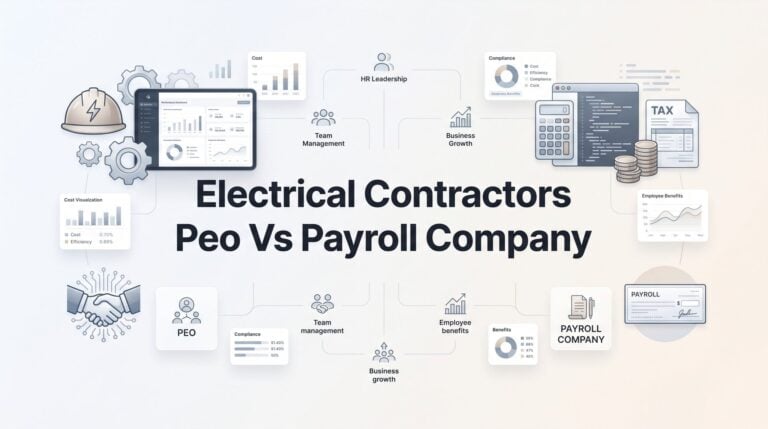
Electrical contractors face unique payroll challenges including multi-state compliance, prevailing wage requirements, and high-risk workers’ comp classifications that standard payroll companies can’t fully address. Understanding the difference between an Electrical Contractors PEO vs Payroll Company is critical—while payroll providers simply process checks, PEOs become co-employers who manage risk exposure, employment liability, and complex compliance issues specific to construction trades wo…
When your plumbing business reaches 50 employees, you face unique HR challenges including complex workers’ comp rates, multi-jurisdiction compliance, and diverse benefits needs across field and office staff. This guide reveals seven strategic approaches to selecting a plumbing PEO for 50 employees that addresses industry-specific factors like claims history management, technician scheduling integration, and the balance between field crew and administrative team requirements—helping you avoid …
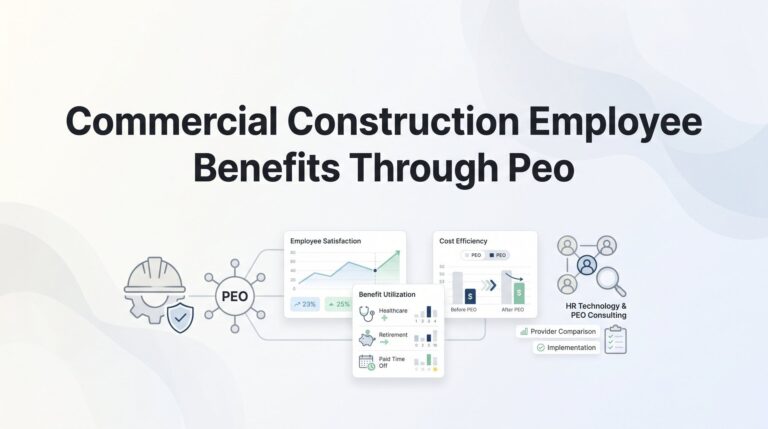
Commercial construction companies lose skilled workers to competitors offering immediate health coverage and struggle with fluctuating workers’ comp costs and multi-state payroll compliance. PEOs (Professional Employer Organizations) address these challenges by providing pooled insurance rates, streamlined benefits administration across state lines, and immediate coverage options that match the industry’s project-based, mobile workforce—helping contractors retain talent while managing the com…
Commercial Construction PEO Compliance Support promises to handle payroll taxes, workers’ comp, and HR compliance for construction companies managing prevailing wage requirements, multi-state crews, and OSHA documentation. However, the construction industry’s unique compliance complexity means significant gaps often exist between what contractors assume their PEO covers and what’s actually delivered, creating potential costly exposures that require careful evaluation before partnering.
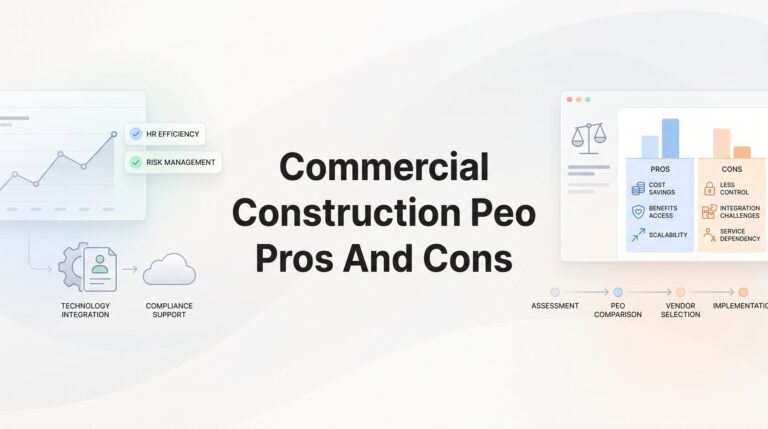
Commercial construction companies face complex HR challenges including fluctuating crews, high workers’ comp costs, multi-state compliance, and strict safety regulations. While PEOs promise to streamline payroll, benefits, and compliance through a single partnership, understanding the commercial construction PEO pros and cons is critical—these services can solve expensive problems for some contractors but may create unnecessary friction for others depending on trade classifications, safety re…
Commercial construction companies face unique challenges with standard PEO contracts that weren’t designed for their fluctuating crew sizes, multi-state operations, and high-risk workers’ comp classifications. Before signing, contractors must negotiate commercial construction PEO contract terms that address seasonal workforce changes, accurate workers’ comp pricing, flexible termination clauses, and jobsite-specific liability protections to avoid costly surprises like minimum employee penalti…
Switching your commercial construction company to a PEO requires careful navigation of industry-specific challenges like workers’ comp class codes, certified payroll requirements, and fluctuating headcount that standard transition guides ignore. Missteps during the switch can trigger jobsite shutdowns, audit penalties, and jeopardize your ability to bid on bonded projects, making a construction-focused transition strategy essential to avoid costly compliance gaps.