
HVAC companies with 25 employees face unique challenges managing seasonal workforce fluctuations, compliance, and competitive benefits without a full HR department. This guide provides seven targeted strategies for selecting an HVAC PEO for 25 employees that understands industry-specific needs like flexible seasonal hiring, technician retention through competitive benefits, and workers’ compensation management that actively reduces your mod rate rather than simply pooling risk.
HVAC businesses with five employees face a critical decision point where HR complexities multiply but a full-time HR staff isn’t cost-effective. This guide reveals seven targeted strategies for evaluating HVAC PEO for 5 employees, focusing on industry-specific needs like workers’ comp for field techs, seasonal hiring fluctuations, and compliance management that generic PEO providers often miss.
When your HVAC company reaches 50 employees, you become an Applicable Large Employer facing complex ACA reporting requirements, escalating workers’ comp costs for field technicians, and challenging multi-state payroll management. An HVAC PEO for 50 employees can help navigate these compliance burdens and administrative challenges, but selecting the right partner requires understanding which providers truly grasp the operational realities of HVAC contractors—including seasonal workforce fluctu…
HVAC contractors face unique HR challenges including field crew management, seasonal hiring, high workers’ comp exposure, and DOT compliance that generic PEOs can’t handle effectively. This guide evaluates the best PEO for HVAC companies in 2026 based on construction trade expertise, workers’ comp cost reduction, field-friendly onboarding systems, and pricing transparency to help you find a partner who understands trade contractor operations.
Choosing the right HVAC PEO for 100 employees requires evaluating partners based on industry-specific needs like workers’ comp experience mods, seasonal workforce management, and multi-state compliance rather than generic HR criteria. These seven targeted strategies help HVAC companies at this critical growth stage select a PEO that addresses field crew challenges, high-risk work classifications, and the unique operational demands of managing technicians across multiple job sites without the …
General Contractors PEO Payroll Services transform how construction businesses handle multi-site payroll by managing certified payroll requirements, project-based labor tracking, workers’ comp class code allocation, and prevailing wage compliance in one system. Unlike generic payroll solutions, construction-focused PEOs address the unique challenges of fluctuating crew sizes, mid-week project transfers, and Davis-Bacon reporting that office-based payroll systems can’t handle effectively.
Construction PEO cancellation policies are far more complex than standard service agreements because they involve active workers’ comp claims, ongoing project insurance requirements, and coverage transitions that can halt operations if mishandled. Contractors often overlook exit terms when signing, but understanding your construction PEO cancellation policy before entering the relationship is critical—once you need to leave, you’re negotiating from a position of weakness with jobsites, claims…
General Contractors PEO Pricing & Cost Structure differs dramatically from other industries because construction businesses face unique cost drivers that office-based companies don’t encounter. Your PEO costs are primarily determined by workers’ compensation exposure (which can vary 800% between different trade roles), seasonal payroll fluctuations, and construction-specific compliance requirements like certified payroll and prevailing wage calculations—factors that explain why your quotes ru…
General Contractors PEO Compliance Support can handle core HR tasks like payroll tax filings, workers’ comp management, and new hire reporting, but it won’t cover construction-specific compliance issues such as prevailing wage requirements, subcontractor verification, or project-specific insurance endorsements. Understanding exactly what a PEO covers—and what critical gaps remain in your compliance obligations—is essential before deciding if this partnership fits your multi-state construction…
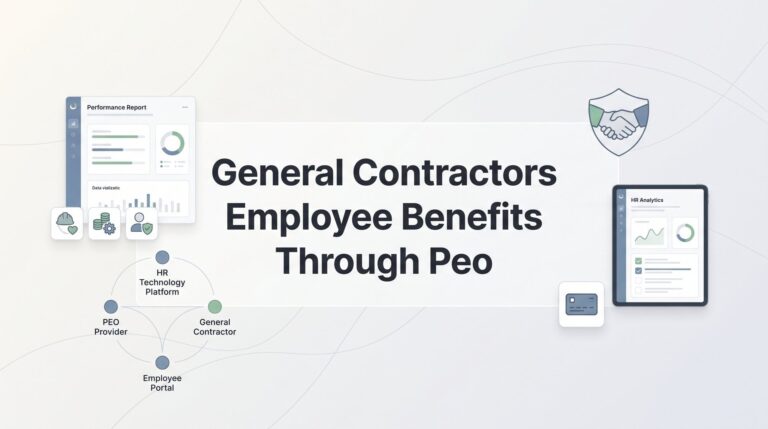
General contractors facing tight margins and crew retention challenges can access Fortune 500-level health insurance and retirement benefits through a PEO (Professional Employer Organization) by pooling with other small businesses. This guide examines the real costs, coverage improvements, and specific scenarios where general contractors employee benefits through PEO arrangements make financial sense versus when traditional insurance remains the better option for construction operations.
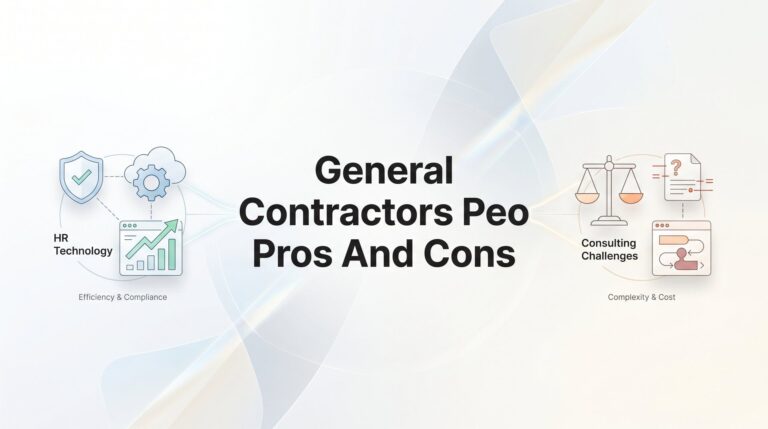
Professional Employer Organizations (PEOs) offer general contractors potential benefits like reduced insurance costs and simplified compliance, but construction-specific challenges—including seasonal workforce fluctuations, high-risk trade coverage limitations, and specialized payroll requirements like certified payroll—mean these services don’t always deliver on their promises for GCs the way they do for other industries.
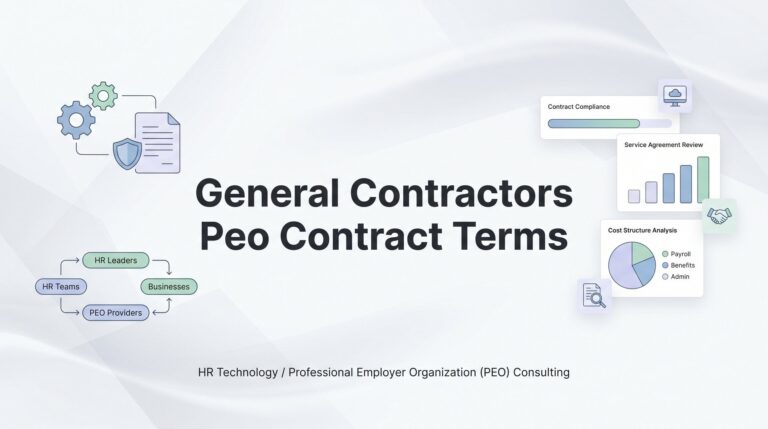
General contractors face unique risks with standard PEO agreements that aren’t designed for seasonal workforce fluctuations and construction-specific workers’ comp classifications. Understanding general contractors PEO contract terms before signing is critical—especially regarding employee minimums during slow seasons, proper trade classifications that prevent costly audit adjustments, and flexibility for project-based staffing changes that can mean the difference between a strategic partners…