
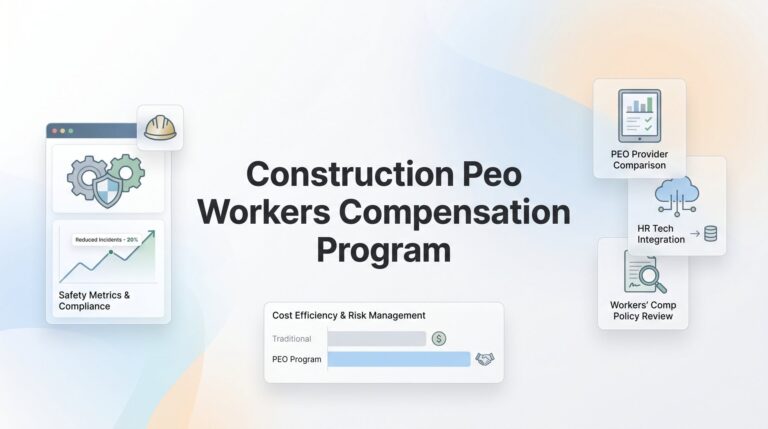
A Construction PEO Workers Compensation Program can offer contractors lower rates and simplified administration when workers comp costs spiral out of control due to claims or high mod rates. However, whether a PEO makes sense depends on your specific situation—including your current experience mod, trade classifications, project pipeline, and growth trajectory—since these programs shift risk management in ways that aren’t always immediately visible.
Construction PEO payroll services specialize in managing the unique complexities of construction payroll, including certified payroll for prevailing wage projects, union trust fund contributions, multi-state tax compliance, and worker classification issues. These services make the most sense when your company manages multiple job sites with varying contract types, crosses state lines, handles both union and non-union labor, or faces recurring compliance challenges that standard payroll provid…
Construction PEO Compliance Support addresses the unique regulatory challenges construction businesses face, from managing prevailing wage requirements and workers’ comp classifications across multiple states to handling OSHA inspections and fluctuating employment rules. This service goes beyond generic compliance assistance to tackle construction-specific issues like multi-state crew management, job-based wage requirements, and the complex workers’ compensation classifications that change ba…
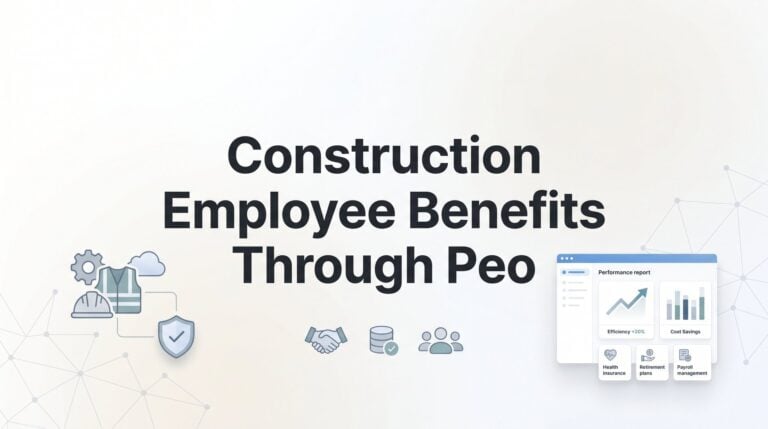
Small construction companies often lose skilled workers to larger competitors who can afford comprehensive benefits packages. A Professional Employer Organization (PEO) levels the playing field by pooling multiple small businesses together, giving construction firms access to enterprise-level health insurance, 401(k) plans, and other construction employee benefits through PEO arrangements that would otherwise be unaffordable, helping you compete for talent without the administrative burden of…
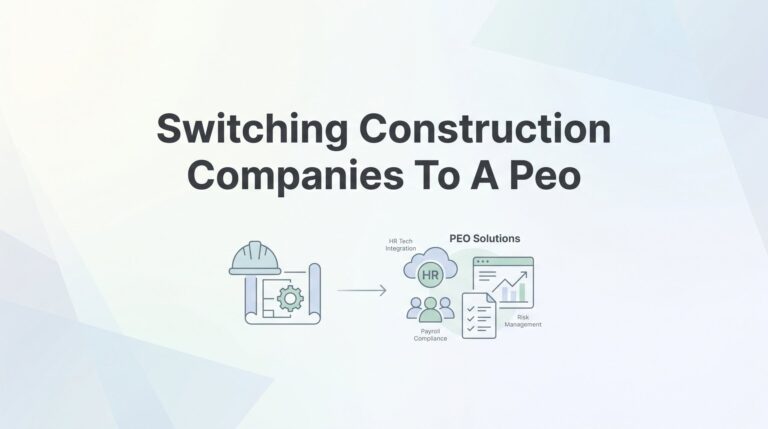
Switching construction companies to a PEO requires careful coordination to avoid workers’ comp coverage gaps, payroll disruptions, and benefit transition problems. This step-by-step guide helps construction business owners execute the transition smoothly while maintaining operations and compliance, addressing industry-specific challenges like experience modifiers, payroll cycle alignment, and crew communication during the handoff process.
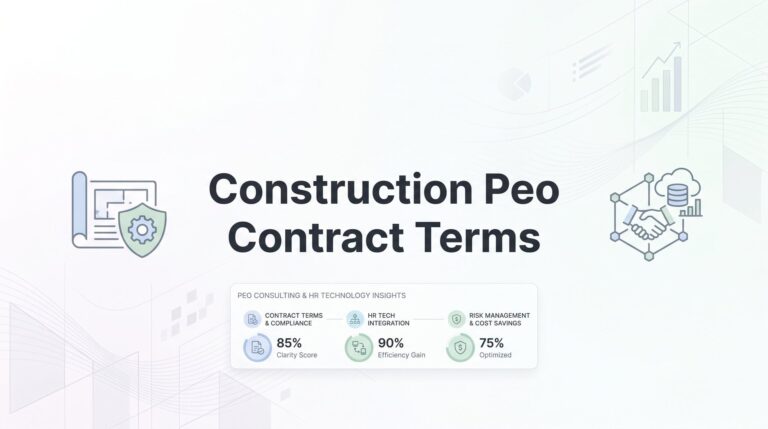
Construction business owners often focus on PEO pricing while overlooking critical construction PEO contract terms that create significant financial risk. Termination clauses, indemnification provisions, and industry-specific protections for jobsite injuries, multi-state compliance, and seasonal workforce changes can expose contractors to far greater liability than monthly fees, making careful contract negotiation essential before signing any PEO agreement.
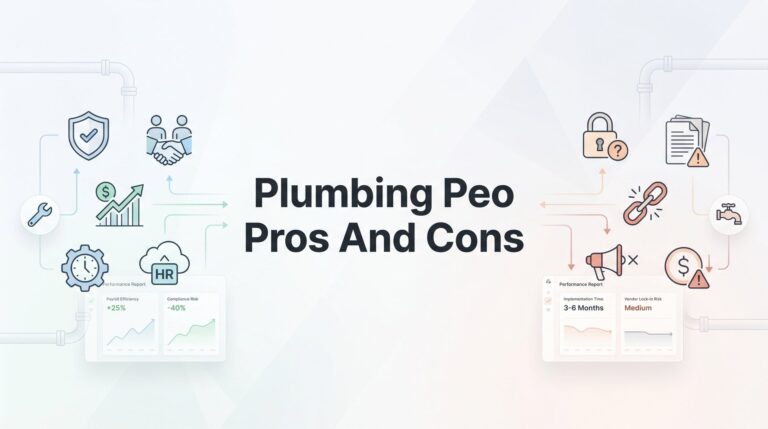
Plumbing contractors face unique HR challenges including high workers’ comp classifications, OSHA compliance, and competitive benefits for skilled tradespeople. This guide breaks down the plumbing PEO pros and cons that actually matter for trade businesses—from workers’ comp rate pooling and real cost analysis to co-employment licensing impacts and when a PEO makes sense versus when to handle HR in-house.
Finding the right plumbing PEO for 5 employees requires cutting through generic sales pitches to identify providers who understand trade contractor needs without imposing minimums designed for larger companies. This guide reveals seven practical strategies to evaluate whether a PEO fits your specific headcount, state requirements, and risk profile—while avoiding contracts that don’t scale as your plumbing business grows.
When your plumbing company reaches 25 employees, you need specialized HR support but can’t justify a full-time hire—making a plumbing PEO for 25 employees the ideal solution. This guide reveals seven essential strategies for selecting a PEO that understands trade-specific challenges like certified payroll, prevailing wage calculations, and workers’ comp classifications, rather than settling for generic providers designed for office environments that can’t address your unique operational needs.
Roofing contractors can solve their unique benefits challenges—high-risk work, seasonal staffing, and cost-conscious employees—by strategically structuring roofing employee benefits through a PEO. This guide reveals seven proven approaches to building a benefits package that addresses the industry’s core tension between expensive coverage needs and workers skeptical of premium costs, helping you protect your crews while controlling your bottom line.

Roofing contractors face unique payroll challenges with high-risk workers’ comp and variable crew schedules, making the choice between a roofing PEO vs payroll company critical for operations. This comprehensive guide compares eight top solutions for 2026, explaining when full-service PEOs make sense for handling workers’ compensation complexities versus standalone payroll platforms for straightforward processing needs.

Roofing contractors face a critical choice between Roofing PEO vs In-House HR when their operations hit key inflection points like ten employees, rising mod rates, or multi-state projects. This guide examines seven roofing-specific decision factors—including workers’ comp volatility, seasonal workforce fluctuations, and OSHA compliance costs—that determine whether a PEO’s economics align better with your operation than building internal HR capacity.