
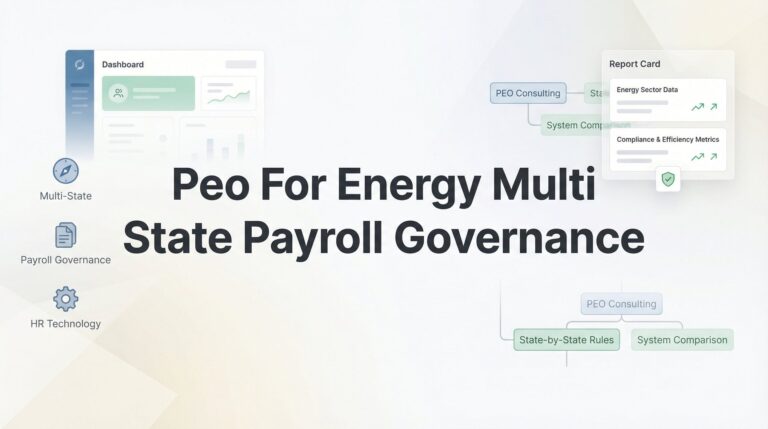
Energy companies with mobile crews face complex multi-state payroll challenges including varying state withholding requirements, union reporting obligations, and prevailing wage compliance across jurisdictions. A PEO for energy multi-state payroll governance must do more than process payments—it needs to actively track crew movements, manage jurisdiction-specific tax withholding, handle union and non-union structures simultaneously, and reduce compliance liability rather than simply shifting …
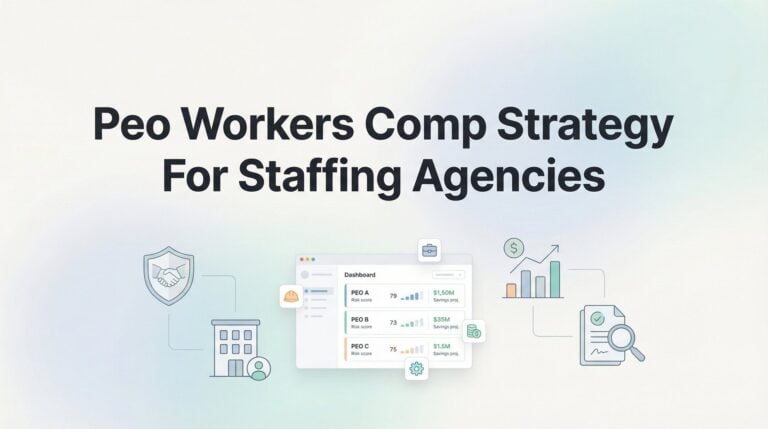
Staffing agencies face unique workers’ comp challenges placing employees across multiple industries with varying risk levels and high turnover. This guide reveals seven staffing-specific PEO workers’ comp strategies for structuring arrangements that reduce costs, manage multi-site risk exposure, and prevent coverage gaps—from negotiating classification flexibility to handling client site safety protocols you can’t directly control.
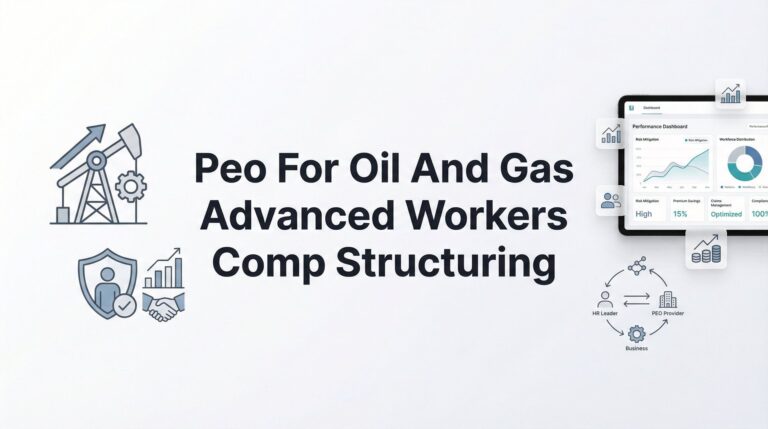
Oil and gas operators face uniquely high workers comp exposure, and structuring coverage through a PEO requires more than generic solutions. This guide walks through the specific steps to evaluate, negotiate, and structure a PEO for oil and gas advanced workers comp structuring that accounts for multiple class codes, fluctuating payroll, and high experience mod factors—helping you balance cost control with adequate coverage based on your actual field operation risks.
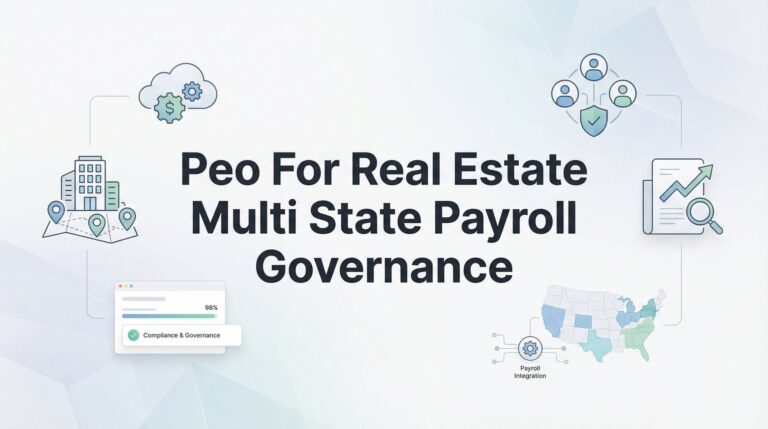
Real estate businesses operating across multiple states face unique payroll compliance challenges including commission-based compensation, cross-border transactions, and complex worker classification rules. A PEO for real estate multi-state payroll governance helps navigate varying state tax withholding requirements, prevents costly misclassification penalties, and manages the compliance complexities that arise when agents, property managers, and staff work across different jurisdictions—turn…
Restaurant groups face unique PEO compliance risks across tip credits, multi-state wage laws, and scheduling regulations that many operators don’t realize until it’s too late. This guide identifies seven critical compliance vulnerabilities in the co-employment relationship and provides actionable protection strategies, because when violations occur, the Department of Labor holds restaurant owners accountable regardless of who processes payroll.
Oil and gas companies face uniquely complex compliance challenges across OSHA safety standards, EPA permits, multi-state workforce regulations, and contractor classification rules that carry severe penalties. This guide examines whether a PEO for oil and gas enterprise compliance risk management actually reduces regulatory exposure in this high-stakes industry, or simply adds complexity to an already demanding compliance landscape, helping operators determine where co-employment arrangements …
Hospitality operators often overpay for workers’ comp through PEOs by accepting standard packages that pool them with unrelated industries. This guide reveals advanced structuring strategies—including proper classification codes, loss-sensitive programs, and hospitality-specific claims protocols—that can reduce costs by 3-5% of payroll, potentially saving restaurant groups $150,000+ annually through strategic PEO for hospitality advanced workers comp structuring.
A PEO workers’ comp payroll exposure audit reconciles your actual employee payroll against initial estimates to determine if you owe additional premium or receive a credit. This guide provides step-by-step preparation strategies to help business owners organize records, avoid employee misclassification issues, minimize surprise costs, and approach the audit process confidently whether conducted by your PEO or the underlying carrier.
Most PEO clients receive workers comp renewal quotes with vague claim reserve figures and no detailed breakdown of how those numbers are calculated. This lack of PEO workers comp claim reserve transparency directly impacts your experience modification rate and can lead to significant overpayment when reserves are inflated and never adjusted, yet you have no visibility into the accuracy of these cost estimates that determine your premiums.
Dental practices typically allocate 60-70% of revenue to payroll and benefits, but costs can quickly escalate without proper management. This guide explores seven proven cost containment strategies that dental practices—from solo practitioners to multi-location groups—use with their PEO for dental practices to reduce expenses in health insurance, workers’ comp, compliance overhead, and administrative tasks. Each strategy includes practical tradeoffs to help owners make informed decisions abou…
Many growing businesses wonder if using a PEO with outsourced HR consultant creates redundancy or adds value. While PEOs provide bundled payroll, benefits, and general HR support, independent HR consultants offer strategic, business-specific guidance that generic PEO hotlines often can’t match. The decision to layer both services depends on your company’s complexity, growth stage, and whether you need transactional HR administration plus customized strategic planning.
Planning your PEO workers’ comp audit timeline prevents last-minute scrambles and costly premium adjustments that can exceed 20% of your budget. This step-by-step guide shows business owners how to prepare documentation, verify employee classifications, and coordinate with their PEO throughout the year—transforming audits from stressful emergencies into routine administrative processes that protect your bottom line.