
Partial PEO services configuration allows businesses to outsource only specific HR functions—like benefits, compliance, or payroll—while maintaining control over other areas. This guide reviews the nine best platforms and providers offering modular, flexible PEO solutions that let you customize services to match your exact business needs without committing to a full-service package.
Most business owners receive overwhelming PEO payroll reports that don’t answer critical questions about correct charges, tax payments, or cost optimization. Understanding the right peo payroll reporting framework means knowing which reports to demand, how to interpret them, and what red flags indicate billing errors or compliance issues—turning confusing spreadsheets into actionable financial intelligence that protects your bottom line.
Corporate carve-outs create urgent HR challenges when parent infrastructure disappears overnight, but rushing into a PEO during carve out transition often leads to costly oversights. This guide presents seven strategic approaches to selecting and implementing a Professional Employer Organization that balances immediate separation deadlines with long-term flexibility, helping you maintain employee continuity while avoiding common pitfalls around contract terms, geographic coverage, and future …
When a wrongful termination lawsuit names both you and your PEO, understanding PEO liability in wrongful termination claims becomes critical. Despite co-employment arrangements, courts focus on who actually made the termination decision rather than what your service agreement states, meaning business owners often retain significant legal exposure even when PEOs provide HR guidance and process termination paperwork.

Mergers involving PEO arrangements require immediate decisions about employer of record status, payroll continuity, and benefits transfers across combined workforces. This step-by-step guide covers the critical sequence for PEO employment transfer during merger—from pre-close due diligence through final consolidation—whether you’re keeping your current PEO, switching providers, or moving to direct employment post-acquisition.
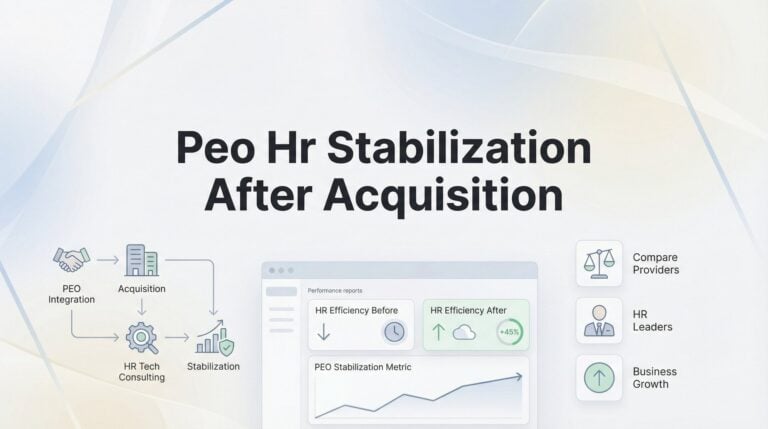
When your PEO gets acquired, employee benefits, payroll continuity, and compliance can be disrupted without warning. This guide provides seven actionable strategies for PEO HR stabilization after acquisition, helping you audit contracts, protect employee data, maintain benefits continuity, and decide whether to stay with the new entity or transition to a different provider while minimizing operational disruption.

When a wage and hour dispute arises, many business owners assume their PEO is fully responsible—but the reality of PEO wage and hour dispute responsibility is far more complex. While PEOs handle payroll and compliance administration under a co-employment arrangement, legal liability often falls on both parties, and understanding who’s actually on the hook requires careful examination of your service agreement, state laws, and the specific nature of the violation.
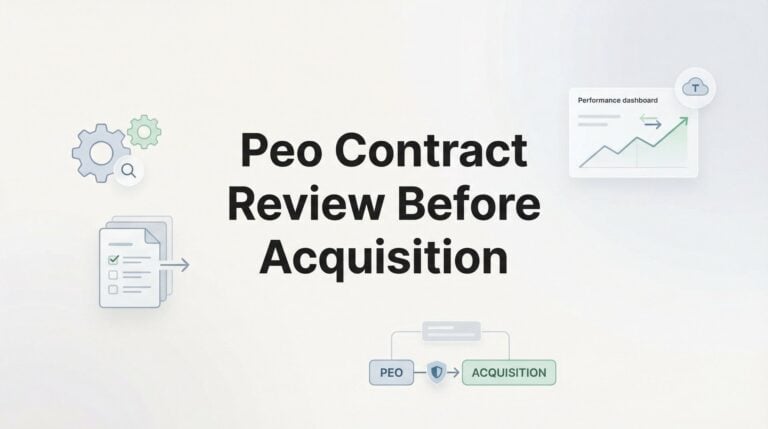
Before your business gets acquired, a thorough PEO contract review can prevent costly surprises during due diligence. Change-of-control provisions, hidden liability clauses, and termination penalties that seemed manageable during normal operations can become deal-breakers or add six figures to transaction costs when ownership changes hands. These seven strategies help both sellers preparing for acquisition and buyers evaluating PEO arrangements identify and negotiate around critical contract …
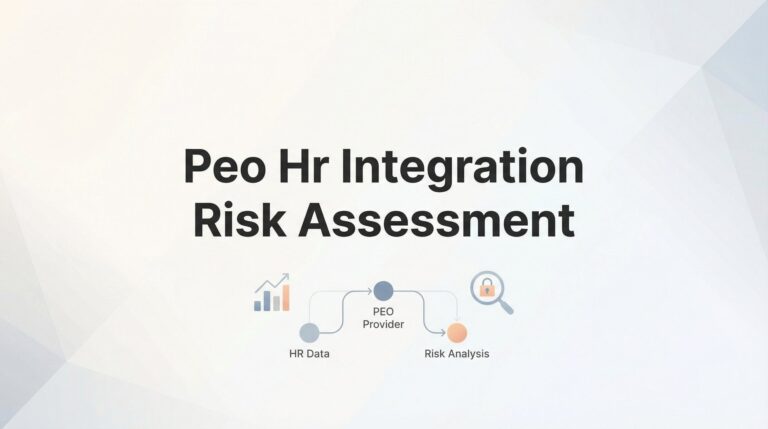
Before signing with a PEO, run an in-house integration risk assessment to identify potential data migration failures, system incompatibilities, and compliance gaps that could create costly problems post-contract. This practical guide shows you how to map your current HR systems, stress-test integration points, and ask the right questions to prevent workflow disruptions and ensure a smooth PEO transition.

When unemployment claims hit, PEO unemployment claim liability allocation determines who actually pays—and it’s rarely straightforward. Co-employment creates split responsibility that varies by state, with some holding the PEO as employer of record while others bill the client company directly, and your PEO contract may add additional cost allocation layers that impact your SUTA rates and quarterly tax bills regardless of state rules.
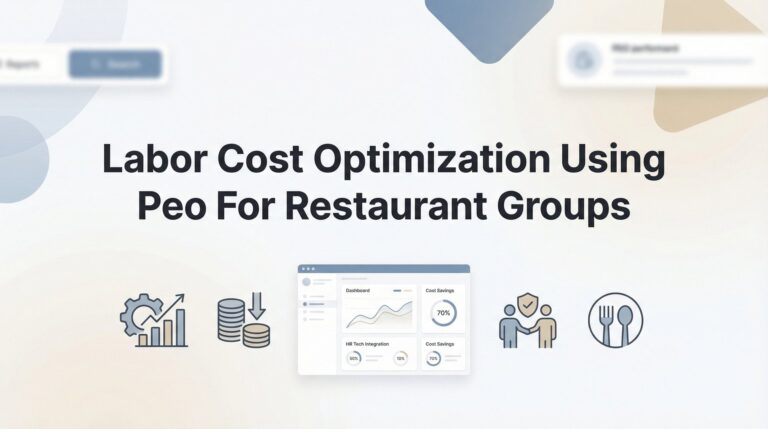
Restaurant groups typically spend 25-35% of revenue on labor costs, but most operators don’t realize how much a PEO can reduce these expenses beyond basic HR outsourcing. This guide reveals seven tactical strategies for labor cost optimization using PEO for restaurant groups, focusing on multi-location compliance management, workers’ comp savings, turnover reduction, and eliminating hidden administrative expenses that erode already-thin profit margins.
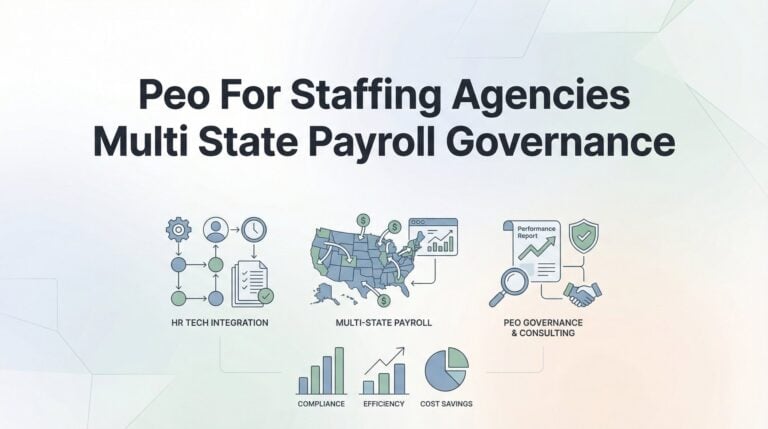
Staffing agencies placing workers across multiple states face complex payroll compliance challenges that differ from typical multi-state operations—you inherit tax withholding, wage and hour, and registration obligations in jurisdictions driven by unpredictable client demand rather than planned expansion. A PEO for staffing agencies multi-state payroll governance offers specialized relief by managing state-specific tax requirements, registrations, and fluctuating workforce administration acro…