
Real estate companies managing diverse workforces—from 1099 agents to property managers and maintenance crews—face escalating benefits costs that traditional cost-cutting approaches can’t solve without damaging retention. This guide reveals seven PEO for real estate benefits cost containment strategies specifically designed for real estate workforce structures, starting with classification audits and claims analysis to identify where spending actually occurs, then implementing targeted tactic…
The PEO with fractional HR director model combines administrative efficiency with strategic HR expertise for growing companies that have outgrown DIY HR but can’t justify a full-time director. This dual approach works when you need a PEO’s scalable infrastructure for payroll, benefits, and compliance alongside a fractional HR director’s customized guidance for talent strategy, culture development, and complex employee situations that standard PEO reps aren’t equipped to handle.

Most business owners trust their PEO to handle workers’ comp compliance, but classification errors, premium miscalculations, and documentation gaps often surface during state audits—leaving you liable for penalties. This guide provides a practical framework for conducting quarterly or annual PEO workers’ comp regulatory compliance reviews, helping you identify red flags, request the right documentation, and catch compliance issues before regulators do.
Staffing agencies with razor-thin 2-4% profit margins need specialized cost containment strategies when working with a PEO for staffing agencies, as traditional approaches fail with fluctuating headcount and varying workers’ comp exposure. This guide reveals specific tactics successful agency owners use to maximize PEO value despite unpredictable workforce cycles and diverse risk classifications that make standard pooled pricing models costly and inefficient.

A “PEO compliance-only service structure” isn’t standardized—it’s a catch-all term for stripped-down HR arrangements that vary wildly between providers. Understanding what you’re actually buying matters because the structural differences determine liability ownership, audit support levels, and whether you’re getting regulatory monitoring, ASO modules, or rebranded consulting services.
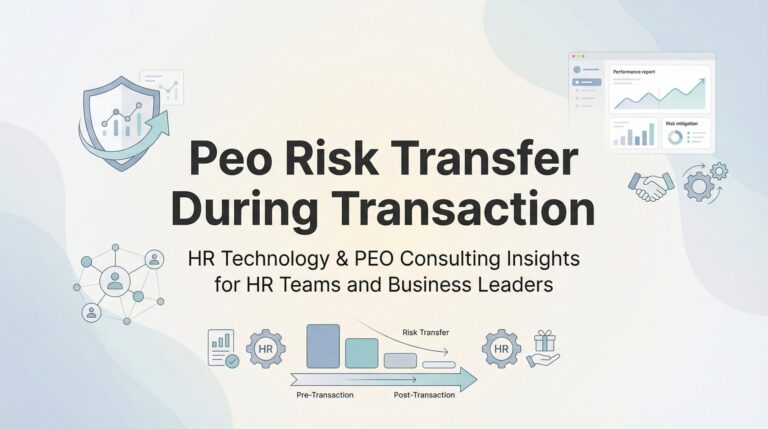
When you sign a PEO agreement, employment risk doesn’t transfer completely—it splits in specific, often counterintuitive ways. Understanding peo risk transfer during transaction is critical because co-employment means certain liabilities shift to the PEO while others remain your responsibility, and the dividing line isn’t always clear until a claim arises. The PEO typically handles payroll taxes and workers’ compensation, but decision-making authority determines who’s liable when employment d…

Most business owners overlook PEO contract indemnity clause risks while negotiating agreements, focusing instead on pricing and benefits. These often one-sided provisions determine who pays when problems arise, and poorly structured clauses can unexpectedly shift significant liability and costs from your PEO partner onto your company’s balance sheet.
Before signing a PEO contract, understanding the indemnification clause is critical—it determines who pays when employment claims, payroll tax issues, or benefits errors occur. A thorough PEO indemnification clause analysis reveals that co-employment structures create complex liability scenarios where poorly written terms can leave business owners financially responsible for the PEO’s mistakes, potentially costing more than a year’s worth of service fees.
A PEO deal readiness assessment is a structured self-audit completed before engaging providers, helping businesses identify gaps, align stakeholders, and gather critical data vendors will request. This preparation process documents your current HR infrastructure, surfaces actual pain points, and ensures your timeline matches implementation realities—positioning you to negotiate from strength rather than scrambling mid-process.

Before signing with a PEO, business owners must complete thorough legal verification beyond just comparing pricing and benefits. This peo legal due diligence checklist covers eight essential steps to verify licensing, review liability allocation in contracts, assess financial stability, and identify potential compliance risks—protecting your business from costly extraction problems and legal complications that emerge after committing to a multi-year co-employment agreement.

When a discrimination claim hits your business, your PEO agreement probably won’t protect you the way you think. Courts focus on who made the actual employment decisions that led to the lawsuit—and that’s typically still you, the business owner, regardless of co-employment arrangements. Understanding PEO liability in discrimination claims means recognizing that cutting checks and handling benefits doesn’t transfer legal responsibility for hiring, firing, and workplace decisions that trigger l…

Switching PEOs requires clear employee communication to prevent confusion about payroll, benefits, and enrollment processes. This step-by-step guide shows how to manage PEO employee communication during transaction periods, addressing common concerns like direct deposit timing, healthcare network changes, and portal access before employees discover problems on their own.