
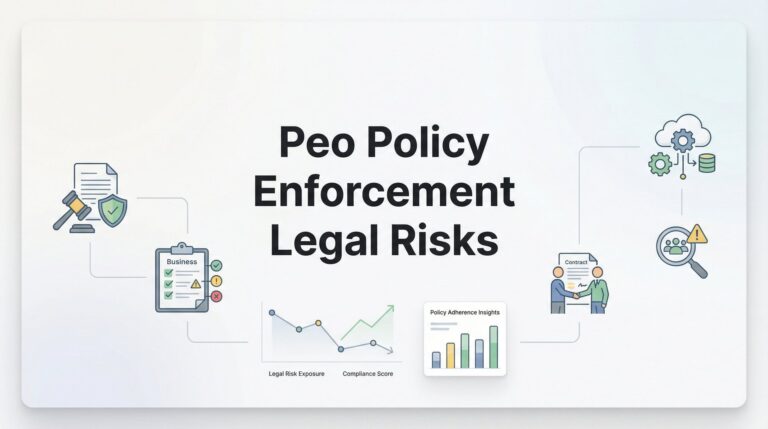
Partnering with a PEO creates a co-employment relationship where unclear responsibility for policy enforcement can lead to wrongful termination claims, discrimination lawsuits, and wage violations. This guide addresses the specific friction points that increase PEO policy enforcement legal risks—including documentation responsibilities, termination approval processes, and maintaining consistency when generic PEO policies don’t align with your operational needs—with seven practical strategies …
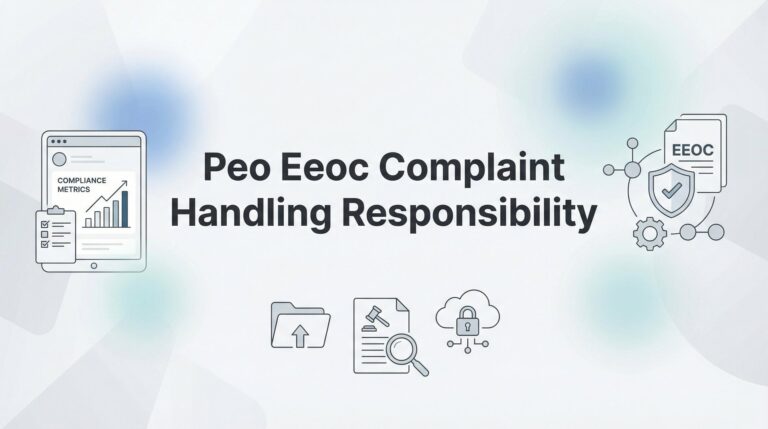
When an EEOC complaint arrives, many business owners assume their PEO handles it completely—but co-employment means PEO EEOC complaint handling responsibility is often split between both parties. Who responds, who pays legal costs, and who’s ultimately liable depends on your contract terms and which party made the employment decision that triggered the complaint, leaving business owners potentially exposed even with a PEO partnership.
When a harassment complaint arrives, most business owners either assume their PEO handles everything or nothing—both are wrong. The PEO role in harassment investigations is actually a shared responsibility with specific boundaries that aren’t always clear until you’re mid-crisis. Understanding who investigates, who decides outcomes, and where your liability sits before a complaint lands protects your business from costly missteps that happen when roles overlap or fall through the cracks.
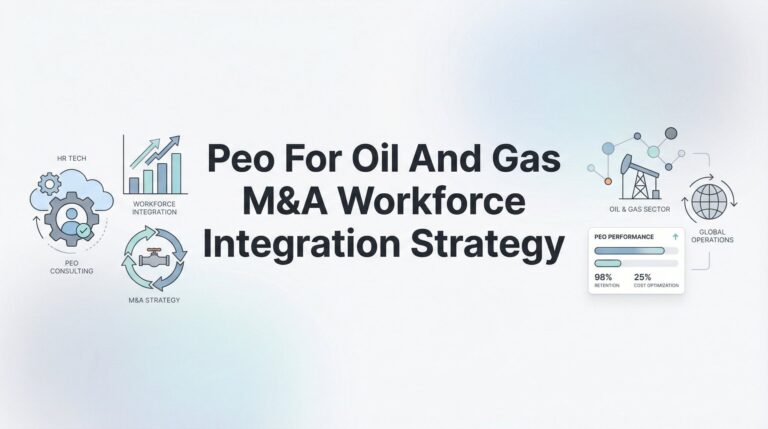
After closing an oil and gas acquisition, companies face immediate workforce integration challenges across multiple states with different payroll systems, benefits, and compliance requirements. A PEO for oil and gas M&A workforce integration strategy can streamline this complex transition by consolidating HR administration, standardizing benefits, managing multi-state compliance, and handling high-hazard workers’ compensation—all within the compressed timeline that M&A deals demand.
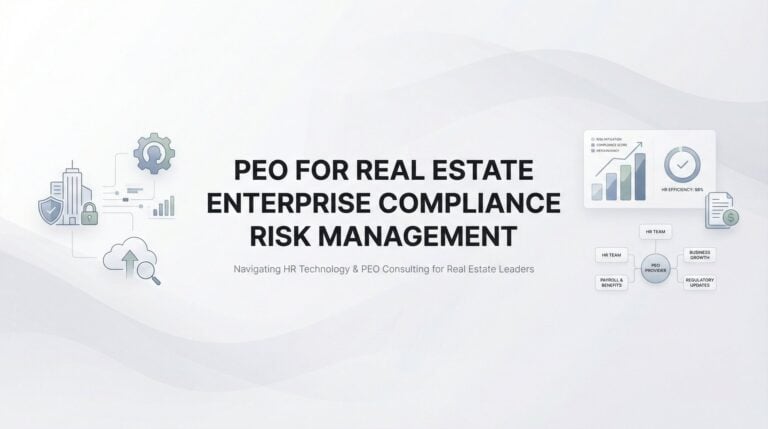
Real estate enterprises face unique compliance challenges including multi-state licensing, contractor classification across jurisdictions, and complex workforce structures mixing W-2 employees with 1099 agents. A PEO for real estate enterprise compliance risk management must address industry-specific exposures like property management labor laws and fair housing requirements—not just standard payroll functions—to truly mitigate the regulatory risks that come with operating across state lines …
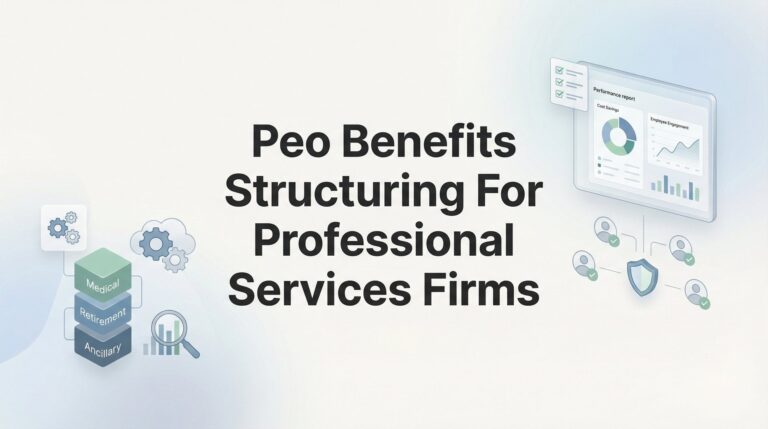
Professional services firms need competitive benefits to attract top talent but lack the scale for enterprise HR infrastructure. The right PEO provider understands partner compensation structures, professional liability requirements, and billable hour pressures that make benefits administration costly. This guide evaluates the best PEO benefits structuring for professional services firms, comparing providers that specialize in accounting, legal, and consulting practices rather than treating t…
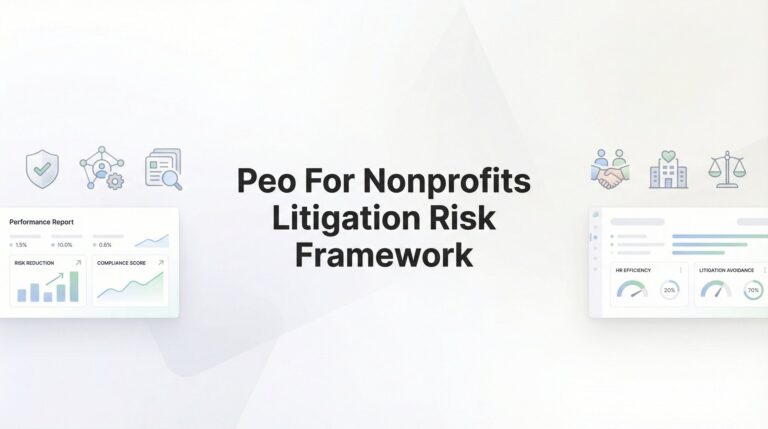
A PEO for nonprofits litigation risk mitigation framework provides essential protection against employment lawsuits that can devastate limited budgets and mission work. Nonprofits face the same employment law exposure as for-profit companies—including discrimination, wage disputes, and compliance violations—but with fewer resources to defend themselves, making a structured PEO partnership critical for managing HR liability while preserving donor confidence and organizational focus.
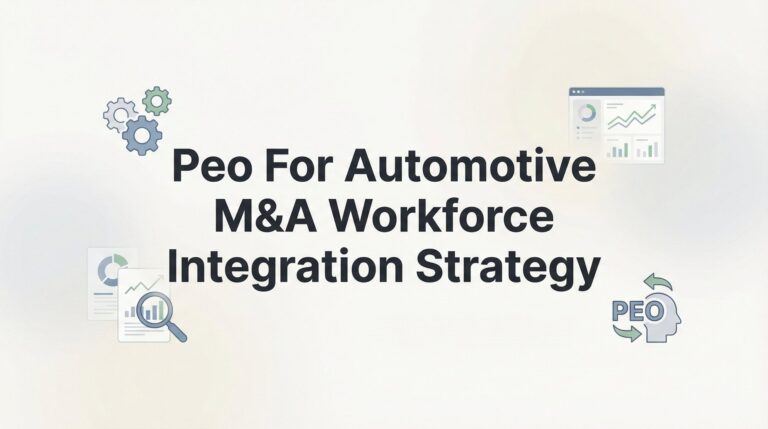
When acquiring automotive businesses like dealerships or service chains, a strategically deployed PEO for automotive M&A workforce integration strategy can absorb the complex HR challenges that emerge immediately after closing. Unlike other industries, automotive M&A requires managing ASE certifications, flat-rate pay structures, EPA compliance, and specialized dealer management systems while preventing technician turnover and maintaining benefits continuity across both organizations.

Construction companies need specialized PEO benefits structuring that addresses their unique workforce challenges—from managing mixed employee types (office staff, field crews, seasonal workers) to navigating complex workers’ comp for high-risk trades and multi-state compliance. This guide evaluates seven PEO providers based on their construction-specific expertise, including workers’ comp programs tailored to contractors, benefits flexibility for diverse workforces, prevailing wage complianc…
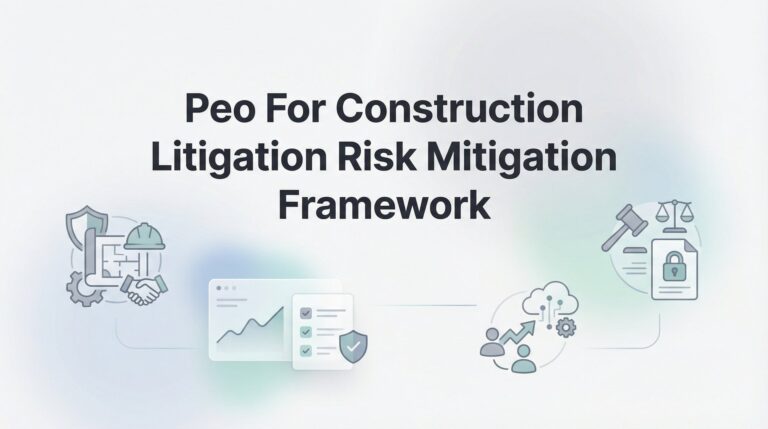
Construction companies face unique litigation risks—from jobsite injuries and worker misclassification to OSHA violations—that standard HR solutions often fail to address. This framework helps construction business owners evaluate whether partnering with a PEO for construction litigation risk mitigation actually reduces legal exposure or simply adds another vendor, examining the specific co-employment strategies that work in high-stakes construction environments where generic approaches fall …
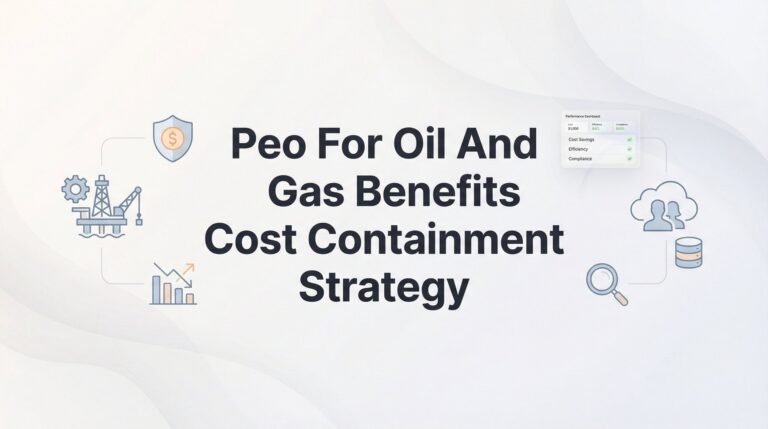
Oil and gas companies struggle with benefits costs due to hazardous work environments, remote locations, and rapid workforce scaling tied to commodity prices. A PEO for oil and gas benefits cost containment strategy addresses these unique challenges by providing a structured framework to evaluate cost drivers across upstream, midstream, and downstream operations while maintaining competitive benefits packages that attract skilled workers in this high-risk industry.
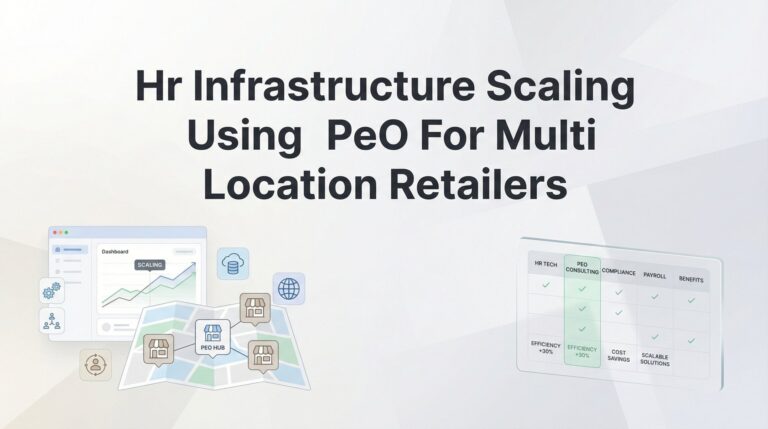
Multi-location retailers face mounting HR complexity as they expand across different jurisdictions with varying wage laws, local ordinances, and compliance requirements. This guide explores seven strategic approaches for implementing HR infrastructure scaling using PEO for multi-location retailers, addressing how to centralize compliance management while maintaining operational flexibility, reduce payroll errors, close compliance gaps, and build HR systems that support growth rather than crea…