
When you partner with a PEO, employee handbook liability becomes complicated due to co-employment relationships—the PEO provides template policies while you maintain daily management, creating ambiguity about who’s legally responsible when handbook policies trigger lawsuits. Understanding these seven PEO employee handbook liability considerations helps business owners clarify policy ownership, ensure state compliance, and protect against claims before a terminated employee’s attorney comes ca…
Planning to sell your business? Your PEO relationship needs a strategic exit 6-12 months before closing to avoid deal complications. This guide walks through the complete PEO exit planning before sale timeline, from initial assessment and benefits transition to employee communication and due diligence preparation, helping you unwind co-employment arrangements without operational disruption or spooking potential buyers during M&A negotiations.
When employment disputes escalate into discrimination claims, wrongful termination allegations, or wage disputes, a robust PEO legal defense support structure provides coordinated protection through integrated insurance coverage, experienced legal counsel, and professional claims management. Unlike basic payroll services, comprehensive PEO legal defense systems combine Employment Practices Liability Insurance with dedicated legal expertise to shield businesses from costly employment-related l…
Most PEO lawsuit risk stems from the co-employment model where compliance failures and management decisions create shared liability between businesses and their PEO partners. A solid peo lawsuit risk mitigation framework addresses predictable gaps like unclear role definitions, poor documentation, and compliance oversights before they trigger discrimination claims, DOL audits, or wrongful termination lawsuits that courts won’t dismiss based on contractual responsibility divisions.
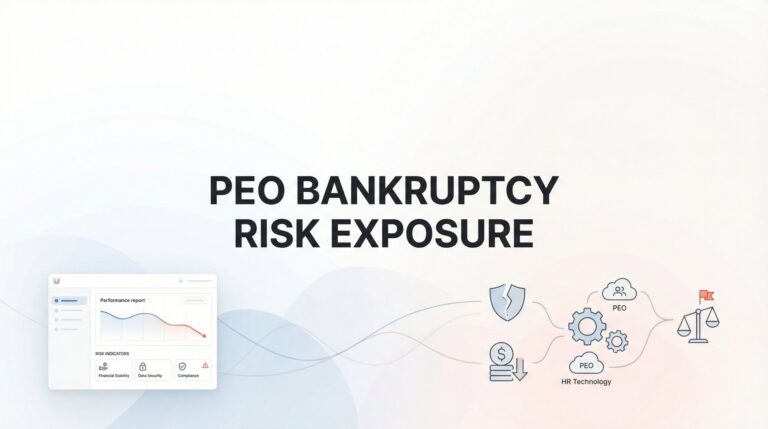
When you enter a co-employment relationship with a PEO, your business becomes directly dependent on that company’s financial stability for critical functions like payroll, benefits, and tax compliance. Understanding PEO bankruptcy risk exposure is essential because a PEO failure creates immediate operational crises—missed payroll, lapsed insurance coverage, and potential tax liability—that go far beyond losing a typical service provider. While PEO bankruptcy is uncommon, the structural nature…
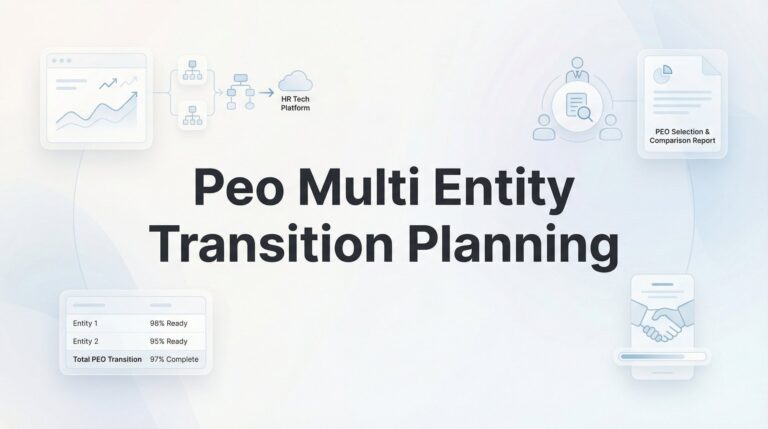
Planning a PEO multi-entity transition requires careful coordination of different EINs, state registrations, employee counts, and benefit structures across business entities to avoid payroll gaps and compliance issues. This step-by-step guide provides a framework for mapping your entity structure, sequencing the rollout, handling entity-specific complications, and building a timeline that accounts for critical dependencies—whether you’re consolidating all entities under one PEO or maintaining…
When partnering with a PEO, understanding record retention legal requirements is critical because you share responsibility for compliance with federal agencies like the IRS, DOL, EEOC, and OSHA—each with different retention periods. This guide clarifies which PEO record retention legal requirements your provider handles versus what remains your responsibility, helping you avoid costly fines, failed audits, and legal vulnerabilities by building a compliant retention system that protects your b…
When a PEO compliance audit reveals violations, business owners often discover their service agreement doesn’t shield them from legal liability as expected. Co-employment arrangements don’t split compliance responsibility cleanly—regulators focus on who made decisions causing violations and who has resources to pay penalties, regardless of contractual language. Understanding your actual legal exposure in PEO compliance audit legal implications before problems surface is critical, as liability…
PEO employment documentation standards require clear frameworks to protect your business in co-employment relationships. This guide identifies seven critical documentation standards that define responsibilities between you and your PEO, addressing common gaps that create compliance exposure and potential liability. Learn which records you control versus what your PEO handles, and discover the specific documentation practices that transform your PEO arrangement from a potential risk into genui…

Technology companies with distributed teams face complex multi-state payroll governance challenges when each new hire in different states triggers unique tax registrations, unemployment insurance requirements, and conflicting wage laws. A PEO for technology multi-state payroll governance helps tech companies maintain consistent employment policies across jurisdictions while ensuring equity grants, bonus structures, and overtime calculations comply with varying state regulations and satisfy bo…

Nonprofit mergers require specialized workforce integration strategies that account for mission-driven staff, grant-funded positions, and complex benefit structures including loan forgiveness eligibility. This guide provides a practical PEO for nonprofits M&A workforce integration strategy, covering when to consolidate benefits, how to manage employees across different grant cycles, and realistic timelines for organizations with mismatched fiscal years—addressing the unique regulatory and cul…
When partnering with a PEO, understanding data ownership clauses is critical for protecting sensitive employee information and ensuring compliance. This systematic framework guides business owners through seven essential steps to review PEO data ownership clauses, helping you identify who controls your data, what happens during transitions, and how to avoid compliance risks hidden in contract terms before signing or while managing existing agreements.