
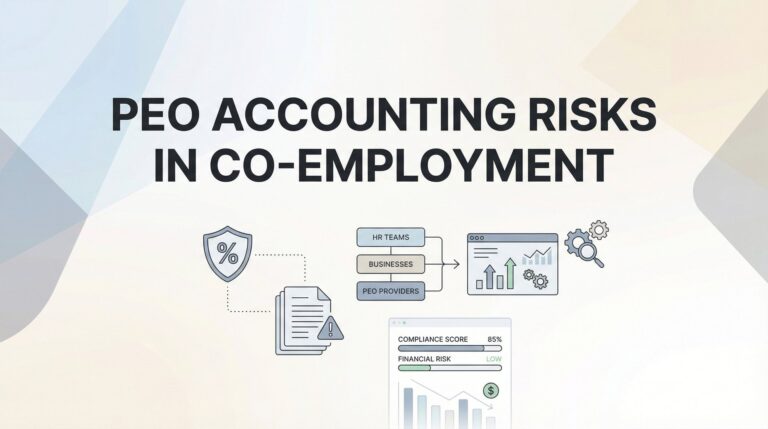
Business owners who partner with PEOs for payroll and benefits often face unexpected PEO accounting risks in co-employment arrangements, including confusion over how to properly categorize hundreds of thousands in quarterly fees and unexplained balance sheet liabilities. While co-employment delivers real benefits like enterprise-level coverage and compliance support, the split employer responsibilities create accounting ambiguities that surface during audits and tax filings—problems that rare…
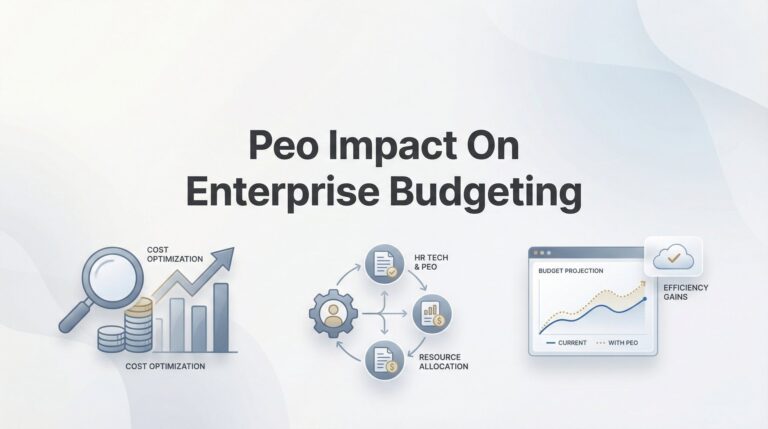
Enterprise CFOs struggle with PEO impact on enterprise budgeting because traditional PEO invoices bundle payroll, benefits, compliance, and administrative costs into opaque line items that don’t map to standard general ledger categories. The real challenge isn’t tracking current spending—it’s accurately forecasting future costs, allocating expenses across departments, and explaining variances when a single PEO bill replaces what used to be a dozen separate vendor relationships and internal co…
When your PEO gets acquired, employee uncertainty about benefits and HR contacts can trigger turnover among top performers. This guide provides seven actionable strategies for PEO employee retention during acquisition, focusing on proactive communication, benefits continuity, and transition management steps you can control in the critical first 90 days—whether you stay with the merged entity or switch providers.
After an acquisition, HR leaders face the complex challenge of merging different PEO benefits structures, health plans, and policies across newly combined employee populations. This operational guide provides a practical, step-by-step approach to PEO benefits restructuring post acquisition, covering everything from initial benefits audits through final enrollment, with critical decisions typically required within 30-90 days to maintain compliance and employee morale.
Automotive dealerships and service centers face unique litigation risks from commission disputes, workplace injuries, and high turnover that generic HR solutions don’t address. A PEO for automotive litigation risk mitigation framework provides specialized compliance support, documentation systems, and expert guidance tailored to the specific employment challenges of service bays and sales floors, helping businesses prevent routine HR situations from escalating into costly legal battles.
Nonprofits can significantly reduce insurance expenses by strategically partnering with a Professional Employer Organization (PEO) to access large-group insurance pools and enterprise-level risk management tools. This guide reveals seven actionable strategies for insurance cost control using PEO for nonprofit organizations, covering plan design optimization, claims management, and leveraging collective buying power to redirect more funds toward mission-critical programs instead of overhead co…
Auto shops facing skyrocketing workers’ comp premiums after claims can explore PEO solutions, but choosing the right structure is critical—the wrong PEO for automotive advanced workers comp structuring can actually increase costs rather than reduce them. This guide reveals how to properly evaluate PEO workers’ comp pooling arrangements, experience modifier impacts, and automotive-specific risk management strategies that insurance brokers often overlook when dealing with high-risk operations l…
Energy companies face unique litigation risks from workplace injuries, multi-state wage compliance issues, and contractor misclassification that generic HR policies can’t address. A specialized PEO for energy litigation risk mitigation framework provides practical protection by implementing industry-specific safety protocols, ensuring proper worker classification, managing workers’ compensation across jurisdictions, and maintaining compliant HR policies designed specifically for high-hazard e…
Nonprofits partnering with PEOs face unique compliance challenges beyond typical HR risks, including potential conflicts with tax-exempt status, grant funding requirements, and mission-critical regulatory obligations. This guide examines seven critical PEO compliance risks for nonprofit organizations and provides strategies to mitigate them, helping nonprofits evaluate whether a PEO understands the nuanced regulatory landscape that can impact both operations and charitable mission.
Oil and gas companies face intense litigation exposure from OSHA violations, environmental claims, and wrongful termination suits in hazardous work environments. A PEO for oil and gas litigation risk mitigation framework helps operators evaluate whether co-employment structures can meaningfully reduce specific legal risks beyond simply redistributing paperwork responsibilities when incidents occur at drilling sites, refineries, and remote field operations.
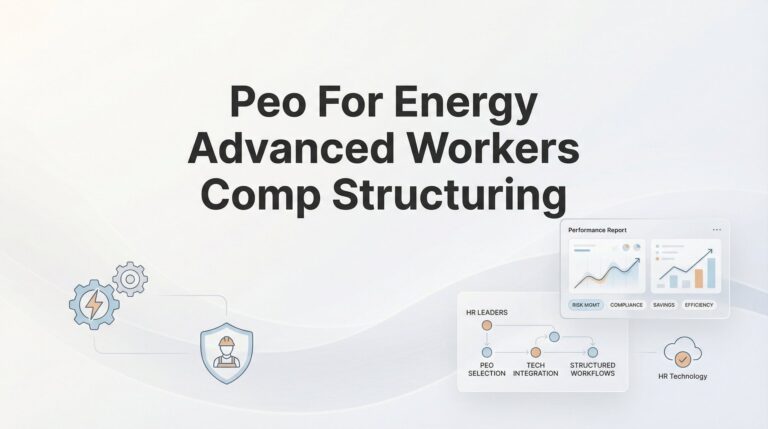
Energy companies with diverse workforces—from rig workers to office staff—face complex workers’ comp challenges across multiple states and risk classifications. This guide explains advanced PEO for energy workers’ comp structuring strategies to avoid overpaying premiums, prevent coverage gaps, and ensure proper classification for field and office employees operating in different jurisdictions.
Technology companies struggling with rising compensation and compliance costs can achieve significant labor cost optimization using PEO for technology companies through specialized providers that understand equity compensation, multi-state regulations, and remote workforce management. This comprehensive comparison evaluates eight PEO providers based on their technology integration capabilities, benefits pricing, and proven track record with software companies and tech startups, helping you re…