
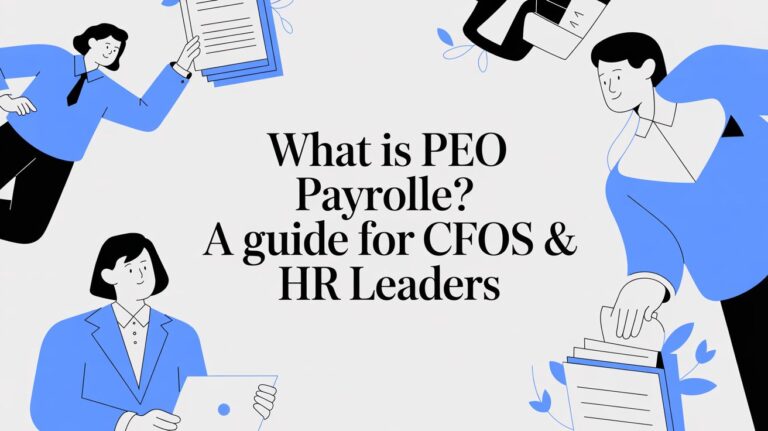
Most advice about what is PEO payroll gets the basic definition right and the buying decision wrong. It treats a PEO like…
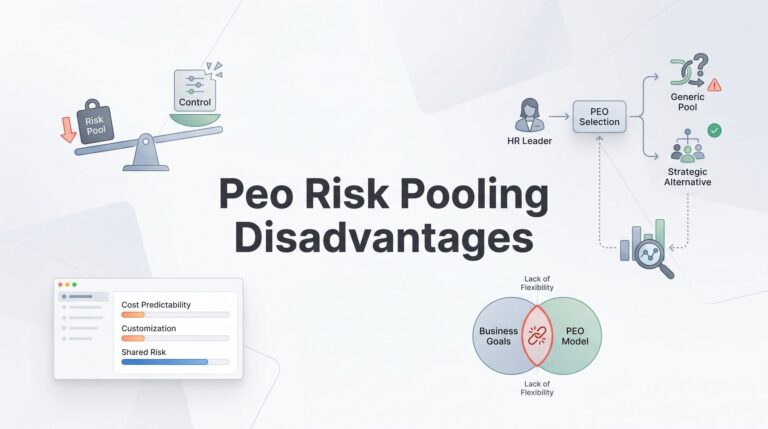
Understanding PEO risk pooling disadvantages is critical before committing to a provider, as the bundled insurance model that promises savings can quietly drain your budget if your workforce is low-risk, healthy, or growing. This breakdown covers seven specific ways risk pooling can work against your business, from subsidizing high-claim companies in your pool to losing pricing leverage you’d have negotiating coverage independently.
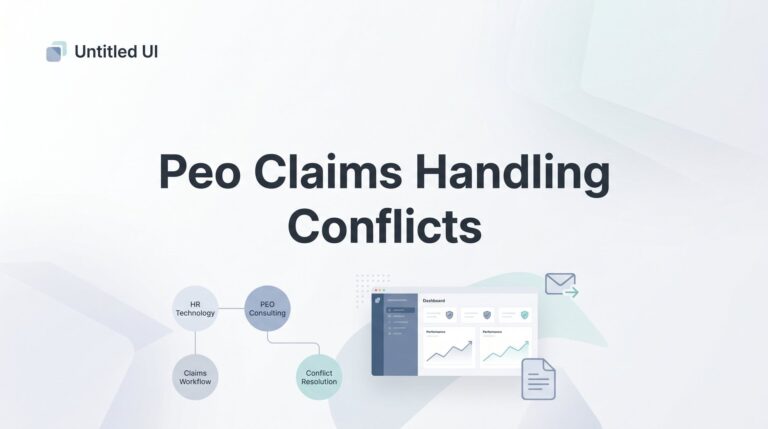
PEO claims handling conflicts arise from a structural gap in co-employment arrangements, where the PEO owns the master workers’ comp policy but the business controls the worksite. This guide explains why claims get denied, delayed, or mismanaged—and what business owners can do to protect themselves before a workplace injury exposes the vulnerabilities in their PEO relationship.
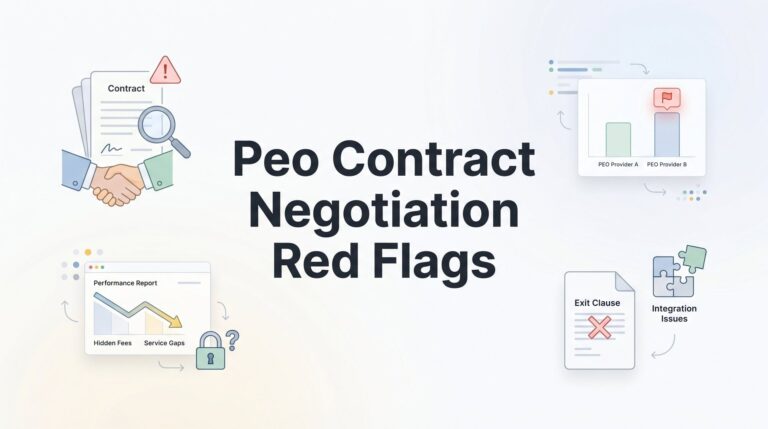
Signing a PEO contract without scrutinizing the fine print can lock your business into escalating costs and costly exit terms. This guide identifies eight specific PEO contract negotiation red flags—from buried renewal clauses to liability language—that business owners frequently overlook but that significantly impact long-term flexibility and expenses.
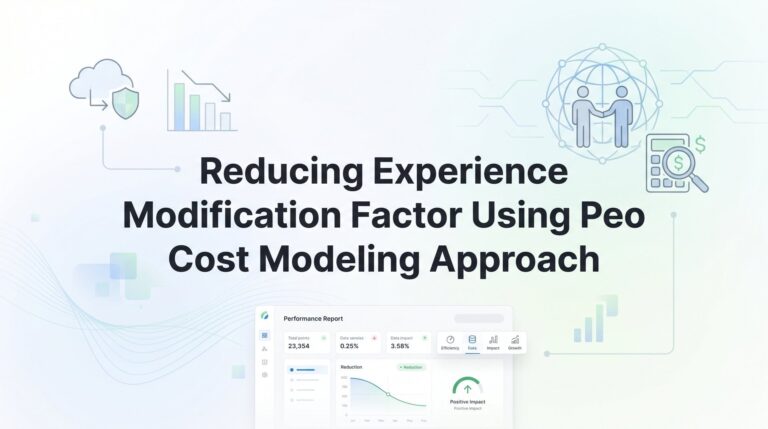
Reducing your experience modification factor using a PEO cost modeling approach gives business owners a data-driven way to take control of workers’ comp costs rather than passively accepting renewal outcomes. This guide explains how the e-mod formula works, where PEOs can strategically influence your loss history and claims management, and how to model the financial impact before committing to a partnership.
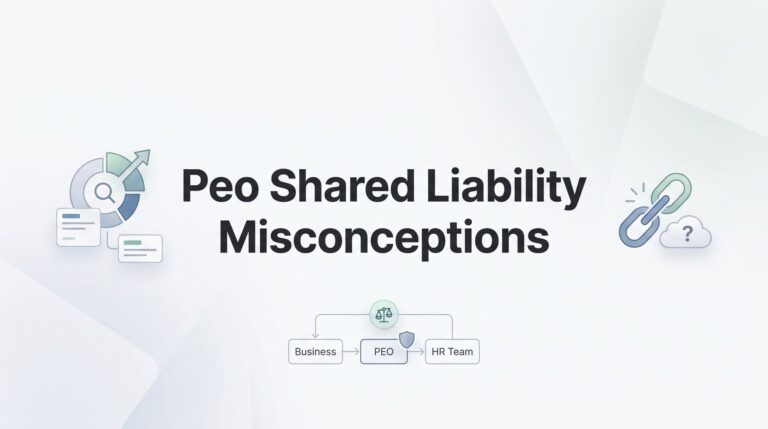
Many business owners enter PEO arrangements believing they’ve transferred most employment liability to their provider, only to discover the reality is far more nuanced. This piece breaks down the most common PEO shared liability misconceptions, clarifying exactly which risks remain with the client company and how the co-employment model actually divides legal and compliance responsibilities between both parties.
Navigating PEO benefit plan transparency issues can be challenging, as the co-employment structure often creates information gaps that leave business owners seeing only bundled rates while PEOs retain full visibility into claims data and margins. This guide outlines seven practical strategies to help you identify hidden costs, evaluate plan competitiveness, and close the asymmetry gap before committing to a PEO relationship.
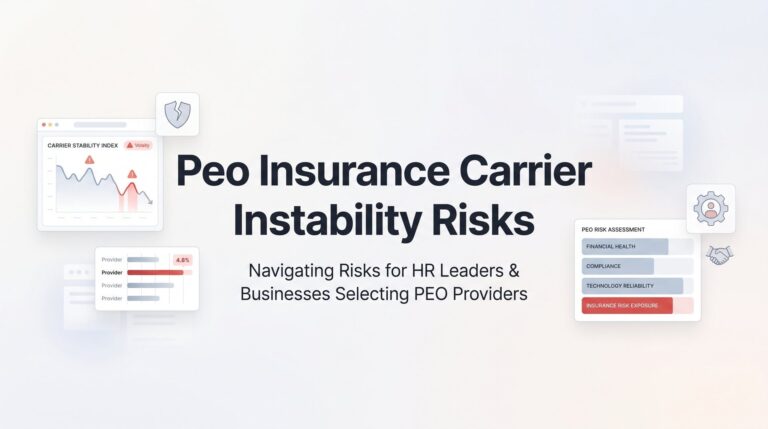
PEO insurance carrier instability risks can blindside business owners when the carrier behind a master policy unexpectedly exits, leaving employees scrambling to replace coverage mid-year with disrupted networks and reset deductibles. Understanding these risks before signing with a PEO helps companies avoid costly, stressful transitions that impact both HR operations and employee benefits continuity.
Labor cost optimization using a PEO for professional services firms offers a strategic path to reducing the 70-85% of revenue consumed by people costs—but only when implemented thoughtfully. This guide breaks down exactly how PEOs can lower payroll taxes, benefits expenses, and administrative overhead for accounting, legal, and consulting firms, while honestly addressing where the savings are real versus overhyped.

Conducting a thorough PEO cancellation penalty analysis before signing — or before attempting to exit — can save businesses from unexpected multi-month fees and complex contract traps. This guide covers seven practical strategies for identifying, quantifying, and negotiating cancellation terms so you can make informed decisions about your PEO arrangement at any stage.
PEO service model limitations explained honestly reveal the structural friction points that sales pitches gloss over—co-employment constraints, limited plan customization, and post-onboarding surprises that only surface after you’ve signed. This guide walks business owners through the real operational, financial, and structural trade-offs of the PEO model so they can make a fully informed decision before committing.
A PEO workers’ comp strategy for restaurant groups can consolidate multiple locations under a master policy to reduce per-employee rates and streamline claims management across diverse, high-risk roles. This guide outlines how multi-location restaurant operators can evaluate PEO partners, avoid common pitfalls like employee misclassification, and structure an arrangement that controls costs as their group scales.