Decision-focused content for business owners evaluating long-term HR infrastructure and growth strategy.
PEO adoption before a private equity exit risk mitigation strategy is gaining traction among PE-backed companies looking to clean up HR liabilities before due diligence begins. Implementing a PEO 12-24 months ahead of a planned exit can resolve misclassified workers, inconsistent payroll filings, and benefits gaps — reducing buyer leverage and protecting valuations during the deal process.
A well-designed PEO strategy for rapid workforce expansion helps fast-growing companies scale from small teams to large ones without payroll breakdowns, compliance gaps, or benefits delays. This guide explains how to select and structure a PEO partnership with growth in mind from the start, so your HR infrastructure supports hiring velocity instead of slowing it down.

A PEO broker conflict analysis reveals why brokers often recommend higher-cost providers over better alternatives: most are compensated by PEO vendors, not the businesses they advise. This guide helps buyers identify hidden financial incentives, ask the right disclosure questions, and evaluate recommendations more critically before signing a PEO agreement.
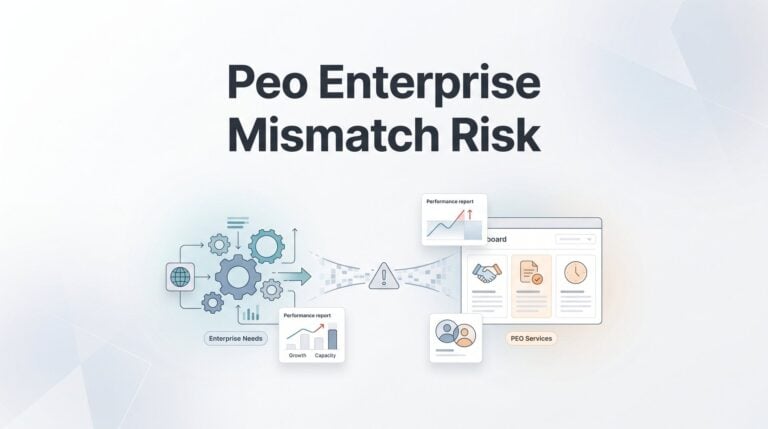
PEO enterprise mismatch risk occurs when a technically competent provider simply isn’t built for your specific business size, industry, or operational complexity—resulting in hidden costs, compliance gaps, and service failures that compound over time. This guide helps enterprise leaders identify the warning signs of a misaligned PEO relationship and understand what to evaluate before signing or renewing a contract.

PEO scaling limitations explained through real operational breakdowns — this guide details exactly where the co-employment model starts to fail as companies grow beyond 50-100 employees. From benefits configuration bottlenecks to multi-state expansion friction, business owners learn to recognize the warning signs before they’re locked into a contract that no longer fits their stage.
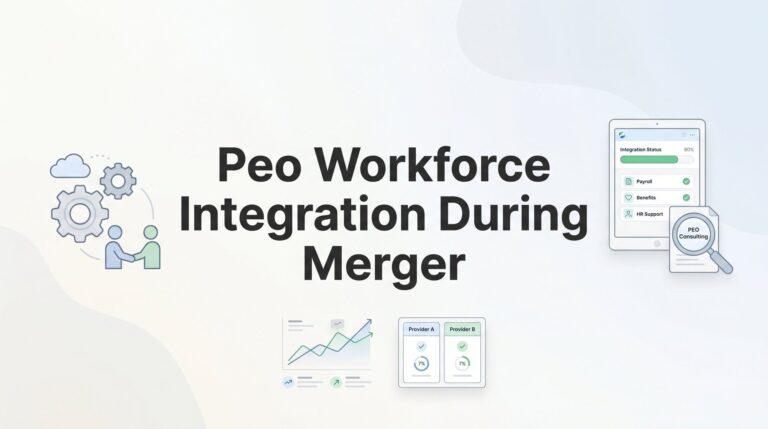
PEO workforce integration during a merger requires careful planning to avoid benefits gaps, compliance failures, and employee attrition. This step-by-step guide walks business owners through consolidating co-employment structures, reconciling benefits plans, and managing state compliance requirements when combining two organizations — whether one or both companies are currently working with a PEO.

Companies that regret using a PEO typically don’t regret the concept itself — they regret the decisions made before signing. This diagnostic guide breaks down the predictable patterns behind PEO dissatisfaction and provides practical guidance to help businesses avoid the same mistakes, whether they’re currently evaluating a PEO or questioning an existing relationship.
Understanding the key PEO client dissatisfaction drivers before signing can save your business from costly mistakes and operational headaches. This guide breaks down the seven most common reasons businesses leave their PEO—from mismatched expectations to poor execution—and provides concrete screening steps to identify red flags during the evaluation phase before you commit to a provider.
Implementing PEO adoption before a private equity exit in the 12-24 month window can significantly strengthen your company’s valuation by consolidating payroll, normalizing benefits, and producing clean HR documentation that satisfies buyer due diligence. This step-by-step playbook walks PE-backed companies through timing, vendor selection, and execution to transform HR infrastructure from a liability into a competitive advantage during the exit process.

PEO workforce misalignment risks develop gradually when your provider’s structure doesn’t match your actual workforce, leading to inflated costs, uncovered compliance gaps, and administrative burdens that never disappear. This guide helps businesses identify the warning signs of a misaligned PEO relationship and understand what a properly fitted provider partnership should actually look like.
