Decision-focused content for business owners evaluating long-term HR infrastructure and growth strategy.
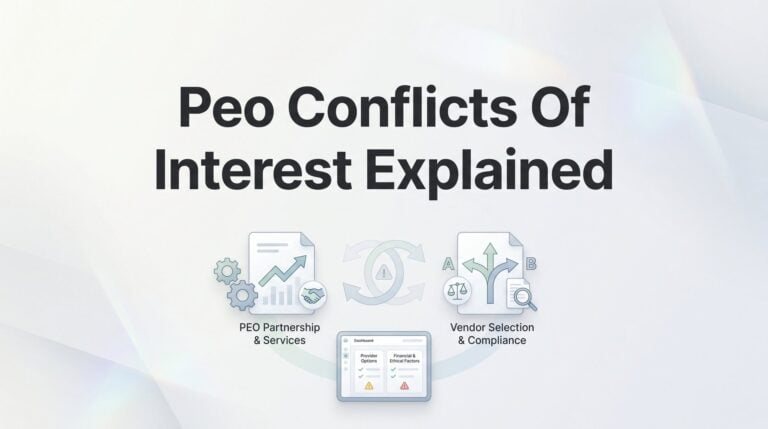
PEO conflicts of interest explained clearly for business owners who want to make informed decisions before signing. This guide breaks down the structural incentives — from undisclosed broker commissions to bundled pricing and insurance markups — that can quietly influence which PEO gets recommended to you, helping you ask the right questions and evaluate providers with a clearer understanding of who benefits from your contract.
PEO oversight challenges explained through the real friction points business owners encounter when outsourcing HR — from unexpected workers’ comp adjustments to missed compliance filings. This guide helps small business owners understand that delegating HR to a PEO requires active monitoring, not hands-off trust, and outlines the specific oversight gaps that can quietly erode the value of your PEO relationship.

Portfolio-wide HR consolidation using a PEO allows private equity and holding company operators to eliminate duplicated payroll systems, benefits brokers, and compliance practices across multiple entities while gaining aggregated purchasing power and centralized oversight. This guide covers the multi-entity-specific considerations that single-company PEO advice typically ignores, helping portfolio managers avoid common implementation pitfalls like payroll disruptions and benefits lapses.

Building an effective PEO cross-functional coordination model requires deliberate structure across finance, operations, legal, IT, and HR to prevent costly breakdowns in your co-employment relationship. This guide outlines seven practical strategies specifically designed for companies with 25–150 employees to streamline handoffs, maintain compliance, and eliminate the duplicated work that derails most PEO implementations once the initial setup phase ends.

A well-structured PEO for federal contractors M&A workforce integration strategy helps acquirers merge security clearances, DCAA labor categories, SCA wage determinations, and OFCCP obligations without triggering audit exposure or jeopardizing contract eligibility. This tactical playbook walks federal contractors through the specific steps to unify HR and compliance infrastructure post-close while keeping government oversight requirements intact.

A PEO administrative efficiency model gives business owners a structured framework to measure whether their PEO partnership genuinely reduces total HR administration hours or simply shifts the workload elsewhere. This practical approach helps companies evaluate PEO performance beyond the initial sales pitch, identifying hidden time costs like duplicate data entry, portal management, and unresolved employee questions that erode the promised administrative relief.
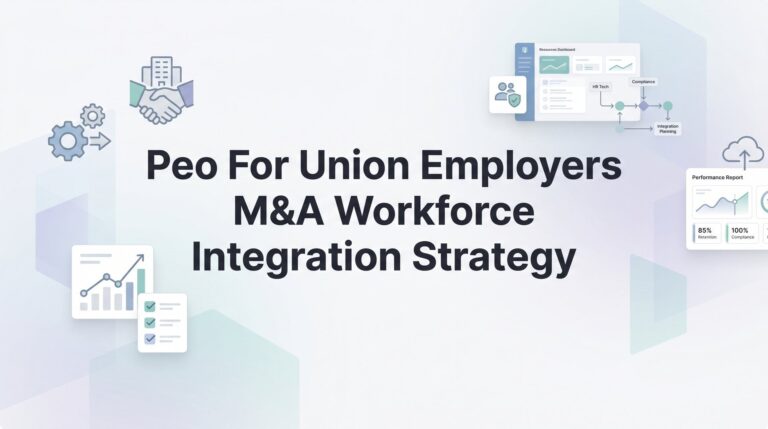
A practical step-by-step guide for business owners and HR leaders on implementing a PEO for union employers M&A workforce integration strategy, covering how to navigate collective bargaining agreements, co-employment tensions, and administrative complexity from pre-close due diligence through post-integration stabilization when acquiring a unionized workforce.

Using a PEO for high mod rate employers pursuing M&A workforce integration can shield a combined entity from compounding workers’ comp costs when either side carries a damaging experience modification rate. This guide provides a practical, step-by-step strategy for leveraging a PEO’s master workers’ comp policy to isolate legacy risk profiles, stabilize insurance costs, and protect the merged workforce’s bottom line during acquisition.

A PEO strategic HR alignment model is a structured evaluation process that helps businesses identify their actual HR priorities, risk exposure, and operational needs before selecting a PEO provider. Rather than discovering a costly mismatch 18 months into a contract, this framework ensures the PEO you choose is genuinely built for the way your specific business operates.

Integrating a remote workforce after an M&A deal means inheriting employees across multiple state jurisdictions with complex compliance requirements that can derail your timeline. This guide explains how to strategically deploy a PEO for remote workforce companies M&A workforce integration strategy, compressing onboarding timelines while managing multi-state payroll, benefits, and employment law obligations before costly compliance gaps emerge.
