Decision-focused content for business owners evaluating long-term HR infrastructure and growth strategy.

After acquiring a gig economy platform, a PEO for gig economy platforms M&A workforce integration strategy can accelerate onboarding of inherited W-2 employees, establish benefits infrastructure, and resolve multi-state payroll compliance gaps — but only when deployed with a clear understanding of contractor classification risks and workforce model differences that traditional acquisitions don’t face.
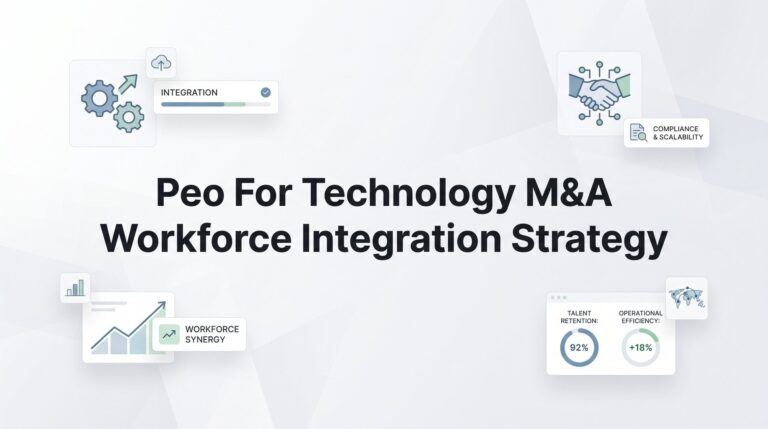
A PEO for technology M&A workforce integration strategy provides the operational infrastructure needed to consolidate payroll, benefits, and multi-state compliance during the critical post-close period. This guide explains how acquiring companies can use a Professional Employer Organization to stabilize inherited engineering and product teams, reduce compliance risk, and retain top talent before transition chaos drives them to competitors.
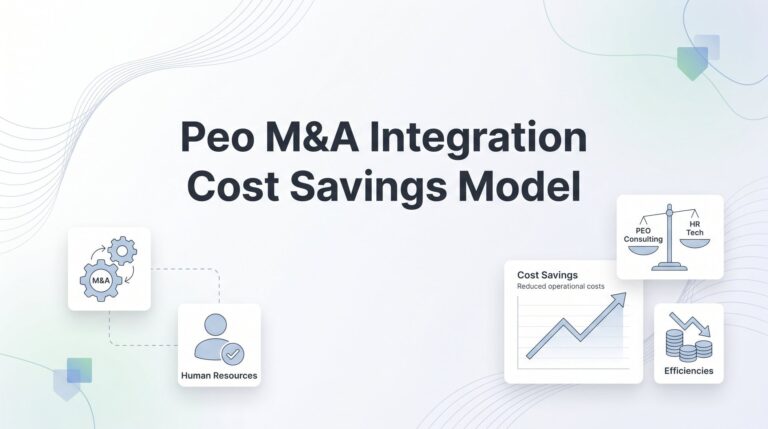
A practical PEO M&A integration cost savings model requires moving beyond generic HR synergy assumptions to accurately account for co-employment contracts, bundled insurance pools, and compliance infrastructure. This walkthrough helps business owners and finance leads quantify real HR consolidation value during a deal, avoiding the costly projection errors that occur when standard G&A frameworks are misapplied to PEO arrangements.

A PEO HR outsourcing maturity framework helps businesses accurately assess their current HR capabilities before selecting a PEO provider, preventing costly mismatches between the support they pay for and what they actually need. Rather than comparing vendor pitches, companies start with an internal audit of their HR evolution to identify the right level of outsourced support.
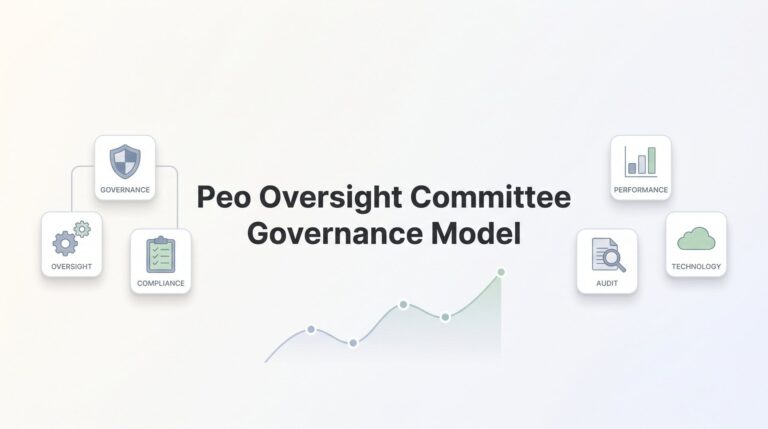
A PEO oversight committee governance model provides businesses with a structured internal accountability framework to actively manage their co-employment relationship, preventing costly gaps like unresolved compliance penalties or surprise benefits rate increases. This guide explains how to build the right committee structure, assign clear ownership roles, and establish review cadences that keep your PEO partnership performing as intended.
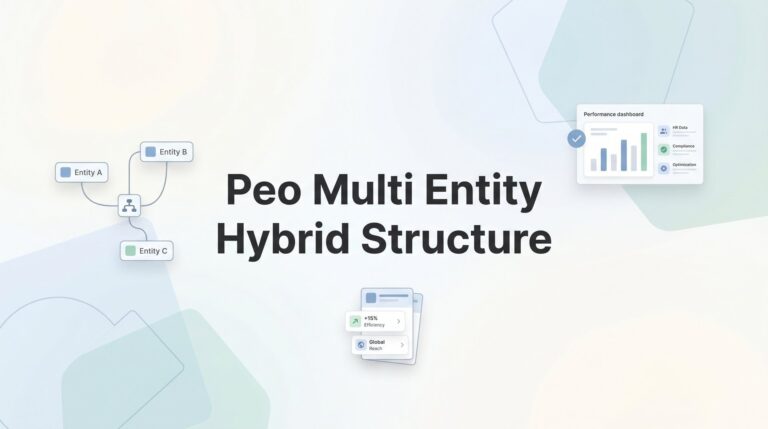
A PEO multi entity hybrid structure makes strategic sense for holding companies, franchise groups, and PE portfolio firms that can’t fit cleanly into a single PEO agreement. This approach lets businesses assign different entities to different workforce models—PEO, ASO, or self-administered—based on size, risk classification, geography, and operational needs, rather than forcing a one-size-fits-all solution that creates coverage gaps or unnecessary cost.
Using a PEO with decentralized HR teams creates real structural tension, since PEOs centralize by design while distributed HR models exist to preserve local expertise and decision-making speed. This guide examines what actually works—and what breaks down—when organizations with regional HR authority, division-level compliance ownership, and site-specific benefits try to layer co-employment onto an already functioning distributed structure.
Running a PEO with an internal compensation team doesn’t have to create redundancy — it requires deliberate role separation. A PEO handles payroll execution, tax administration, and compliance infrastructure, while your internal comp team retains ownership of pay philosophy, salary bands, and equity strategy, allowing both functions to operate efficiently without duplicating work or creating conflicting data sources.
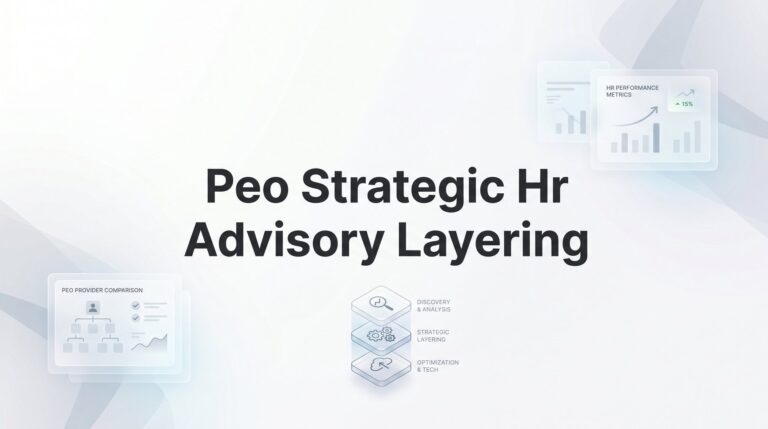
PEO strategic HR advisory layering is the practice of supplementing standard PEO services with dedicated strategic HR expertise when administrative support alone no longer meets your organization’s growing needs. This approach helps scaling businesses navigate complex challenges like multi-state expansion, leadership development, and workforce strategy that fall outside a typical PEO’s transactional scope.
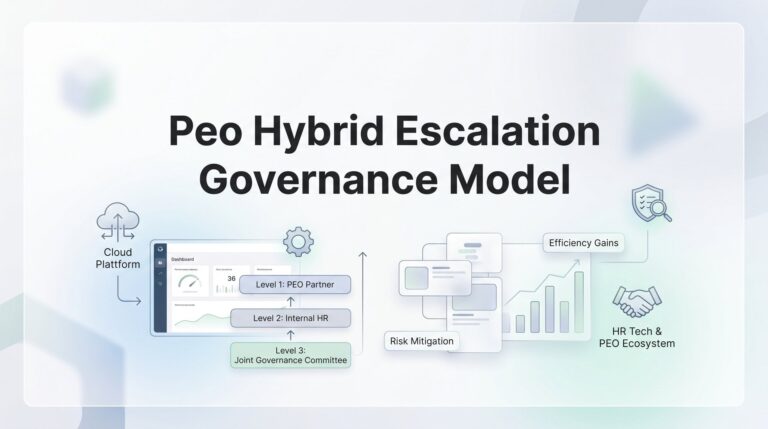
A PEO hybrid escalation governance model provides a structured framework for defining decision authority between your internal HR team and your PEO partner when workplace issues arise—from harassment complaints to EEOC charges. Without clearly documented escalation paths, co-employment arrangements create dangerous authority gaps that stall response times and expose both parties to compliance risk.
