Decision-focused content for business owners evaluating long-term HR infrastructure and growth strategy.
Running a PEO with an internal benefits committee doesn’t have to mean choosing between administrative efficiency and meaningful employee oversight. This guide helps HR leaders redefine their committee’s role within a PEO structure, preserving governance, employee advocacy, and strategic influence without duplicating the PEO’s administrative functions.
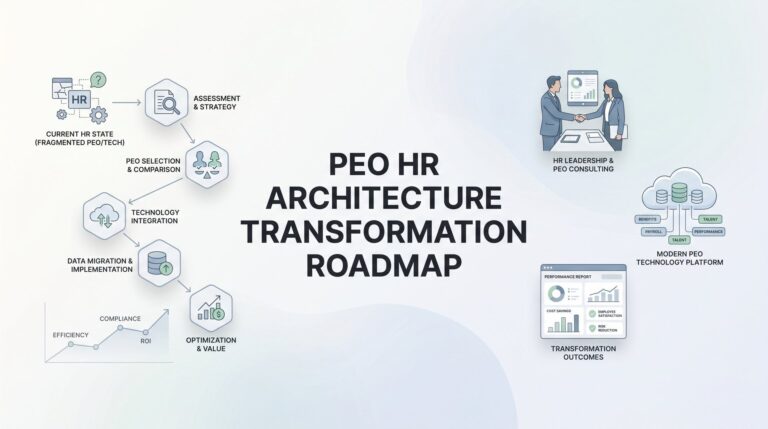
This practical peo hr architecture transformation roadmap guides businesses through restructuring their internal HR operations around a PEO partnership — covering how to audit existing processes, clarify ownership boundaries, eliminate redundant workflows, and sequence the transition to avoid costly gaps in payroll, compliance, and benefits management.
A PEO for multi-location acquisition strategy helps operators consolidate inherited payroll systems, benefits, and compliance obligations across multiple acquired locations into a unified HR infrastructure. This guide examines whether a PEO genuinely solves the integration burden that deal teams face post-close, or whether it adds complexity to an already fragmented situation across three, five, or ten locations simultaneously.
A PEO for buy and build strategy solves the operational chaos that serial acquirers face when each new company brings incompatible HR systems, fragmented benefits, and compliance gaps. Instead of managing multiple payroll providers and benefits carriers across acquisitions, a PEO provides standardized infrastructure that lets you integrate workforces quickly without derailing your deal pipeline or overwhelming your HR team with administrative complexity.
Most electrical contractors sign PEO contracts without understanding the critical terms that affect their business—from workers’ comp exposure that can swing 40% based on a single claim to prevailing wage compliance across multiple states. This guide identifies the specific electrical contractors PEO contract terms you must negotiate before signing, helping you avoid costly mid-contract issues that can impact your staffing, compliance, and bottom line when standard agreements fail to address …
Plumbing contractors often rush into PEO agreements without scrutinizing plumbing PEO contract terms that directly affect their bottom line and operational flexibility. Unlike standard HR outsourcing deals, plumbing businesses require specialized contract provisions addressing multiple workers’ comp classification codes, seasonal workforce fluctuations, apprenticeship programs, and prevailing wage requirements—making careful negotiation essential before signing to avoid locked-in unfavorable …
Commercial construction companies face unique challenges with standard PEO contracts that weren’t designed for their fluctuating crew sizes, multi-state operations, and high-risk workers’ comp classifications. Before signing, contractors must negotiate commercial construction PEO contract terms that address seasonal workforce changes, accurate workers’ comp pricing, flexible termination clauses, and jobsite-specific liability protections to avoid costly surprises like minimum employee penalti…
Residential construction PEO contract terms contain hidden clauses that can trigger massive surprise costs during workers’ comp audits and year-end reconciliations. Unlike standard service agreements, these contracts include specific language around job classifications, workforce fluctuations, and risk definitions that directly impact builders with seasonal crews and jobsite exposures. Understanding these critical contract details before signing protects construction companies from unexpected…

Subcontractors with five employees face a critical decision point where PEO services can either deliver exceptional value or become an unnecessary expense. This guide examines five strategic evaluation methods tailored specifically to subcontracting challenges—including workers’ comp requirements, multi-site payroll, classification issues, and seasonal workforce management—helping you determine if a Subcontractors PEO for 5 Employees arrangement fits your operational reality and budget.
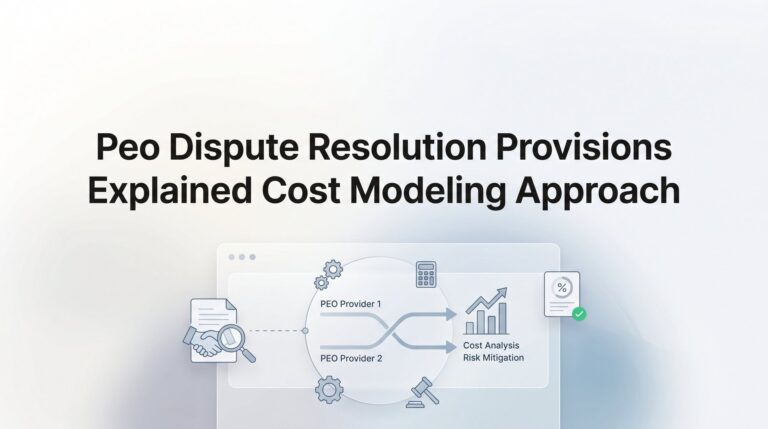
Most business owners overlook PEO dispute resolution provisions until a costly disagreement emerges, but these clauses function as hidden cost centers that can mean the difference between $5,000 and $50,000 in resolution expenses. This guide explains how to use a cost modeling approach to financially evaluate PEO dispute resolution provisions before signing, treating these clauses as the quantifiable business expenses they truly are rather than dismissible legal boilerplate.
