Decision-focused content for business owners evaluating long-term HR infrastructure and growth strategy.
When PEO service level agreement enforcement becomes necessary, most business owners discover their contract’s performance guarantees are far vaguer than sales promises suggested. Understanding the difference between legally enforceable SLA terms and marketing language is critical before signing, as leverage to hold providers accountable largely disappears once the contract is executed—especially when issues like delayed payroll corrections reveal that “reasonable efforts” clauses offer minim…
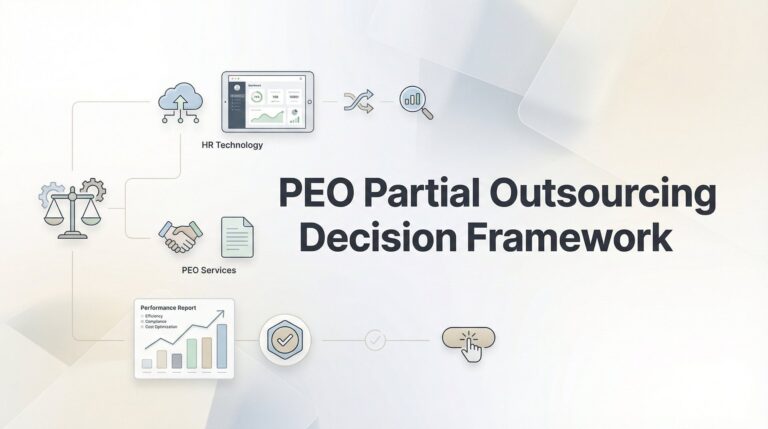
A PEO partial outsourcing decision framework helps businesses determine which HR functions to hand off to a PEO and which to manage internally, avoiding the costly mistake of either paying for unnecessary services or drowning in compliance work that should be outsourced. This guide presents seven critical decision factors to structure an effective partial outsourcing arrangement that balances cost efficiency with operational control.
Enterprises with existing HR teams can strategically split functions by keeping high-value activities like recruiting and culture in-house while outsourcing compliance-heavy tasks to a PEO. This guide explains how to structure a PEO enterprise hybrid configuration that avoids ownership gaps, ensures system integration, and maximizes value without surrendering control of your entire HR operation.
A PEO policy approval governance model defines who has decision-making authority over HR policies in a co-employment relationship—preventing situations where benefits or PTO rules change without your knowledge. This framework clarifies which policies require your approval, which the PEO controls for compliance, and which need joint sign-off, eliminating the costly ambiguity that creates friction when one party makes unexpected decisions the other didn’t authorize.
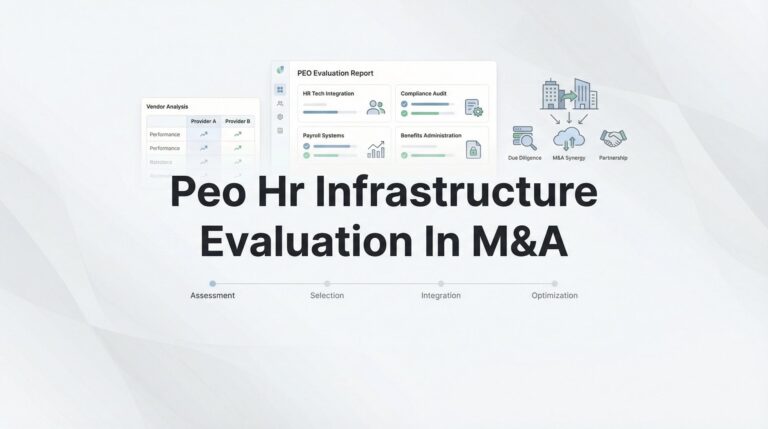
Acquiring a company that uses a PEO creates unique M&A challenges because co-employment relationships and bundled services don’t transfer cleanly like traditional HR systems. This guide provides specific steps for PEO HR infrastructure evaluation in M&A, helping acquirers identify hidden liabilities, assess contractual obligations, and plan seamless post-close integration while avoiding costly compliance gaps and unexpected delays.
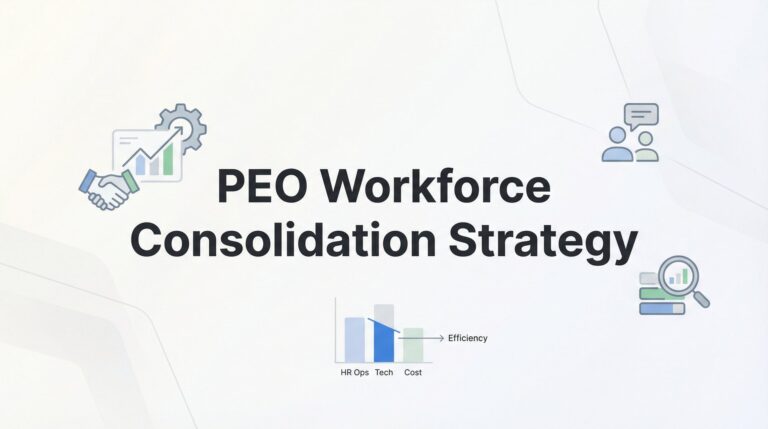
A PEO workforce consolidation strategy addresses the operational complexity that emerges when companies manage multiple HR systems across different entities, acquisitions, or geographic expansions. This approach focuses on unifying fragmented payroll, benefits, and compliance infrastructure under a single PEO provider to eliminate manual reconciliation, reduce administrative overhead, and create scalable HR architecture that supports both current operations and future growth without disruptin…
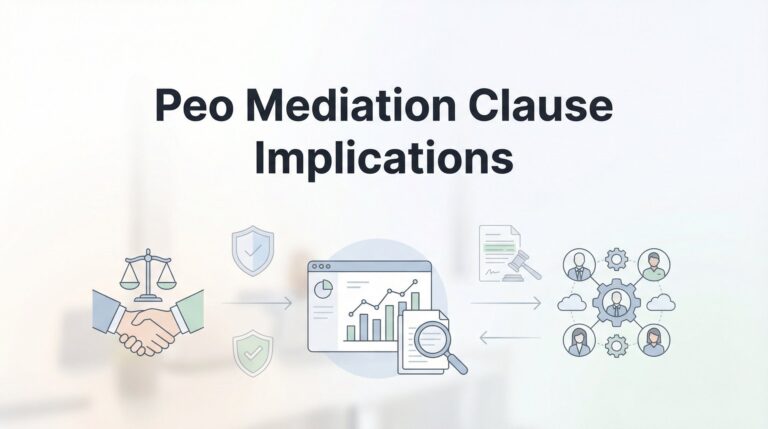
Most PEO contracts include mediation clauses that require dispute resolution through mediation before legal action, but these terms are rarely explained during sales. Understanding PEO mediation clause implications is critical before signing, as poorly structured clauses can delay resolution during urgent issues like payroll errors, limit your legal options, and create costly procedural barriers when you need fast action to protect your business and employees.
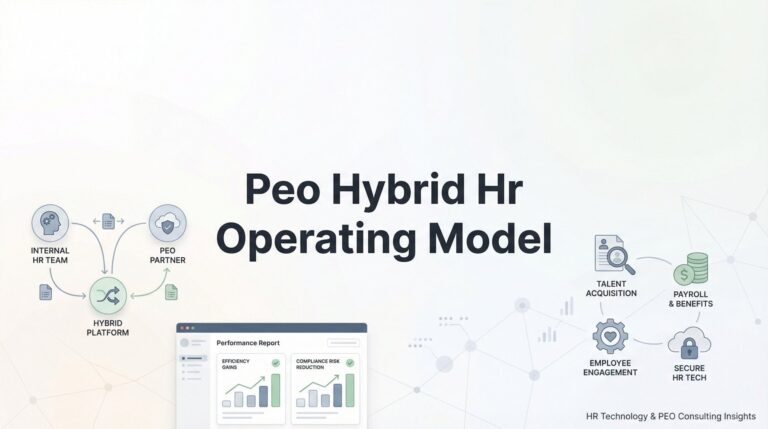
A PEO hybrid HR operating model allows companies to outsource compliance-heavy transactional HR tasks to a Professional Employer Organization while keeping strategic functions like culture and employee experience in-house. This approach delivers PEO infrastructure benefits—better insurance rates, compliance support, streamlined payroll—without surrendering full control of your HR function, though success requires deliberate planning around which functions to split and how to manage operationa…
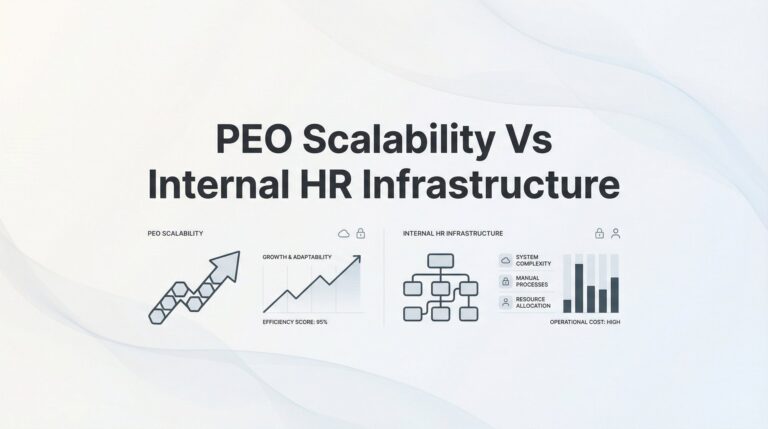
Choosing between PEO scalability vs internal HR infrastructure requires matching your model to your actual growth pattern—whether you’re expanding linearly, through acquisitions, or need flexibility to scale up and down. This framework-based guide moves beyond generic headcount thresholds to help you evaluate seven decision models tailored to your specific growth trajectory, ensuring your HR infrastructure supports rather than hinders your scaling needs.
When acquiring companies, HR quickly becomes a bottleneck with fragmented payroll systems, conflicting benefits, and multi-state compliance challenges. This guide outlines seven operational strategies for leveraging PEO HR scaling for acquisition growth—from pre-deal due diligence to post-close workforce consolidation—helping acquirers avoid delayed integrations, employee frustration, and operational costs that erode deal value.
