Coverage of tax responsibility, workers’ comp, liability exposure, and regulatory obligations under co-employment.
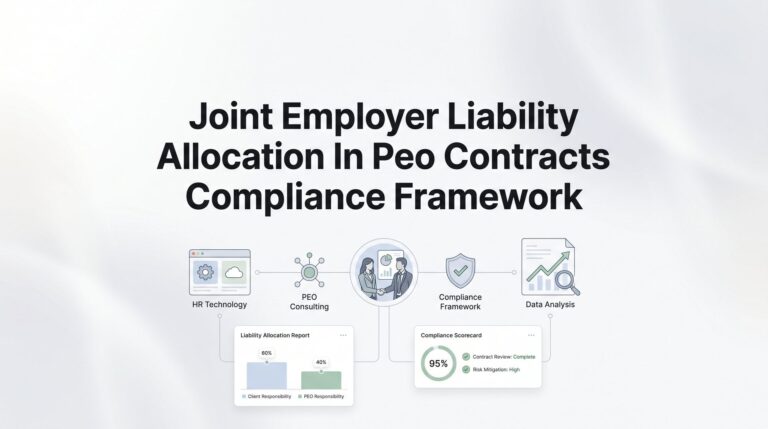
Understanding joint employer liability allocation in PEO contracts compliance framework is essential for business owners who assume outsourcing HR transfers all legal risk. This guide explains how liability is actually divided between employers and PEOs when wage claims, OSHA violations, or discrimination lawsuits arise, identifying common contract gaps that leave businesses unexpectedly exposed to significant financial and legal consequences.
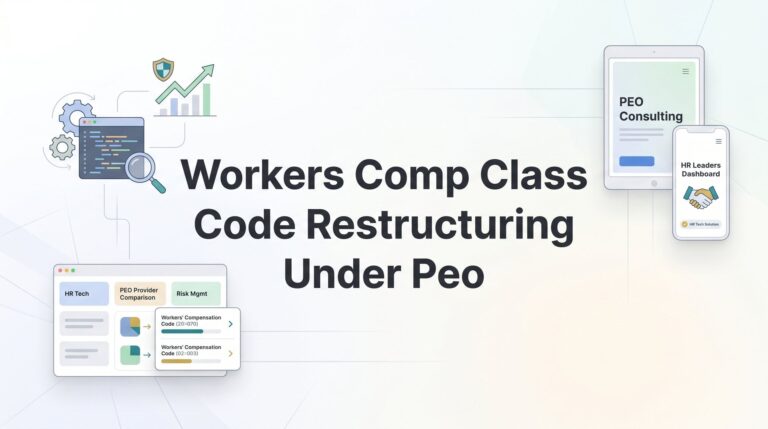
Workers’ comp class code restructuring under a PEO requires proactive auditing of job roles and payroll allocation before the transition to ensure accurate code mapping. This guide walks employers through how to review existing classifications, challenge mismatched assignments, and negotiate correct code structures with their PEO to avoid overpaying on premiums.
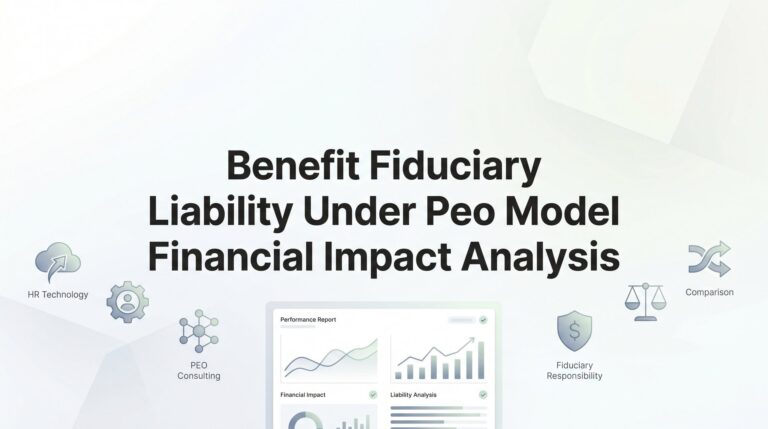
This financial impact analysis examines benefit fiduciary liability under the PEO model, breaking down how co-employment arrangements affect legal and financial responsibility when benefit plan compliance gaps arise. Business owners discover that fiduciary liability transfer is rarely automatic or complete, making it critical to understand exactly what protection a PEO arrangement actually provides versus what’s assumed.
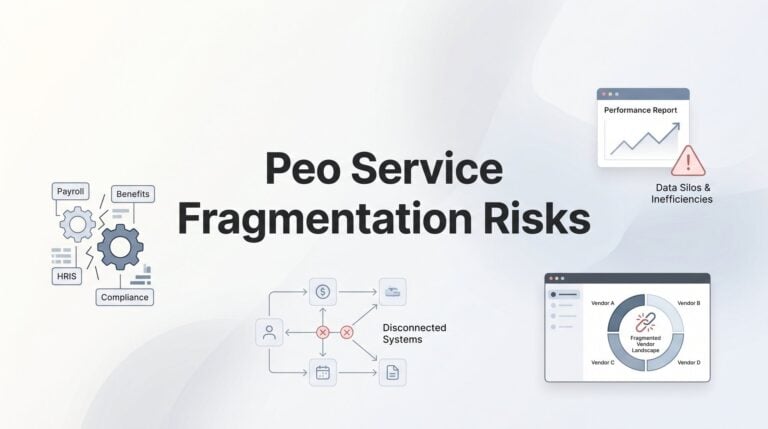
Managing PEO service fragmentation risks becomes critical when HR operations span multiple vendors, creating compliance gaps, duplicate records, and unclear accountability. This guide reviews eight tools designed to prevent or resolve fragmentation—from PEO selection platforms that identify coverage gaps upfront to integration solutions that synchronize disconnected systems already in place.
Large deductible workers comp through a PEO can offer significant premium savings for larger businesses willing to retain more risk, but the arrangement involves complex mechanics that don’t always match the sales pitch. This guide breaks down how these programs actually work inside a PEO structure, when they make financial sense, and what contract terms to scrutinize before committing.
PEO compliance documentation gaps often emerge from unclear service agreements and co-employment ambiguity rather than outright negligence, leaving businesses exposed during audits, termination claims, and workers’ comp disputes. This guide identifies the seven most common documentation gaps in PEO relationships and provides actionable strategies to close them before they trigger costly legal or regulatory consequences.
Workers’ comp class code restructuring under a PEO risk mitigation strategy requires a different approach than standard policies, since the PEO controls the master workers’ comp policy and class code assignments. This guide walks business owners through auditing payroll data, correcting employee misclassifications, and negotiating with their PEO to reduce inflated premiums and strengthen audit documentation.

Business owners considering a PEO arrangement should understand the real risks of a PEO master workers’ comp policy before signing—including loss of claims history ownership, limited carrier flexibility, and complex exit terms that rarely get explained upfront. This practical breakdown covers the structural tradeoffs so you can make an informed decision rather than discovering the fine print after you’re already locked in.
A PEO transparency risk assessment helps business owners systematically identify hidden fees, unclear compliance responsibilities, and opaque reporting within their PEO relationships before these gaps create financial or legal exposure. This guide outlines seven practical strategies to evaluate your PEO contract and service delivery, giving you the visibility needed to ensure fair pricing, clear liability ownership, and a partnership that genuinely protects your bottom line.
A PEO arbitration risk review reveals that most PEO service agreements contain mandatory arbitration clauses that can severely limit a business owner’s legal options in a dispute, often requiring arbitration in the PEO’s home state with restricted discovery rights. Understanding these provisions before signing is critical, as billing errors, payroll mistakes, or workers’ comp disputes could leave businesses with little recourse once locked into an unfavorable agreement.
