Coverage of tax responsibility, workers’ comp, liability exposure, and regulatory obligations under co-employment.
Labor burden restructuring through a PEO model risk mitigation strategy goes beyond consolidating payroll costs — it systematically transfers volatile risk categories like workers’ comp premiums, compliance gaps, and misclassification exposure off your books entirely. This guide walks business owners through the precise steps to audit existing labor costs, evaluate PEO providers, and execute a transition that genuinely strengthens financial position rather than creating new vulnerabilities.
Business owners who rely on PEOs for compliance protection are often surprised to discover that peo regulatory compliance failures can still leave them personally liable for fines, lawsuits, and audit penalties. This guide identifies seven recurring failure patterns—from wage law gaps to OSHA lapses—and provides actionable strategies to vet providers more effectively and know when to verify rather than simply trust.
Reducing your experience modification factor using a PEO gives small and mid-size businesses access to dedicated safety programs, professional claims management, and carrier leverage they couldn’t afford independently — potentially saving tens of thousands annually on workers’ compensation premiums by shifting your e-mod below the industry average of 1.0.
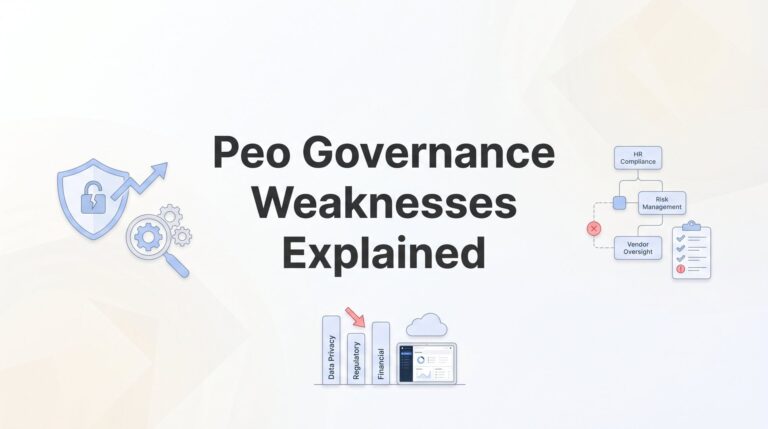
PEO governance weaknesses explained through real-world accountability gaps reveal why business owners must scrutinize co-employment arrangements before signing. Beyond the sales promises, structural blind spots in payroll tax responsibility, benefits administration, and compliance oversight can expose companies to serious IRS and HR liability when neither party assumes clear ownership of critical tasks.
PEO audit documentation failures consistently cost businesses money through surprise surcharges, tax discrepancies, and billing errors that stem from split responsibilities in the co-employment model. This guide identifies the seven most common documentation gaps — from stale headcount data to workers’ comp misclassifications — and provides actionable fixes to prevent costly audit surprises whether you’re currently with a PEO or considering one.
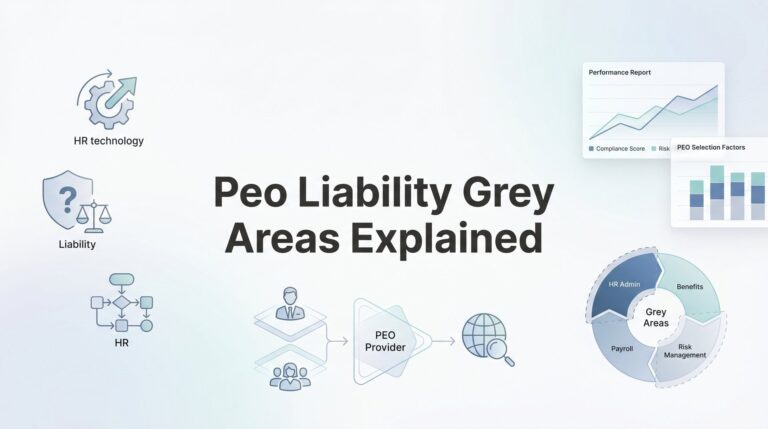
Understanding PEO liability grey areas explained through real scenarios helps business owners recognize that co-employment creates shared—not transferred—responsibility. This guide maps the specific gaps between what PEO agreements imply and what they actually guarantee, so you can identify where your legal and financial exposure truly lives before signing a contract.
Businesses researching PEO service failure case studies will find this guide invaluable — it outlines eight practical due-diligence tools that directly address the most common ways PEO relationships break down, from missed payroll tax deposits to compliance gaps. Rather than a standard software roundup, this resource maps specific tools to real failure patterns, helping companies vet providers upfront and maintain ongoing oversight to avoid costly PEO disasters.
Real-world PEO misclassification risk case studies reveal a critical gap many business owners overlook: PEO agreements typically don’t shield companies from worker classification liability. When misclassification occurs, back taxes, IRS penalties, and wage violations often fall on the client business rather than the PEO, making it essential to understand exactly what your co-employment arrangement does and doesn’t cover before assuming you’re protected.
A PEO indemnification imbalance analysis reveals how service agreements often use “mutual” language to disguise heavily one-sided risk allocation, where clients absorb broad liability while PEO obligations are narrowly restricted to gross negligence. This guide explains how to identify these contractual disparities and negotiate more equitable terms before signing.
Union employers navigating workers’ comp through a PEO face unique challenges that standard PEO arrangements rarely address, from CBA conflicts to shifting classification codes. This guide covers seven advanced strategies for PEO for union employers advanced workers comp structuring, helping you avoid costly payroll misclassifications, protect multi-employer trust fund contributions, and build a PEO arrangement that actually works alongside your collective bargaining obligations.
