
Running a moving company means you’re already managing more complexity than most small business owners. Physical labor, equipment, drivers, seasonal hiring surges, and DOT compliance don’t exactly make PEO selection a straightforward process. Most generic PEO comparisons assume a relatively clean risk profile — office workers, predictable headcount, standard benefits needs. Moving companies don’t fit that mold.
The stakes here are real. Workers’ comp classifications for moving crews are among the higher-risk categories in the service sector. If your PEO isn’t equipped to handle that properly, you’ll either overpay significantly or end up underinsured. Getting this decision right matters more than it does for a lot of other industries.
Below are three resources worth using as you evaluate PEO options for your moving or relocation business. They serve different purposes in the research process, so the order matters.
1. PEO Metrics
Best for: Moving companies that want unbiased, side-by-side PEO comparisons before talking to a sales rep
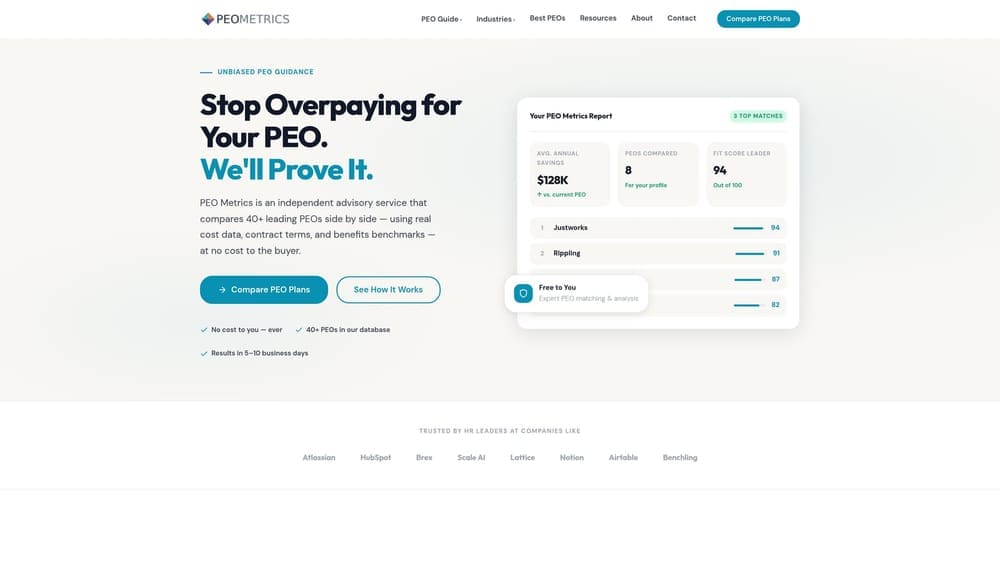
PEO Metrics is an independent PEO comparison service built for businesses that need real data before making a decision, not just a lead form that routes them to whichever provider pays the highest referral fee.
Where This Tool Shines
For moving companies specifically, the value is in the depth. Workers’ comp pricing varies significantly between PEOs depending on how they pool risk and which industries they’re experienced in. A side-by-side comparison that shows you actual pricing structures and service capabilities is worth a lot more than a sales pitch from a provider who may or may not have experience with transportation or logistics workforces.
PEO Metrics doesn’t have a financial incentive to push you toward any particular provider. That independence is meaningful when you’re evaluating a contract that could run into six figures annually. You get to see the differences clearly before you’re sitting across from someone whose job is to close you.
Key Features
Side-by-Side Provider Comparisons: Evaluate multiple PEOs against each other using detailed, structured metrics rather than relying on each provider’s own marketing materials.
Pricing Analysis: Understand what you’re actually paying for and identify where bundled fees or administrative markups might be inflating your costs.
Unbiased Positioning: Not affiliated with or financially incentivized by any single PEO provider — the comparison reflects actual data, not preferred partnerships.
Depth Over Lead Generation: Designed for businesses that want to understand the full picture before engaging providers directly, not just businesses looking for a quick referral.
Useful for Complex Risk Profiles: Particularly relevant for industries like moving where workers’ comp exposure, DOT compliance, and seasonal staffing all affect which PEOs are actually equipped to serve you well.
Best For
Moving company owners and HR leads who are serious about the evaluation process and want to compare providers on substance rather than sales presentation. Also useful for businesses approaching a PEO renewal and wondering whether they’re getting fair value.
Pricing
Free to use for comparison research. You’re not paying for access to the data, which makes it a logical starting point before you commit time to provider conversations.
2. PEOcompare
Best for: Early-stage discovery when you’re not yet sure which PEO providers operate in your market or industry
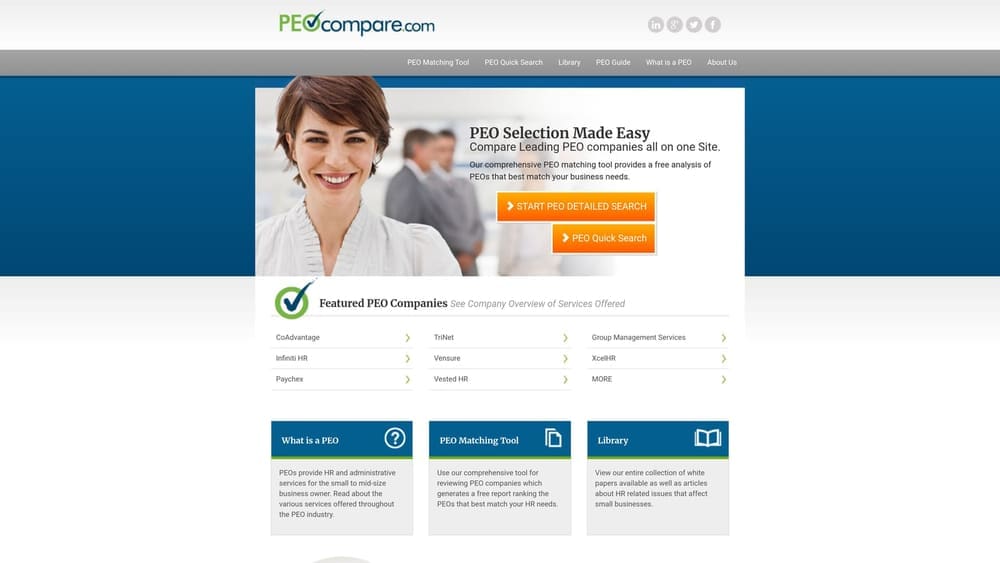
PEOcompare is a PEO discovery platform that aggregates provider options across the market, giving you a broader view of what’s available before you narrow your shortlist.
Where This Tool Shines
If you’re new to the PEO evaluation process and don’t have a clear sense of which providers are even worth considering for a moving company, PEOcompare can help you get oriented. It pulls together provider information in one place, which saves the early-stage legwork of trying to track down who operates in your region or industry segment.
Think of it as a starting point rather than a decision-making tool. It gives you a lay of the land. What it won’t do is tell you which of those providers is actually equipped to handle your workers’ comp risk classification or has meaningful experience with transportation workforces. For that, you’ll need something with more analytical depth.
Key Features
Broad Market Overview: Aggregates PEO provider options across the market so you can see what’s available without researching each one individually.
Discovery-Oriented: Useful for business owners who are early in the process and building initial awareness of the PEO landscape.
Centralized Provider Information: Consolidates provider details in one place, reducing early-stage research friction.
Lead Generation Awareness: The platform may include lead-generation components. Be intentional about what contact information you submit and when — submitting your details early can trigger provider outreach before you’re ready for it.
Best For
Business owners who are just starting to explore PEO options and want a broad view of what’s available. Less useful for businesses that already have a shortlist and need granular pricing or risk management comparisons.
Pricing
Free to use. Be aware that the platform may connect you with PEO sales teams as part of how it operates, so go in with that expectation.
3. HR Guide
Best for: Business owners who want to understand PEO mechanics and co-employment basics before starting provider comparisons
HR Guide is an educational HR resource that covers PEO structure, co-employment fundamentals, and compliance basics in plain language — useful background reading before you engage comparison tools or provider sales teams.

Where This Tool Shines
One of the more common mistakes moving company owners make when evaluating PEOs is going into provider conversations without understanding the contract structure. Co-employment arrangements have specific implications for liability, benefits administration, and how workers’ comp is handled. If you don’t understand those mechanics, it’s easy to miss something important in a contract review.
HR Guide fills that knowledge gap. It’s not going to tell you which PEO to pick or what you should pay — but it will help you walk into those conversations better prepared. For a moving company owner who hasn’t worked with a PEO before, that foundational understanding is genuinely useful. Just don’t expect it to replace a real comparison tool.
Key Features
Plain-English PEO Explanations: Breaks down how PEOs work, what co-employment means in practice, and how the relationship is structured — without the jargon.
Compliance Fundamentals: Covers HR compliance basics relevant to small and mid-sized businesses, which is useful context before you evaluate provider capabilities.
Question-Framing Support: Helps business owners understand what to ask PEO providers during the evaluation process, so you’re not walking in blind.
Educational, Not Transactional: No pricing data, no side-by-side comparisons, no lead generation. It’s a knowledge resource, and it’s best used as one.
Best For
Moving company owners who are new to PEOs and want to build baseline knowledge before comparing providers. Also useful as a reference if you’re reviewing a PEO contract and want to understand specific terms or structural elements.
Pricing
Free informational resource. No purchase or registration required to access the content.
Which Resource Fits Where You Are Right Now
The moving industry doesn’t give you much margin for error on this decision. Workers’ comp exposure for physical labor crews is real. DOT compliance requirements for drivers add another layer that many generalist PEOs aren’t set up to handle well. Seasonal staffing swings mean your payroll and benefits administration needs to flex in ways that some providers handle better than others. And high employee turnover — common in moving — means onboarding and offboarding volume can quietly become a significant administrative cost depending on which PEO you choose.
These aren’t abstract concerns. They’re the specific factors that make PEO selection more consequential for a moving company than it is for a professional services firm with 20 employees and minimal risk exposure. Getting it wrong costs real money, either through inflated workers’ comp premiums, administrative fees you didn’t anticipate, or a provider that simply isn’t equipped for your workforce.
Here’s how to use these three resources in sequence. Start with HR Guide if you need foundational knowledge about how PEOs work. Use PEOcompare to get a broad view of which providers exist in your market. Then use PEO Metrics to do the actual comparison work with depth — side-by-side pricing data, provider metrics, and the kind of detail that lets you make a real decision rather than just a hopeful one.
Before you sign that PEO renewal, make sure you’re not leaving money on the table. Many businesses unknowingly overpay because of bundled fees, hidden administrative markups, and contracts designed to limit flexibility. Don’t auto-renew. Make an informed, confident decision.
Before you sign that PEO renewal, make sure you’re not leaving money on the table.
Many businesses unknowingly overpay because of bundled fees, hidden administrative markups, and contracts designed to limit flexibility. We give you a clear, side-by-side breakdown of pricing, services, and contract terms—so you can see exactly what you’re paying for and choose the option that truly fits your business.
