
Waste management companies operate in one of the most demanding HR environments in any industry. You’re dealing with OSHA-regulated job sites, high workers’ comp exposure, CDL requirements, seasonal workforce swings, and multi-state compliance headaches — all at once. A PEO can take a real chunk of that off your plate, but only if you pick one that actually understands your risk profile.
Most generic PEO directories lump waste haulers in with office companies and call it a day. This guide is different. We’ve focused specifically on what waste management operators need to evaluate: workers’ comp class code handling, experience modification rates, safety program integration, and pricing transparency. Here’s how to find a PEO that actually fits — and how to compare your options without getting sold a bill of goods.
What Makes PEO Selection Different for Waste Management
Before jumping into the tools, it’s worth naming the variables that make this industry uniquely complicated from a PEO evaluation standpoint. These aren’t edge cases — they’re core factors that should drive every vendor conversation you have.
Workers’ Comp Class Codes: Waste management workers fall under several high-rate NCCI class codes covering garbage collection, recycling operations, and landfill work. These codes carry significantly higher base rates than most industries. How a PEO classifies your workforce — and manages claims within its master policy — directly affects what you pay.
Experience Modification Rate (EMR) Sensitivity: Joining a PEO’s master workers’ comp policy can help or hurt depending on the PEO’s overall loss ratio. If you’re bringing a clean safety record into a PEO with a poor loss history, you could end up subsidizing other clients’ claims. This is a nuanced risk factor that generic PEO comparisons rarely address.
DOT and CDL Compliance: Waste haulers operating commercial vehicles face DOT compliance requirements including driver qualification files, drug and alcohol testing programs, and hours-of-service tracking. Not every PEO has the infrastructure to manage this layer properly.
Seasonal and Variable Headcount: Many waste operations scale up by contract or season. PEO pricing structures with minimum employee counts or high per-employee admin fees are a poor structural fit for this workforce model.
Keep these factors in mind as you evaluate each resource below.
1. PEO Metrics
Best for: Waste management operators who want unbiased, side-by-side PEO comparisons before engaging any sales team.
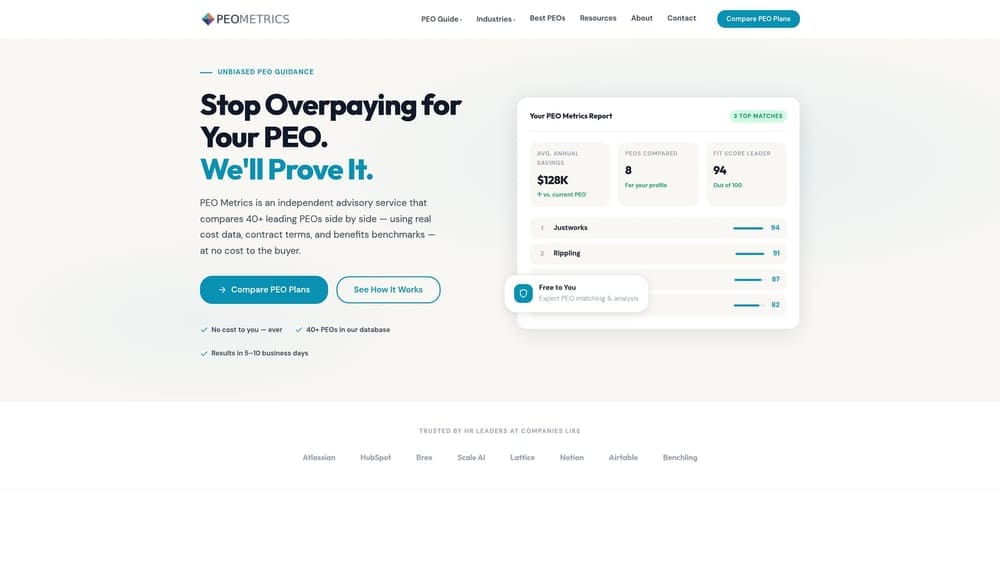
PEO Metrics is a comparison platform built to help businesses evaluate PEO providers side-by-side using detailed pricing data and unbiased analysis — not a lead-gen funnel for a single provider.
Where This Tool Shines
For waste management companies, the value here is specificity. Generic PEO comparison tools weren’t designed with high-risk industries in mind. PEO Metrics is built around the premise that pricing complexity and risk exposure vary dramatically by industry — and that buyers deserve line-item clarity before they’re handed off to a sales rep.
If you’re trying to understand whether a PEO’s workers’ comp master policy is actually a good deal for your class codes, or whether the admin fee structure makes sense for a variable-headcount operation, this is the kind of platform that surfaces those discrepancies rather than glossing over them.
Key Features
Side-by-Side Provider Comparisons: Compare multiple PEO providers across pricing, services, and contract terms in a structured format — not a sales brochure.
Unbiased Analysis: PEO Metrics isn’t affiliated with any single PEO provider, which means the comparison isn’t shaped by referral incentives.
Pricing Transparency Tools: Helps identify cost discrepancies and bundled fee structures that can obscure the true cost of a PEO arrangement.
High-Risk Industry Relevance: Particularly useful for industries like waste management where pricing complexity is elevated and workers’ comp handling is a primary cost driver.
Pre-Sales Preparation: Supports informed vendor conversations before you engage a PEO’s sales team — so you walk in knowing what questions to ask.
Best For
Waste management operators evaluating multiple PEO options, businesses concerned about overpaying due to bundled fees or opaque pricing, and HR teams that want to understand the full cost picture before signing anything. Also useful for companies coming off a bad PEO experience who want to compare more rigorously this time around.
Pricing
Free to use. PEO Metrics operates as a comparison service with no cost to access the platform or run comparisons.
2. PEOcompare
Best for: Getting an initial shortlist of PEO providers that serve your industry and headcount tier.
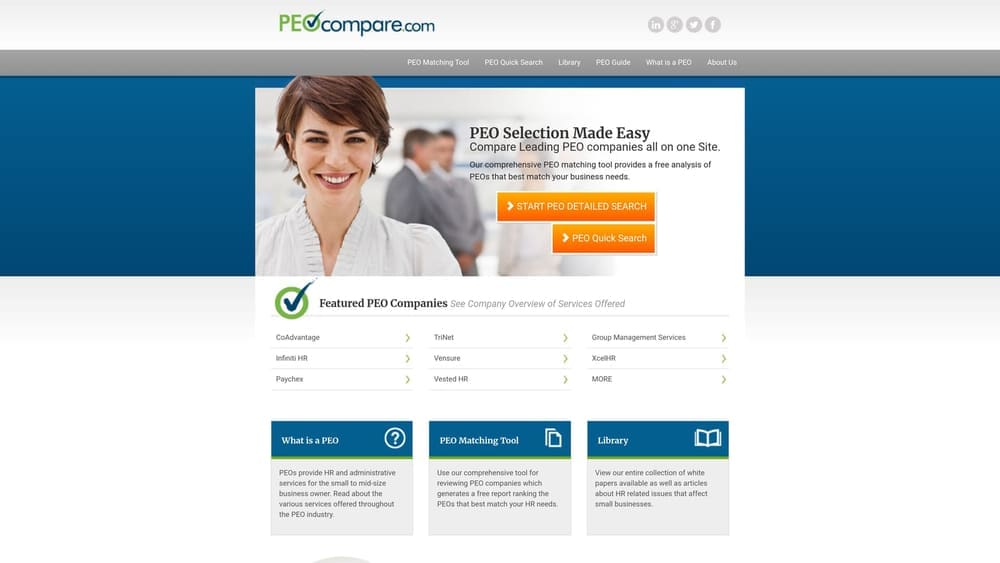
PEOcompare is a broker-style matching and comparison service that helps businesses identify PEO options based on company size, industry, and service needs.
Where This Tool Shines
PEOcompare is useful early in the evaluation process when you’re trying to narrow the field. If you’re a waste management operator who doesn’t know which PEOs even serve high-risk industries, this kind of aggregator gives you a starting point without requiring you to cold-call a dozen providers.
The filtering by industry and company size is genuinely helpful for ruling out PEOs that aren’t built for your risk profile. That said, because the revenue model is referral-based, it’s worth understanding that the shortlist you receive may reflect which PEOs are participating in the network rather than which are objectively the best fit.
Key Features
Multi-Provider Aggregation: Pulls together multiple PEO options in one place so you’re not starting from scratch with individual vendor research.
Industry and Size Filtering: Lets you narrow results based on your industry category and employee headcount, which helps surface providers with relevant experience.
High-Risk Industry Starting Point: Useful for identifying which PEOs at least claim to serve industries like waste management, even if deeper vetting is still required.
Vendor Outreach Facilitation: Provides a structured entry point for initiating conversations with multiple providers simultaneously.
Best For
Businesses in the early research phase who need to build a shortlist quickly. Most valuable for operators who are new to PEO evaluation and want a broad view of the market before doing deeper due diligence. Less useful as a standalone decision-making tool for high-risk industries where pricing nuance and class code handling matter significantly.
Pricing
Free to use. The platform generates revenue through referral arrangements with PEO providers, which is worth factoring into how you interpret the recommendations you receive.
3. HR Guide
Best for: HR teams and business owners building foundational knowledge about PEO structures, co-employment, and contract evaluation before engaging vendors.
HR Guide is an informational resource covering HR and PEO fundamentals, including co-employment structures, compliance considerations, and how to evaluate PEO agreements.
Where This Tool Shines
HR Guide isn’t a comparison platform — it’s a reference resource. For waste management operators whose HR teams may not have deep PEO experience, this kind of foundational content is genuinely useful before any vendor conversations start. Understanding how co-employment actually works, what you’re signing when you enter a PEO agreement, and what compliance obligations shift to the PEO versus staying with you — that knowledge changes the quality of every conversation you’ll have with a sales rep.
It’s particularly relevant for regulated industries because the compliance sections address the kinds of policy and contractual questions that come up when you’re dealing with OSHA exposure, multi-state operations, or complex workforce classifications. It won’t tell you which PEO to pick, but it helps you ask better questions of the ones you’re evaluating.
Key Features
PEO Structure and Co-Employment Education: Explains how PEO co-employment relationships work in plain language, including what responsibilities shift and what stays with the client employer.
Contract Evaluation Guidance: Covers what to look for in PEO agreements — useful for identifying unfavorable terms before you sign.
Compliance and HR Policy Resources: Addresses compliance considerations relevant to regulated industries, including documentation and policy frameworks.
Internal Knowledge Building: Serves as a reference for HR teams developing internal expertise before and during vendor evaluation.
Best For
HR professionals and business owners who are newer to PEO arrangements and want to build a working knowledge base before engaging vendors. Also useful as a reference during contract review. Less useful for operators who already have PEO experience and need comparative pricing data or provider-specific analysis.
Pricing
Free. HR Guide operates as a content-based resource with no fee to access the material.
Making the Right Call for Your Operation
Choosing a PEO for a waste management operation isn’t the same as choosing one for a marketing agency. The risk profile is different, the regulatory exposure is different, and the cost levers are different. The three resources covered here each serve a distinct role in helping you make a more informed decision.
Use HR Guide to build foundational knowledge about PEO structures and what to look for in a contract. Use PEOcompare to get an initial sense of which providers operate in your industry. Use PEO Metrics to go deeper — comparing actual pricing structures, identifying cost discrepancies, and understanding whether a specific PEO’s master workers’ comp policy is actually a good fit for your class codes and risk profile.
The sequence matters. Don’t engage a PEO’s sales team before you understand what workers’ comp class codes apply to your workforce, how master policy placement affects your EMR, and what line-item pricing you should expect to see. Sales conversations go very differently when you walk in already knowing what fair looks like.
If you want to go deeper on how waste management companies specifically structure PEO relationships — including workers’ comp class code restructuring, transitioning out of the assigned risk pool, and risk mitigation strategies — explore the related guides on PEO Metrics. These topics materially affect your total cost of a PEO arrangement and are worth understanding before you sign anything.
The goal isn’t just to find a PEO. It’s to find one that doesn’t cost you more than going it alone. Before you sign that PEO renewal, make sure you’re not leaving money on the table. Don’t auto-renew. Make an informed, confident decision.
Before you sign that PEO renewal, make sure you’re not leaving money on the table.
Many businesses unknowingly overpay because of bundled fees, hidden administrative markups, and contracts designed to limit flexibility. We give you a clear, side-by-side breakdown of pricing, services, and contract terms—so you can see exactly what you’re paying for and choose the option that truly fits your business.
