
Most advice on employee benefits outsourcing starts with the wrong question: “Should the company move everything to a PEO or keep benefits in-house?” That binary choice makes vendor sales easier, but it makes buying decisions worse. Benefits administration is a collection of separate jobs, and each job carries a different mix of cost, compliance exposure, employee impact, and strategic value.
A company can retain plan design, carrier selection, and employee communications while outsourcing COBRA, retirement-plan administration, or eligibility tracking. It can use a broker for negotiation, a TPA for a narrow administrative function, and an ASO provider for daily benefits operations. The strongest arrangement often isn't the one with the fewest vendors. It's the one that puts each responsibility with the party equipped to handle it, while preserving the employer's negotiating power.
Table of Contents
- Why Employee Benefits Outsourcing Is a Portfolio Decision
- The Four Core Outsourcing Models Explained
- Comparing PEO, ASO, TPA, and Broker Models
- The Full Cost Breakdown Beyond the Headline Fee
- A Real-World Scenario for a 120-Employee Company
- When Selective Outsourcing Beats Going All-In
- How to Evaluate Providers and Negotiate Better Terms
Why Employee Benefits Outsourcing Is a Portfolio Decision
The PEO-versus-in-house debate is a poor buying framework. It treats benefits as one package when the employer is deciding who should handle administration, carrier negotiations, plan design, compliance, and employee support. A PEO may combine payroll, benefits, HR services, and compliance, yet still include work the employer performs well or leave gaps in areas under pressure. Smaller employers may gain access to pooled benefits, while growing companies may surrender control over plan design and carrier negotiations.
The International Foundation of Employee Benefit Plans found that employers outsource an average of 40% of their benefits functions. About one-third reported increasing outsourcing over the prior five years, while only about 4% reported reducing it (IFEBP survey results). The same findings show a function-by-function pattern: 80% outsource employee assistance programs, 79% outsource COBRA administration, 75% outsource pharmacy benefits administration, 75% outsource flexible spending accounts, 59% outsource retirement benefit payments, and 54% outsource HSA administration. Employers are usually not giving up benefits strategy. They are assigning repetitive, regulated, or transaction-heavy work to outside specialists.
Separate the decisions before selecting a vendor
Evaluate these responsibilities independently:
- Administration: Who handles eligibility, enrollment changes, billing reconciliation, and payroll feeds?
- Carrier negotiation: Who shops the market and challenges renewal increases?
- Plan design: Who sets contribution levels, networks, deductibles, and voluntary offerings?
- Compliance filings: Who prepares ACA, COBRA, retirement, and required-notice workflows?
- Employee support: Who answers questions, fixes enrollment problems, and escalates claims disputes?
An employer considering portfolio-wide HR consolidation using a PEO should map these functions before reviewing an integrated proposal. Consolidation can reduce handoffs, but it can also create dependence on one service model, one escalation path, and one contract.
The overlooked test is function by function
Choose outsourcing based on the work, not the provider's feature count. Send out functions that require scale, specialized knowledge, or dependable transaction processing. Retain decisions that shape workforce strategy, recruiting, retention, affordability, and employee trust.
Workforce composition also changes the analysis. Employers reviewing health insurance for part time workers should examine eligibility rules and employee communications alongside premium costs. The right portfolio may combine a broker for negotiation, a TPA for a defined administrative task, an ASO provider for daily operations, and internal ownership of plan strategy. A PEO is one option within that portfolio, not the default answer.
Practical rule: Outsource repeatable execution. Retain decisions that shape recruiting, retention, affordability, and employee trust.
The Four Core Outsourcing Models Explained
The four main models solve different problems. Confusion begins when providers use similar language for services that transfer very different levels of control.
PEO
A professional employer organization, or PEO, enters a co-employment relationship and typically bundles payroll, benefits, HR administration, and compliance support. The PEO may sponsor or arrange access to master benefit plans and handles many employment-related tax and administrative processes.
The IRS says federal tax law doesn't recognize the term “co-employer.” A PEO may nevertheless perform employer-related tax functions under Treas. Reg. 31.3504-2, and it may implicitly assert co-employer status by recruiting or hiring workers for a client, leasing employees back to the client, or filing employment tax returns under its own EIN for those workers (IRS guidance on PEO arrangements). In daily practice, an HR manager might send a new-hire file to the PEO, the PEO might process payroll and benefits enrollment, and the employer might use the provider's service team for employee questions.
For a CPEO relationship, Form 8973 must be filed to notify the IRS when the contract starts and ends (IRS customer guidance for CPEO relationships). That documentation matters during onboarding, offboarding, and any transition in tax responsibility.
ASO
An administrative services organization, or ASO, provides operational support while the employer generally keeps its own plans and employment relationship. The ASO can manage enrollment, eligibility, reporting, billing workflows, and employee support without requiring the employer to enter a PEO co-employment arrangement.
A 400-employee employer might retain its existing medical and dental plans, then use an ASO platform to automate eligibility files, payroll deductions, and open-enrollment elections. The employer keeps plan-design authority, but it must understand which compliance duties remain its responsibility.
TPA
A third-party administrator, or TPA, handles a defined function or benefit program. Common assignments include claims administration, COBRA administration, flexible spending accounts, health savings accounts, or retirement-plan recordkeeping.
A TPA's daily workflow is narrow by design. For example, a COBRA administrator receives a qualifying-event record, sends election materials, tracks deadlines, and maintains continuation-coverage records. That specialization can be valuable when the employer needs a precise fix rather than a full HR platform.
Broker
A benefits broker advises on plan design, negotiates with carriers, explains renewal options, and helps the employer understand market alternatives. A broker generally doesn't become the employer's day-to-day administrator.
For example, a broker might compare medical renewals, model employer contributions, and recommend a plan structure, while the internal HR team handles enrollment changes and billing. A broker can be paired with a TPA, ASO, or PEO, but the contract must state who owns each handoff. The outsourced human resources overview provides useful context for separating benefits administration from broader HR outsourcing.
Comparing PEO, ASO, TPA, and Broker Models
The four models differ most sharply in control, pricing, and responsibility. A PEO usually transfers the broadest operational burden, but it can also restrict the employer's ability to select plans and vendors. An ASO preserves more ownership, while a TPA addresses a discrete problem. A broker is primarily an adviser and negotiator, not a replacement benefits department.
| Model | Cost Structure | Employer Control | Compliance Risk | Best Fit (Employee Count) |
|---|---|---|---|---|
| PEO | Bundled administrative fees, payroll charges, and benefits pricing or pass-through costs | Lower control over bundled processes and often plan access | More operational support transfers, but the employer retains important legal duties | Often attractive for smaller and growing employers, including multi-state teams |
| ASO | Usually a defined administrative fee, with employer plans and other costs priced separately | High control over plan design and carrier decisions | Shared operational support, with substantial employer responsibility | Growing employers with an internal HR owner and existing plan relationships |
| TPA | Function-specific fees for claims, COBRA, retirement, or account administration | High control outside the outsourced function | Narrow risk transfer tied to the contracted service | Employers of many sizes needing a specialized fix |
| Broker | Commission or disclosed compensation tied to carrier placement and advisory work | High control, assuming administration stays internal | Employer retains most administrative responsibility | Employers with an internal benefits operator and a need for market negotiation |
Match the model to the problem
A PEO makes the most sense when the company needs a broad operating layer, wants help with payroll and HR processes, and accepts reduced control in exchange for integration. An ASO is better when the employer wants its own benefit plans and needs execution capacity. A TPA is the logical choice when one process is breaking down.
Employee count matters, but it doesn't decide the issue by itself. A small employer may value a PEO's pooled arrangement, while a larger employer may find that per-employee administrative fees are easier to model than bundled pricing. The employer should compare total cost at current headcount and under realistic growth and contraction scenarios.
The PEO and broker comparison is useful for buyers assessing whether they need a co-employment model or stronger benefits advice. The central question remains responsibility. Under a PEO, the provider may process payroll tax filings and administer benefits workflows, but the employer still needs clear accountability for employment decisions, plan governance, data accuracy, and employee communications.
The Full Cost Breakdown Beyond the Headline Fee
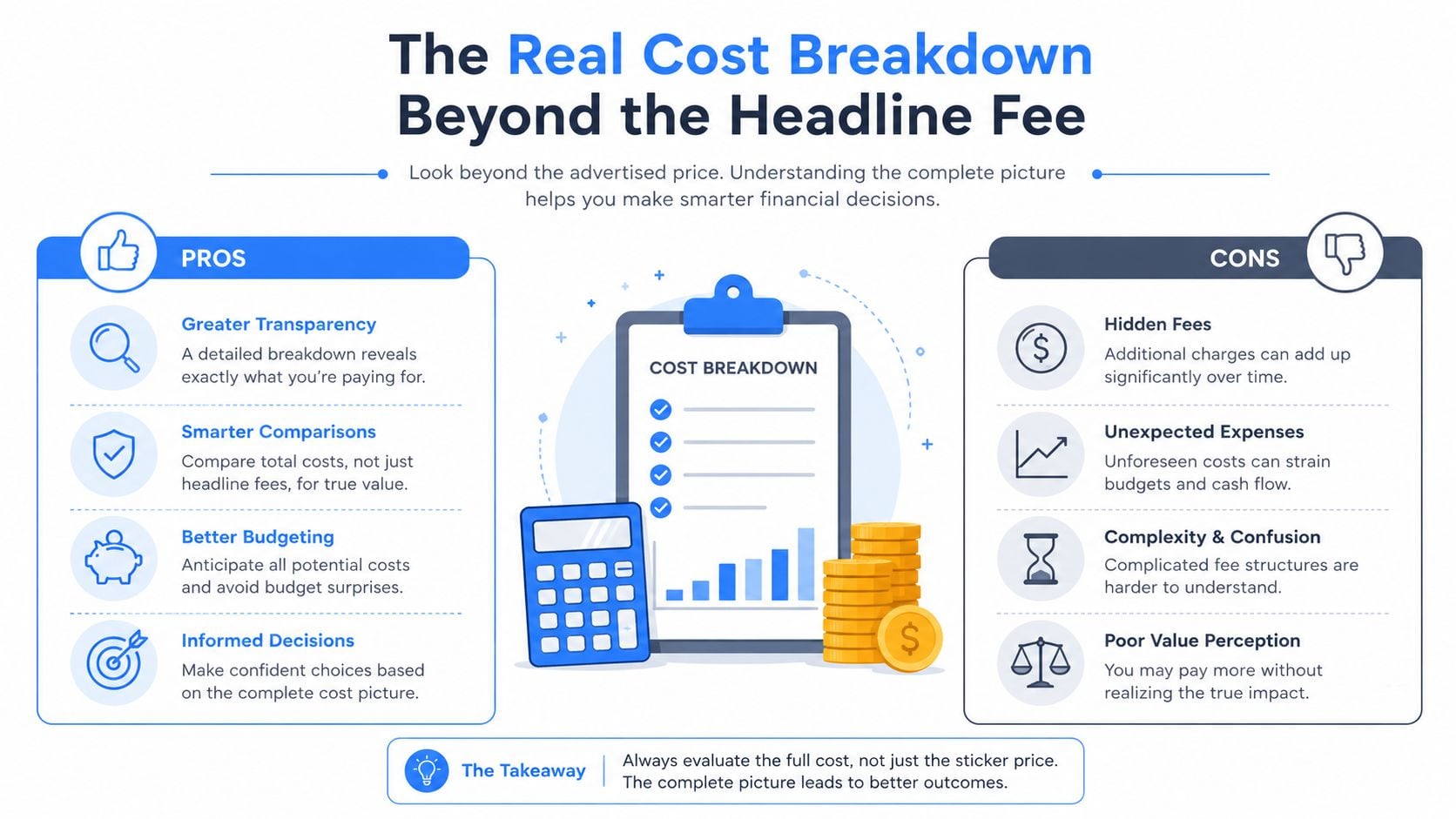
A quoted per-employee-per-month fee is only the opening figure. Providers may separate implementation, reporting, COBRA, enrollment, carrier, and integration charges into schedules that receive less attention during sales discussions. Buyers should convert every proposal into one comparable all-in PEPM view.
Include these categories:
- Implementation: One-time setup, data migration, configuration, testing, and training.
- Administration: Recurring platform and service fees, minimums, and inactive-employee rules.
- Carrier costs: Premiums, master-policy charges, broker compensation, and pass-through commissions.
- Compliance: ACA reporting, required notices, audit assistance, and filing support.
- Special projects: Open-enrollment support tiers, plan changes, 401(k) integration, and custom reporting.
- COBRA: Election notices, participant billing, status changes, and termination processing.
Neutral industry guidance reports that PEO implementation charges can range from about $250 to $2,500. Contracts commonly include 12-month auto-renewals, with notice windows that may begin 90 to 120 days before the anniversary date (PEO pricing and contract considerations). These provisions can outweigh a modest first-year discount. Missing the notice window can leave the company with little practical bargaining power before renewal talks begin.
The contract clauses that drive the final price
Two provisions require close review.
Rate-cap duration sets the period covered by a promised increase limit. A cap that ends after the first renewal provides limited protection. Benchmark triggers set the response when provider costs exceed an agreed market or claims threshold. The contract should identify the data used, the comparison date, and the employer's exit rights if the trigger is breached.
PEO master-policy increases can raise benefits costs through renewal pricing instead of a separate administrative invoice. In an ASO arrangement, stop-loss premiums may be quoted net of expected claims. Buyers must identify the assumptions behind that rate and determine which claims volatility remains with the employer. The PEO cost analysis provides a framework for reviewing these components before comparing bids.
Broker override commissions may not appear as a separate invoice line. That arrangement is not automatically unsuitable, but the broker should disclose the compensation, and the buyer should include it in the total-cost comparison. The same review should cover minimums, pass-through charges, termination fees, and any service tier that changes the price after implementation.
A Real-World Scenario for a 120-Employee Company
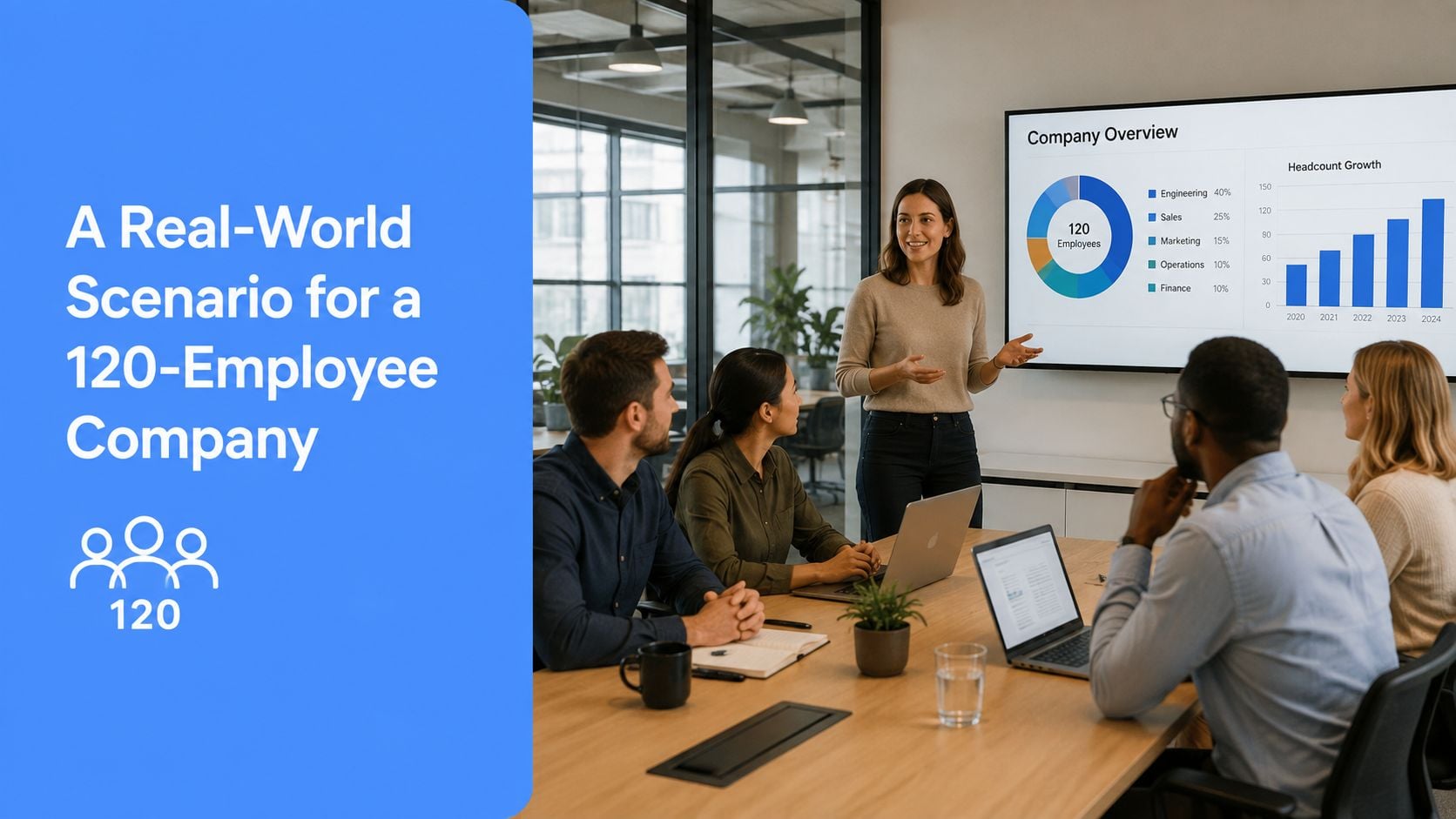
A 120-employee professional services firm in New Jersey has two HR staff members and manages benefits internally. Their recurring workload includes carrier-billing reconciliation, ACA tracking, 401(k) eligibility file feeds, and open-enrollment setup. None of those tasks determines the firm's benefits philosophy, but together they consume the team's operating capacity.
The firm chooses a blended model instead of moving to a PEO. A broker handles carrier negotiations and market intelligence. A TPA takes over 401(k) plan administration and nondiscrimination testing. A standalone COBRA administrator manages qualifying events, election notices, participant billing, and status changes. The HR team retains plan design, contribution strategy, employee communications, and vendor performance management.
What the operating model changes
The broker joins renewal discussions rather than processing every employee transaction. The retirement TPA owns testing and plan administration instead of asking HR to interpret technical records. The COBRA specialist handles continuation coverage independently, giving the HR team a defined escalation path.
The monthly cost stack contains separate broker compensation, TPA administration, COBRA administration, and any technology or integration charges. The exact total depends on the contracts, plan complexity, and employee activity, so the firm should reject a comparison that places only the PEO's headline fee beside the blended vendors' visible invoices.
The structure returns capacity to HR, but it also creates two deliberate failure modes:
- Duplicate handoffs: A new hire may require coordinated action across the HRIS, broker, retirement TPA, COBRA administrator, and payroll system. If ownership isn't documented, two vendors may assume the other completed the update.
- Cross-vendor claims escalation: A disputed claim may involve the carrier, broker, and administrator. Without a named escalation owner, the employee can be passed between service teams.
The firm addresses both risks with a responsibility matrix, a single intake channel for employee issues, and monthly reconciliation across payroll, eligibility, and carrier records. The blended model works because the company outsources execution while retaining the decisions that affect workforce value.
When Selective Outsourcing Beats Going All-In
Selective outsourcing is the better fit when an employer has a capable HR leader but too much transactional work. A full PEO can address capacity quickly, but it may also combine strategic decisions, administration, and vendor control in one relationship. A modular approach buys outside expertise where errors cost the most while keeping benefit decisions with the employer.
Start with functions that are specialized, repetitive, and only loosely tied to strategy:
- COBRA administration: A specialist can manage notices, elections, billing, and event tracking under a defined service level.
- FSA and HSA administration: Contributions, eligibility changes, and participant questions follow a repeatable operating model.
- 401(k) administration and testing: Retirement-plan work requires technical knowledge that many generalist HR teams do not maintain internally.
- ACA full-time and variable-hour tracking: A provider can manage data workflows and reporting while the employer verifies employment records.
- FMLA leave administration: A specialist can handle documentation, notices, and tracking while managers and HR retain workplace judgment.
Use this list to define governance before selecting a provider. Each function needs a named internal owner, a clear approval boundary, and a documented handoff to the vendor.
Keep strategic ownership close to the business
Plan design should generally remain with the employer and its benefits adviser. The same applies to carrier selection, employee communications, benefits strategy, and vendor performance management. These decisions depend on workforce demographics, recruiting priorities, affordability concerns, and the organization's tolerance for plan changes.
Outsourcing also does not make every function cheaper. ISG found health and welfare administration fees were 24% lower over five years and 23% lower over three years, while defined contribution administration fees were 38% lower over five years and 30% lower over three years. Defined benefit administration fees moved in the opposite direction, rising 8% over five years and 10% over three years (ISG pricing trends in HR outsourcing). Use those differences during renewal negotiations instead of accepting one uniform increase across every service category.
Selective outsourcing preserves the employer's ability to negotiate with carriers, avoids automatic dependence on a PEO master policy, and gives HR more time for employee communication and benefits strategy. The model works only with disciplined oversight. For every outsourced function, document the owner, service-level agreement, data-feed map, and escalation route before the contract starts.
How to Evaluate Providers and Negotiate Better Terms
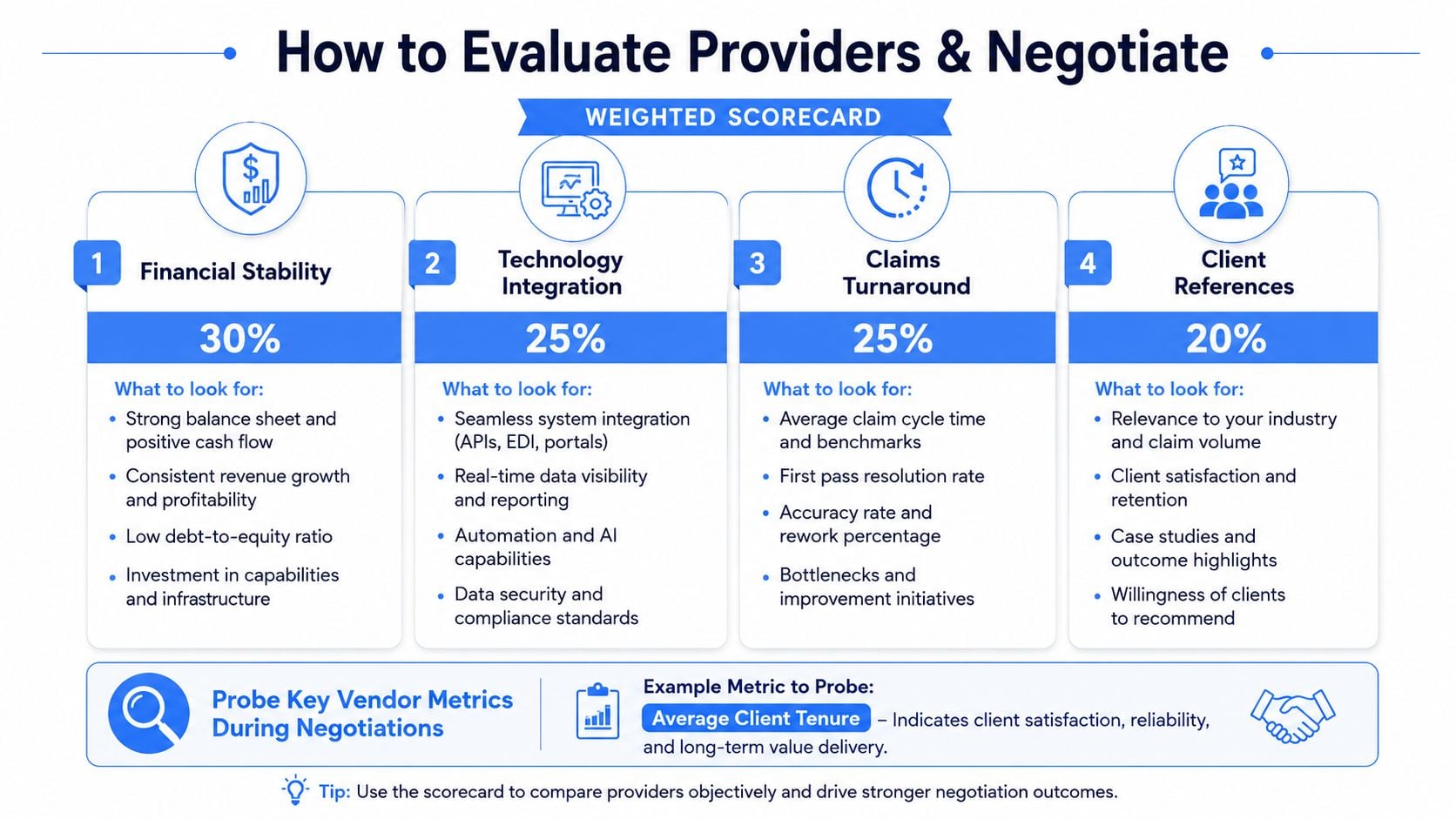
A good RFP doesn't ask vendors to describe their platform. It forces them to expose assumptions. The scorecard should weight financial stability, technology integration, claims turnaround, and client references, then require evidence for each answer.
Build a scorecard that reflects operational risk
Financial stability matters because a provider may control payroll files, benefits data, or claims workflows. Technology integration should cover the HRIS, payroll, carrier feeds, retirement records, and data reconciliation process. Claims turnaround should distinguish between acknowledging a case and resolving it. References should include employers with similar workforce complexity, not only a handpicked success story.
The provider's own operating metrics deserve direct questions:
- Average client tenure: Ask how the figure is calculated and whether terminated accounts are included.
- Employee-to-service ratio: Determine how many client employees each service representative supports.
- Voluntary enrollment rates: Ask how the provider measures employee completion and what support it supplies during enrollment.
- Complaint volume: Request the categories, escalation process, and resolution standards rather than a broad satisfaction statement.
A provider that won't itemize these measures may still be competent, but the refusal limits the buyer's ability to assess service capacity.
Negotiate the contract, not just the quote
The contract should address rate-cap guarantees, pass-through carrier commissions, audit rights, and termination without cause at 30 days where commercially available. It should define benefits-administration SLAs and state clearly whether implementation, statements, open enrollment support, COBRA administration, 5500 filing, and custom reporting are included or separately billed.
Request multi-year pricing scenarios instead of comparing only year-one discounts. The proposal should show what happens under different headcount levels, plan changes, renewal conditions, and termination timing. Every assumption behind the headline PEPM should appear in writing.
Contract discipline: A bundled service isn't bundled unless the schedule of services and the master service agreement say the same thing.
Data ownership is equally important. Employee records and benefits data should remain portable, with a defined export format, reasonable delivery timeline, and no release fee. The employer should also confirm who is responsible for data corrections when two systems disagree.
PEO Metrics is one independent option for companies comparing providers. It reviews pricing, benefits, contract terms, service models, compliance support, industry fit, and risk flags, then presents side-by-side PEO matches and negotiation considerations. Buyers can also use the questions to ask PEO providers as a starting point for renewal or RFP discussions.
Walk away when a provider refuses to itemize the assumptions behind its PEPM price. A low visible fee paired with vague exclusions isn't a low-cost arrangement. It's an invoice the buyer hasn't finished reading.
PEO Metrics helps HR, finance, and leadership teams compare PEOs, ASOs, brokers, and related service models using side-by-side pricing, benefits, contract, service, and risk analysis. Visit PEO Metrics to review provider options, identify contract pressure points, and prepare a more disciplined negotiation before signing or renewing.
